Where to stay and how to pay
Booking sites barely cover Syria, payment is cash, and hotels register your passport. Power and hot water follow the generator, not the clock on the wall.
Three things work differently here: booking, payment and electricity. All three are worth knowing before you set off.
Booking
International booking sites cover Syria thinly and many hotels are not listed on any of them. The common method is to hold a room directly, by phone or message. Prepayment is usually not asked for, because there is no channel to take it through. In high season and around holidays it pays to arrange something in advance; otherwise finding a room the same day is not difficult.
Payment
Cash. Cards are not accepted and there is no paying online. Some hotels quote in foreign currency, some in pounds; settle which one, and the total, as you check in. Prices vary widely by city and season, which is why no record on this site carries a fixed nightly rate.
Registration
The hotel takes your passport at check-in and registers it. This is a requirement, not an unsettling exception, and the entry stamp is what they look for. Your passport may stay at reception for a while — carry a photocopy separately.
What kind of places there are
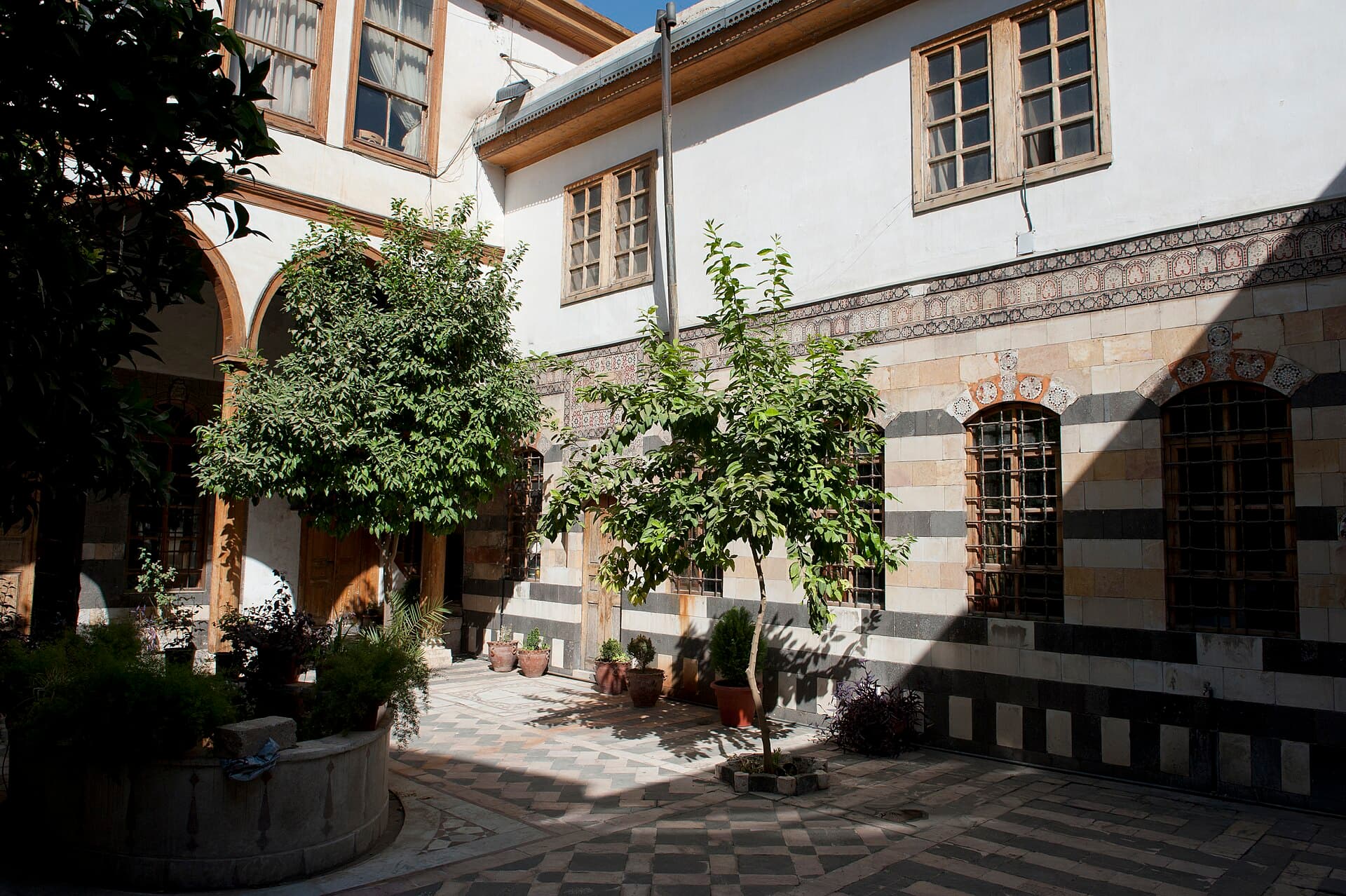
In the old cities of Damascus and Aleppo there are small hotels converted from courtyard houses: few rooms, a cool courtyard, everything within walking distance. In the newer districts the hotels are more conventional. On the coast and in smaller cities the choice narrows. This site recommends no venue that serves alcohol, and the same measure applies to choosing a hotel.
Which quarter to stay in
In Syria the quarter matters more than the name of the hotel: city centres are walked, and staying on the wrong side turns an hour of your day into taxi rides.
Damascus. In the old city — Bab Touma, Qaymariyya, Shaghour — there are small hotels converted from courtyard houses: few rooms, a cool courtyard, the Umayyad Mosque and the markets within walking distance. The lanes are narrow and a car cannot reach the door; the last hundred metres are on foot with your luggage. In the newer districts — Shaalan, Abu Rummaneh — the hotels are more conventional, the streets are wide, and the old city is fifteen minutes away. Old city for quiet, new city for convenience.
Aleppo. Jdeideh is the equivalent on the old-city side, with its courtyard houses and repaired lanes; the citadel and the souq are walkable. Aziziyah is in the newer district and busy in the evening.
Tartus. Stay near the corniche: the Arwad boats leave from the jetty there, and catching an early one is easier for it. The old city inside the fortress is also within walking distance.
Hama. The city is small; staying in the centre by the river is enough, with the wheels and the Azm Palace on foot.
Homs and Latakia. Both are used as bases — Krak des Chevaliers from Homs, Saladin Castle from Latakia. Staying central makes finding a car in the morning easier.
Palmyra. Choice is thin; most visitors go for the day from Homs. If you plan to stay, ask in advance whether there is a room at all.
Five things to ask before you hold a room
All of them have one-sentence answers, by phone or message: what hours the generator runs; whether the hot water depends on it; which currency the price is in and what the total is; whether the room is in the old city or the new; and whether the street is noisy at night. Anyone who knows those five walks into the room without a surprise.
Power and water
Grid cuts happen daily and the hours shift. Most hotels run a generator; outside generator hours there is no lift, no wifi and often no hot water. Ask at check-in when the generator runs — that answer will serve you better than the view from the room.
Tips
- Do not rely on booking sites; hold the room directly by phone
- Payment is cash — settle which currency the price is in at check-in
- Ask when the generator runs; hot water and wifi depend on it
- Passport registration is required; carry a photocopy separately
- Venues serving alcohol are not recommended here, hotels included
Transparency
- How this was chosen
- This page carries the fastest-ageing information on the site: visa rules, exchange rates, border crossings and SIM prices change several times a year. The verification date above says when the facts were last put through their sources; for anything later, check your own foreign ministry travel advice and a Syrian consulate. No figure that is not known for certain is written here.
- Facts checked
- August 2026
- Last updated
- September 15, 2026