Carob Drink (Kharroub)
A dark brown drink that tastes of cocoa and contains none, and no caffeine either. Iced in summer, hot in winter. The fourth glass on the Ramadan tray.
- Where to eat it
- By the glass at sharbat stalls and on the iftar table through Ramadan; the molasses is boiled on the coast and around Aleppo and sold by the jar at spice merchants.
- Price
- Variable — a glass and a jar are priced apart, ask at the counter
- When it is eaten
- Ramadan evenings; iced in summer, hot in winter
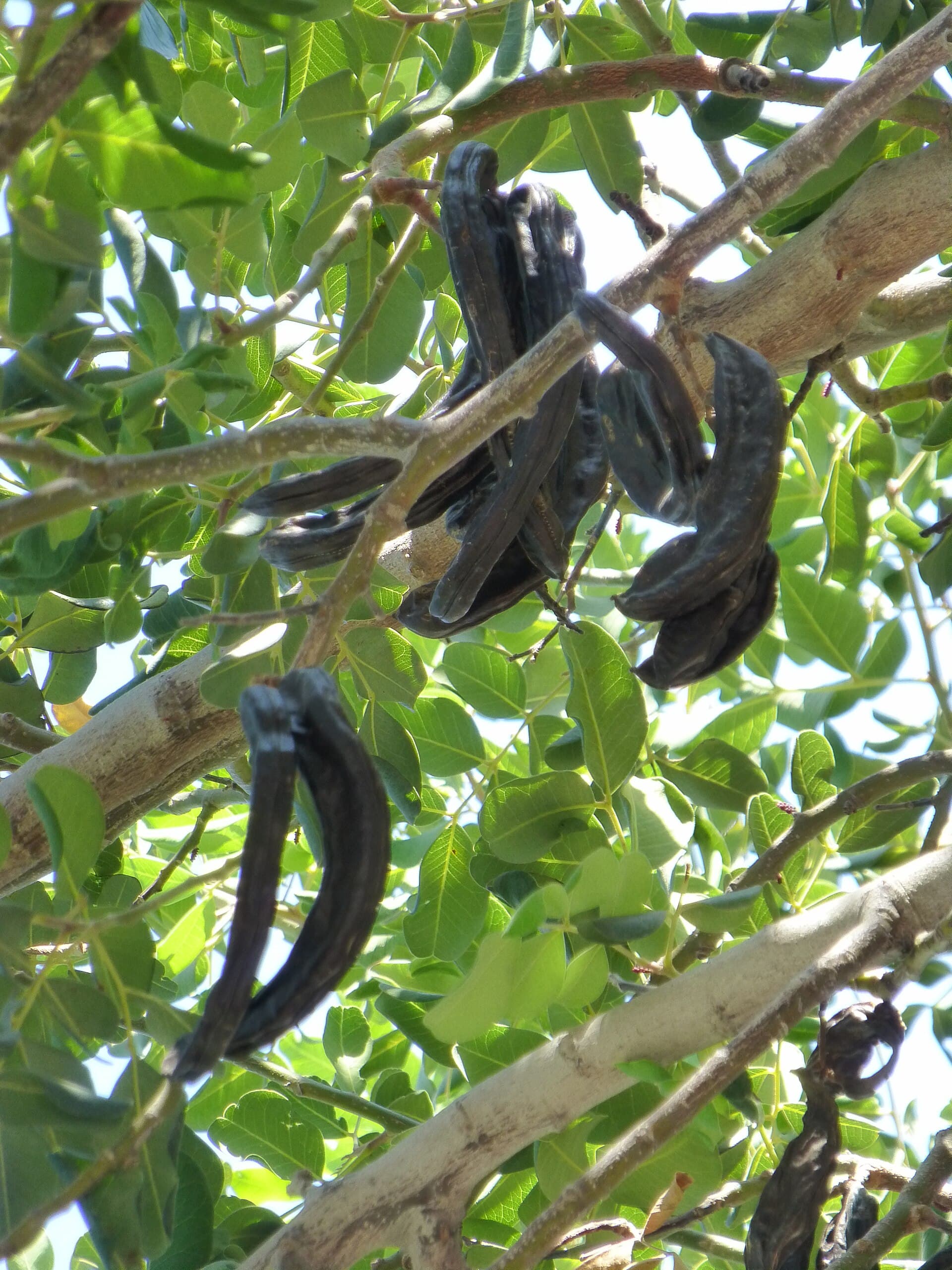
The dark brown liquid in the glass looks and tastes like cocoa, yet there is no cocoa in it, no coffee, no caffeine. Carob — kharroub in Arabic — is drunk either as an infusion of the dried pods or as molasses let down with water. It works in both seasons. Iced in the heat, hot in winter — few drinks in Syria do that.
Two ways to make it
The first starts with dry pods: the hard shells are broken up, boiled in water, strained, sweetened and cooled. The second starts with the finished molasses: a spoon of dibs al-kharroub goes into a glass of water, you stir, and that is it. They do not taste the same — the boiled version is lighter and woody, the molasses version dark and sweet.
What it tastes like
Everyone reaches for cocoa first. They are half right: the dark colour, a slightly earthy note, sweetness sitting behind it. But the bitterness and fat are missing. So is the caffeine, which is why it is drunk late in the evening and given to children.
Where the tree grows
The carob grows wild along the Syrian coast, on the strip between Latakia and Tartus, and in the countryside around Aleppo. The molasses is boiled in the same region: the pods are simmered long in water, strained, then reduced until thick. The jar is one of the goods that travel from the coast inland.
On the Ramadan tray
Kharroub goes round the iftar table alongside liquorice and tamarind. Together the three, with jallab, make up the Ramadan drinks of Syria, and the stalls go up in that month. From Tripoli to Damascus it is a shared eastern Mediterranean habit.
It turns up at breakfast too
The molasses has a second life on the table: stirred into tahini and spread on bread. Same jar as the drink. Only the proportion changes: a spoon into water for the glass, a spoon into tahini for breakfast.
Tips
- Iced in summer, hot in winter — the same syrup makes two different drinks
- No caffeine, so there is nothing against drinking it late
- To make it yourself, buy dried pods from a spice merchant; you break them up, boil and strain
- The same jar is stirred into tahini at breakfast; do not use the drinking proportion there
Transparency
- How this was chosen
- Two kinds of record live here: the dish itself, and the place that serves it. Both are chosen and written by hand; ranking is not for sale and there are no sponsored entries. If a price range is not known for certain, it says so. Venues that serve alcohol are not listed on this site at all.
- Facts checked
- September 2026
- Last updated
- September 15, 2026