Kibbeh mashwiyeh, the grilled kibbeh of Homs and Qusayr
Kibbeh cooked over charcoal, not fried: in Homs two discs sealed around lamb and tail fat, in Qusayr a family job at the fire on the morning of Eid. How it is made.
- Where to eat it
- At home in the Homs countryside, especially Qusayr, on the eve of Eid and on Eid morning; on the Ramadan table in the city of Homs. Also common in Hasakah.
- Price
- Varies — a home and Eid dish; if a restaurant has it, ask the portion price
- When it is eaten
- The eve and morning of Eid al-Fitr and Eid al-Adha
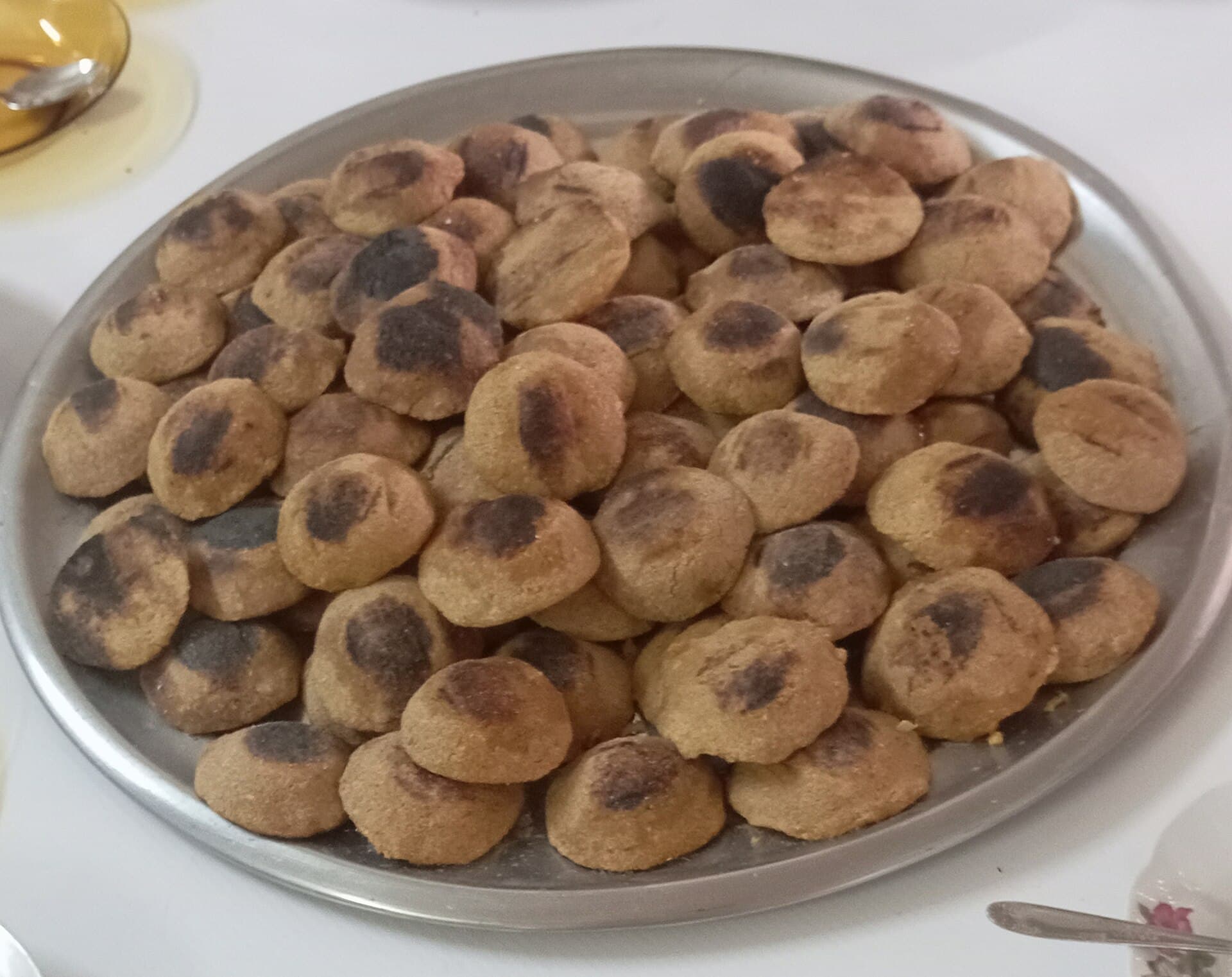
Kibbeh mashwiyeh is kibbeh cooked over charcoal instead of in hot oil. The dough is kneaded from fine kibbeh bulgur, fresh lean meat, suet and spices. In Qusayr, in the Homs countryside, it is the dish of Eid; in the city of Homs it also comes to the Ramadan table. The dish is not unique to the area, since it is also common in Hasakah.
No Eid in Qusayr without kibbeh
According to two SANA reports from 2026, families and neighbours in Qusayr gather around the fire at home on the eve of Eid and on Eid morning to make the kibbeh together. The last day of Ramadan is set aside for the work too. The best meat and bulgur are chosen.
The dish is also linked to the joy of the wheat threshing, and it is seen as work passed from mother to daughter. The saying in town is short: if there is Eid, there is kibbeh.
The Homs way and the Qusayr way
In the city the dish is built from two discs. Two thin discs are pressed out of the bulgur dough, lamb mince, tail fat and spices go between them, and the edges are sealed before grilling. A Homs member of the Syrian History Society says the city’s version stands out for a large disc, more tail fat than usual, and pepper.
In Qusayr the dough is shaped by hand onto skewers and cooked over charcoal or a low fire. Hasakah has a third way: an eSyria report from 2009 describes dough pressed out in a mould, with suet or mince sealed between two half discs.
How it is eaten
Straight off the grill, with salad and cold yoghurt. By a custom in Hasakah, one piece is left empty or given a different filling, and whoever gets it is named the sheikh of the kibbeh.
Where it sits in the kibbeh family
The kibbeh entry on this site covers the fried kind. Kibbeh bil-sanieh is baked in a tray, kibbeh labaniyeh is cooked in yoghurt, kibbeh nayyeh is eaten raw, and kibbeh batata is made with potato. The charcoal version stands apart: there is no frying oil, and the fat comes from the suet and tail fat inside the dough.
Tips
- It is eaten straight off the grill; ask for cold yoghurt and salad with it
- The Homs way is two filled discs, large and rich with tail fat; the Qusayr way is on skewers
- In Qusayr it is cooked mostly at home on Eid morning; more a family job than a restaurant plate
Transparency
- How this was chosen
- Two kinds of record live here: the dish itself, and the place that serves it. Both are chosen and written by hand; ranking is not for sale and there are no sponsored entries. If a price range is not known for certain, it says so. Venues that serve alcohol are not listed on this site at all.
- Facts checked
- September 2026
- Last updated
- September 15, 2026