Shanklish
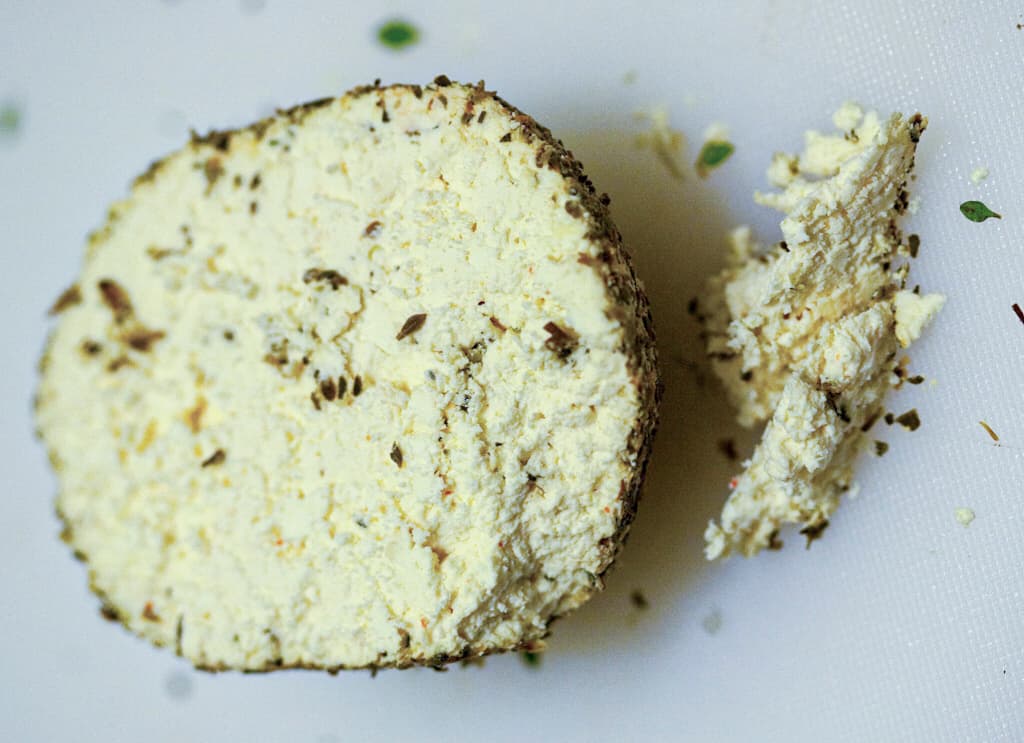
A cheese ball dried, left to ripen, then rolled in thyme or red pepper. Coastal winter stores: crushed with olive oil, tomato and onion, it becomes a mezze plate.
- Where to eat it
- Crushed on the mezze table, or in bread at breakfast. Sold by the ball at dairy counters in the market.
- Price
- Variable — ask the price per plate or per kilo at the counter
- When it is eaten
- All year; the fresh thyme coated batches appear at the end of summer
A cheese made from yoghurt. Skimmed yoghurt is heated and strained, salted heavily, rolled into balls by hand and coated in red pepper or thyme. The balls then dry in the sun and are kept in sealed jars; the longer they sit, the harder they get and the sharper the smell and taste. Fresh, it is soft and mild. Old, it hits the nose like a blue cheese.
Whose work it is
Coastal work. The country around Tartus, and the Akkar region of northern Lebanon that continues it, are named for the best shanklish: hard there, clearly salty, close to white in colour. It is also made in the Latakia countryside and around Aleppo. In Syria the spicy kind is wrapped in red pepper, so you will see red balls on the counter too.
What it belongs to
Mouneh — the winter store. It is made in summer and eaten through the year, so it is not tied to one meal. It can turn up in bread with cucumber and mint at breakfast, or crushed on a mezze plate in the evening.
How it is eaten
The ball is crushed on the plate with a fork and covered in olive oil; finely chopped tomato and onion go in, sometimes cucumber and pepper. Served that way it is called shifurah. Hot bread and tea alongside.
Where a traveller finds it
Eat it in a restaurant if the mezze list names it. The real place to meet it is the dairy counter in the market. There the balls sit stacked in the open, under their coat of thyme. The hard kind survives a journey and travels in a suitcase.
Tips
- The taste follows the age — ask at the counter whether it is fresh or aged
- Ask for the fresh one on a first try; the aged smell is heavy
- Crushed and dressed with olive oil it is called shifurah, and menus may list it so
- Red balls mean chilli; the greenish thyme coated ones are the plain version
Transparency
- How this was chosen
- Two kinds of record live here: the dish itself, and the place that serves it. Both are chosen and written by hand; ranking is not for sale and there are no sponsored entries. If a price range is not known for certain, it says so. Venues that serve alcohol are not listed on this site at all.
- Facts checked
- August 2026
- Last updated
- September 15, 2026