Travelling in Syria during Ramadan
Ramadan begins around 8 February in 2027. What stays open, where lunch is found, what the street does at sunset, and how to behave if you are not fasting.
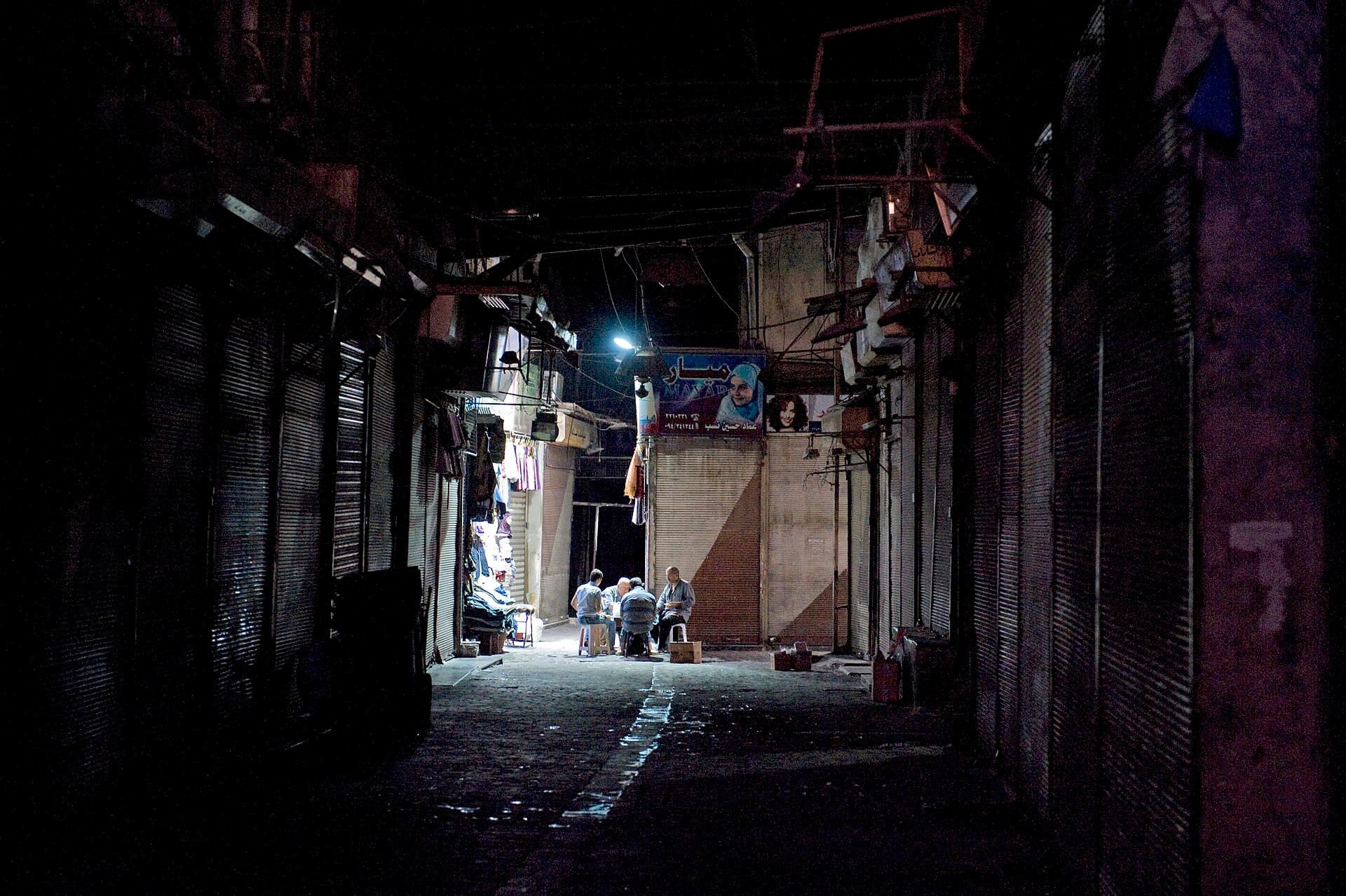
Syria does not close during Ramadan; it moves its clock. The daytime is quiet and foodless, the hour before sunset is gridlock, the street empties completely for half an hour after the call to prayer, and then the city fills up until past midnight. Build the day around that rhythm and the month stops being an obstacle.
When Ramadan falls in 2027
The lunar year is shorter than the solar one, so Ramadan moves back 11 days each year. In 2027 it begins around 8 February and ends around 8 March, with Eid al-Fitr falling near 9 March.
All of that is approximate. The start depends on the sighting of the new moon and can shift by a day, and the number of official holidays for Eid is announced separately each year. Check that year’s announcement before you book a flight or a room.
The dates have a practical consequence. Ramadan in 2027 sits at the end of winter: the days are short, the fast is a few hours shorter than a summer one, and walking around at midday is not punishing. As Ramadan years go, this is an easy one to travel in.
What is open during the day
Government hours shrink: offices and banks may shut before noon, so put any official errand in the morning. Museum and site hours shift too, and the shift varies from one institution to the next — have your hotel phone ahead.
The souq opens late. It comes alive in the afternoon, empties an hour before sunset, and opens again after the meal. There is no point going early; go in the afternoon or at night.
Mosques are open all day and the easiest time to visit is the morning. Visitors are not received during the night prayers, when the prayer halls fill. Churches and monasteries keep their ordinary hours.
Where to find food during the day
Most restaurants are either closed in daylight or serving behind a curtain. You will not go hungry, but you will have to look. There are a few routes.
Hotel restaurants usually serve through the day, and that is where most visitors eat lunch. In the Christian quarters — Bab Touma and Qassaa in Damascus, Jdeideh in Aleppo — cafes and restaurants stay open. Bakeries, grocers and fruit sellers work as usual, so bread, cheese, olives and fruit eaten in your room is the simplest answer of all.
Carry your water bottle in your bag and do not drink from it in the middle of the street. Nothing forbids it; it is simply the measure everyone else is keeping.
Iftar and the rhythm of the street
The fast breaks at sunset. In mid-February that is around 17:30, and by early March it moves towards 18:00; the exact minute changes daily and varies by a few minutes between cities.
The hour before it is the hardest of the day. Traffic locks solid, everyone is trying to get home, and a taxi becomes difficult to find. Do not start an intercity journey then, and get back from a site earlier than you would otherwise.
Then something odd happens. For about half an hour the street is completely empty: shutters down, nobody on the pavement, only a few small tables set out in front of shops. Watching that in the covered souqs of Damascus stays with you as clearly as any monument.
If you are invited to an iftar
Invitations come easily in Ramadan and they are meant. Accept: this is the best table a traveller will sit at in Syria.
Do not arrive empty-handed — sweets or fruit will do, chocolate if there are children. The table opens with dates and water, then soup arrives; instead of diving in, follow the pace of the household.
You do not need to announce that you are not fasting, and nobody asks. If it comes up, an honest answer causes no trouble at all. What is expected is not the fast but the respect.
Expect to be pressed. Saying you are full does not count the first time, and a second and third plate will arrive. The tea and sweets afterwards go on for a while; leaving straight after the food cuts the evening in half.
Suhoor and the second half of the night
After the meal the city opens and stays busy past midnight. Souqs trade late, there are queues outside the sweet shops, and whole families are out.
Things appear on the street that appear at no other time of year: qatayef, small folded pancakes filled with walnuts or cheese, and vendors with brass urns on their backs pouring tamarind, liquorice-root and jallab drinks. All of it is alcohol-free and all of it is seasonal.
Suhoor is eaten before dawn. In the old cities the musaharati still walks the lanes with a drum; you may hear him from your room, and if your window faces the old city you almost certainly will. Since everything opens late the next morning, there is nothing to gain from an early start — shift the day an hour or two back.
Courtesy if you are not fasting
Nobody expects you to fast. What is expected is a measure of visibility, and it fits into six lines.
- Do not eat, drink or smoke in the street. In your hotel, your room or any indoor place none of this is an issue.
- Drink water, but not in the open; on a warm day, step into the shade and drink from your bag.
- Leave the subject alone. Asking why someone is not eating sounds like curiosity and lands as pressure.
- Keep the late afternoon light. Everyone is tired and hungry by then, and long haggling or insistent questions go down badly.
- Tip a little more. The person in front of you is doing the same job without food or water.
- Dress one notch more carefully than usual; shoulders and knees are covered anyway, and more people are watching in Ramadan.
What you gain and what it costs
Both are real, and which one weighs more depends on your plan.
What you gain:
- February and March weather suits walking — at unshaded sites such as Palmyra and Ugarit the difference from summer is enormous.
- Museums, mosques and ruins are quiet by day; the crowd has moved to the evening.
- At night the city is at its liveliest, and that liveliness is local rather than staged for visitors.
- Invitations and hospitality increase, and conversation starts more easily than usual.
What it costs:
- Finding lunch takes effort and the choice is narrow.
- Museum and office hours move, and each one has to be confirmed in advance.
- The hour before sunset is dead for transport; keep it out of the plan.
- On the first day of Eid almost everything is shut, and buses and hotels are full.
In one sentence: travelling in Syria during Ramadan means a shorter day and a longer night. For anyone who arrives knowing that, the month is not a restriction but a version of the city that no other week of the year shows.
Tips
- Ramadan 2027 runs roughly 8 February to 8 March; the moon decides
- The hour before sunset is dead for transport — do not travel then
- Daytime food: hotel restaurants, Christian quarters, bakeries and grocers
- No eating, drinking or smoking in the street; indoors it is fine
- Skip the souq in the morning; go in the afternoon or after iftar
Transparency
- How this was chosen
- This page carries the fastest-ageing information on the site: visa rules, exchange rates, border crossings and SIM prices change several times a year. The verification date above says when the facts were last put through their sources; for anything later, check your own foreign ministry travel advice and a Syrian consulate. No figure that is not known for certain is written here.
- Facts checked
- August 2026
- Last updated
- September 15, 2026