Syria’s UNESCO World Heritage Sites
Syria has 6 sites on the list, and all six have been counted as in danger since 2013. Which they are, how they stand today, and what that means on a visit.
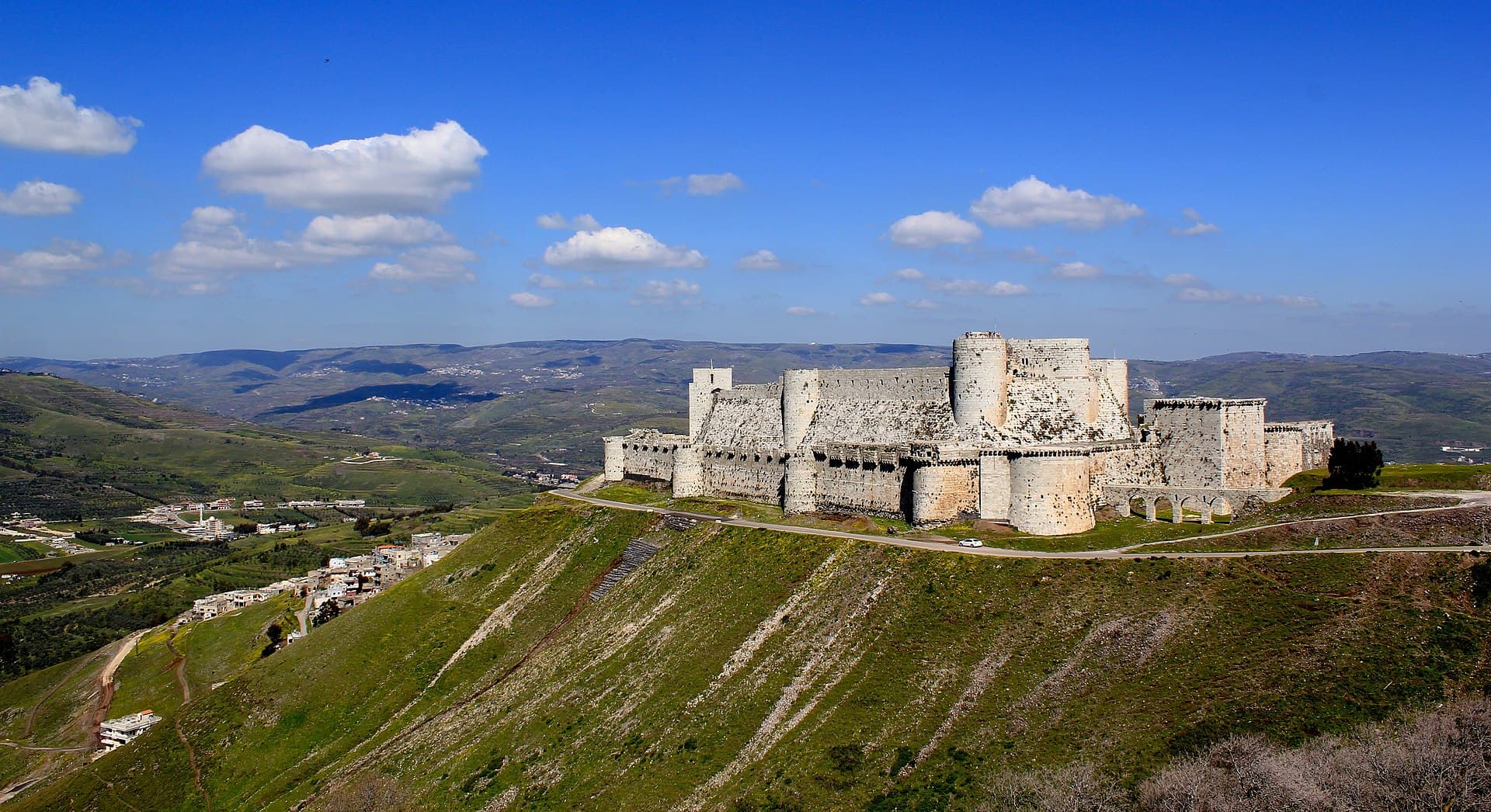
Syria has 6 sites on the UNESCO World Heritage List. All six were placed on the List of World Heritage in Danger in 2013 and were still on it when this page was verified. Below is what they are, how each stands today, and what being on that list means for a visitor.
The six sites
Syria accepted the World Heritage Convention in 1975; its first inscription followed four years later.
Ancient City of Damascus (1979). The oldest Syrian entry on the list, and not an archaeological site in the usual sense: people live in it and the shops trade. Straight Street, the main axis of the Roman plan, still runs on the same line under a market roof. The Umayyad Mosque, the Azm Palace, the khans and the courtyard houses all sit inside the same inscribed area.
Ancient City of Bosra (1980). A Roman theatre of black basalt and the town spread around it. The theatre survived this intact because a citadel was wrapped around it in the Middle Ages — a fortress from outside, a theatre within.
Site of Palmyra (1980). A caravan city in the desert: the colonnaded street, the Temple of Bel, the tower tombs in the valley, the castle on the hill. In August 2015 the main building of the Temple of Bel was blown up; what stands now is the courtyard wall and the monumental gateway, which survived because it had been turned into a fortified gate in the Middle Ages.
Ancient City of Aleppo (1986). The citadel, the Souq al-Madina, the khan courtyards and the Great Mosque are all parts of one site. The souq burned during the war; repair is under way and shops are reopening section by section. The Seljuk minaret of the Great Mosque came down in 2013 and its place is visible in the north-west corner of the courtyard.
Crac des Chevaliers and Qal’at Salah El-Din (2006). Two castles inscribed as a single entry. One sits above the pass that divides the coast from the interior west of Homs, the other on a ridge between two ravines east of Latakia. Both are treated as textbook examples of medieval military architecture.
Ancient Villages of Northern Syria (2011). The area known as the Dead Cities: some 40 villages grouped into 8 archaeological parks on the limestone plateau between Aleppo and Idlib. Al-Bara, Serjilla, Qalb Lozeh and Saint Simeon belong to this inscription — houses, churches, cisterns and olive presses standing without their roofs.
What “in danger” actually means
The danger list is a warning mechanism, not a penalty. When the integrity of a site is under threat the committee moves it to a separate list, reviews its condition every year and can release money from the conservation fund. Removal happens only if the committee decides the threat has ceased.
That decision has not been taken for the Syrian sites. All six have been on the list since 2013. It is worth stating plainly, because summaries saying otherwise are in circulation.
Being on the list does not mean a site is closed. All six are visited. How much damage each carries varies a great deal: at Bosra the fabric is largely in place, while in the Aleppo souq the repair site is still open.
What is on the tentative list
A site can only be nominated for the main list if it was placed on the tentative list first. Syria keeps 12 properties there, most of them added in 1999: the norias of Hama, Ugarit, Ebla, Mari, Apamea, Dura-Europos and the desert palace of Qasr al-Hayr al-Sharqi among them.
So a number of the records you will read on this site sit on the not-yet-inscribed side of the line. For a visit it changes nothing; for protection and funding it changes a good deal.
On a visit
The rule is the same at every one of them: leave it as you found it. Do not climb walls or columns, do not pick up pieces of stone, do not sit on the remains. A loose tessera or an inscribed block on the ground is not a souvenir but a recorded find.
Most of the sites have repair works running and which parts are open changes; ask at the entrance. At Palmyra and on the Idlib plateau you stay on the marked path because of unexploded ordnance. There can be military positions near archaeological sites, and the rule set out on this section’s photography page applies here too.
Hiring a local guide at these sites is not only about commentary. That person has the most current answer to which section is open and which track is safe.
Tips
- All six sites have been on the danger list since 2013 — none has been removed
- On the danger list does not mean closed; all six are visited
- Crac des Chevaliers and Qal'at Salah El-Din count as one inscription
- The Dead Cities are not one place but some 40 villages in 8 parks
- Stone, mosaic pieces and inscribed blocks are not souvenirs — leave them
Transparency
- How this was chosen
- This page carries the fastest-ageing information on the site: visa rules, exchange rates, border crossings and SIM prices change several times a year. The verification date above says when the facts were last put through their sources; for anything later, check your own foreign ministry travel advice and a Syrian consulate. No figure that is not known for certain is written here.
- Facts checked
- August 2026
- Last updated
- September 15, 2026