Visiting mosques, churches, shrines and monasteries
Each asks something different: shoes come off in a mosque, not in a church. Which buildings receive visitors, which do not, and how the donation box works.
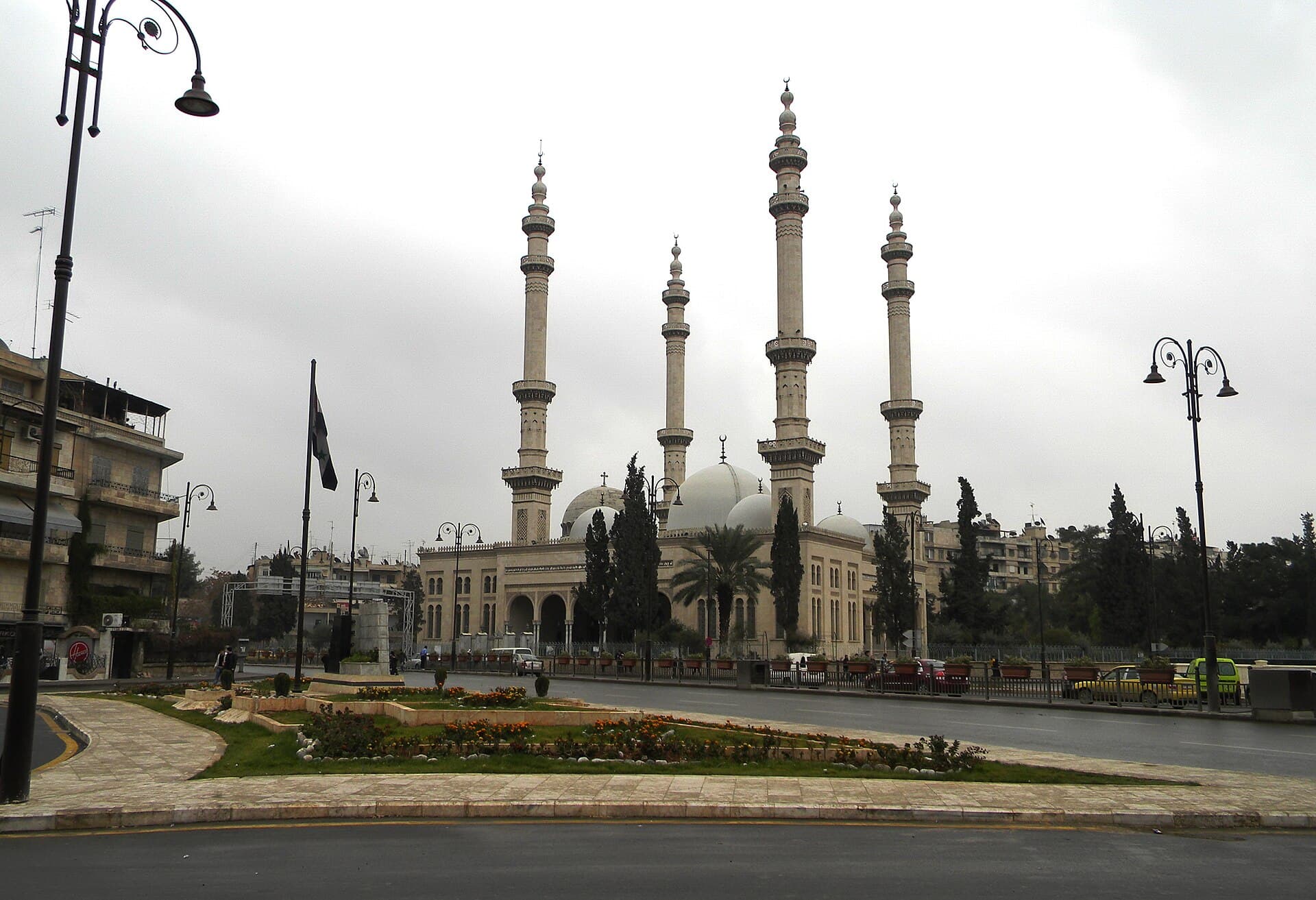
Most of the buildings worth visiting in Syria are working places of worship at the same time. What you walk into is not a monument but a room where someone came to pray that morning. This page gathers the rules specific to those buildings; the dress measure and general manners are on a separate page in this section.
Who is who, and which buildings receive visitors
Alongside the Sunni majority, Syria has Shia, Alawite, Druze and Ismaili communities and a large number of Christian churches. The largest Christian body is the Greek Orthodox Church of Antioch, alongside Syriac Orthodox, Melkite Greek Catholic, Armenian Orthodox and Catholic, Maronite, Chaldean and Assyrian communities. The variety is not scattered evenly; it sits quarter by quarter. Bab Touma in Damascus is Christian and the Amara quarter fills with Shia pilgrim groups. The coast and the Ansariyah mountains hold Alawite villages, and the towns around Suwayda in the south are Druze.
For a visitor the line is clear. Mosques, churches and monasteries receive visitors, and many have done so for centuries. The Druze khalwa and the meeting houses of the Alawite community do not. These are not tourist buildings, and even though nobody would scold you at the door, you do not go in. Knowing this is the courtesy itself — not heading that way unasked is enough.
There is also a question that does not get asked: nobody asks anyone which sect they belong to. If the conversation goes there, the other person will say so themselves. Do not open it.
In a mosque
Shoes come off at the door of the prayer hall, not in the courtyard. There will be a rack or a bag at the entrance; if someone is minding the shoes, a small tip is normal. Bring socks: the marble of the Umayyad Mosque burns in summer and is ice in winter.
Many mosques have a separate entrance and a separate section for women. At the larger mosques used to visitors an abaya or cloak is handed out at the door — the Umayyad Mosque and Sayyida Ruqayya both work this way. Bringing your own scarf still makes things easier.
Two things matter inside: you do not walk in front of someone praying, and you do not step between the mihrab and the rows. Sitting on the carpet is fine; not pointing the soles of your feet at the mihrab or at a person is settled good manners. Put the phone on silent.
Entry to a mosque is free in principle. The larger ones with a separate visitor entrance may charge, and the amount changes; confirm it at the door.
Photography: the building is generally fine, people are not. Nobody in prostration goes in the frame and the women’s section is not photographed. In a small neighbourhood mosque, ask before raising the camera — the answer is usually yes, but asking is expected.
At a shrine
A shrine is a different kind of room from a mosque. It is both a place of prayer and a place of pilgrimage, and the crowd can be emotional: pilgrim groups, people weeping, hands reaching for the grille. In Damascus, Sayyida Ruqayya and Sayyida Zaynab are the centres of this kind of visit.
What a visitor does is simple: watch, do not imitate. Touching the grille, passing a hand over it and then over the face, weeping aloud in prayer — that is the congregation’s worship. You are not required to join and nobody expects it. But photography stops here: you do not take a picture of someone praying.
Entrances for men and women are usually separate, and a covering is handed to women at the door. Shoes come off inside. Money does not go through the grille; it goes in the donation box.
In cemeteries — including old visited ones such as Bab al-Saghir — you do not sit on a headstone or walk over a grave. On narrow paths that takes some care.
In a church
The most commonly confused difference: shoes stay on in a church. The second: most churches do not ask for a headscarf. Monasteries are another matter, below.
The main liturgy is on Sunday morning, with shorter services during the week. Depending on the community the language may be Arabic, Syriac, Armenian or Greek. You may go in during a service, but you stay at the back: no walking about, no filming, no moving to the front.
You do not join the communion line — that line is for members of the church. Kissing an icon or crossing yourself is not expected either, and nobody thinks the worse of you for not doing it. Lighting a candle is welcome, and leaving something in the box is the custom.
Feast dates differ between churches. For which days are closed and which are crowded, see this section’s page on holidays.
At a monastery
A monastery is not a building people visit but a place people live in. That one sentence explains most of the rules: there are hours of prayer and hours of silence, and visitors are not received during them.
At Saidnaya women visitors are expected to cover their hair and closed shoes are asked for; there is a queue at the small chapel that holds the icon, and it is dim inside. At Deir Mar Musa the last stretch of the road is climbed on steps, and notice ahead of a visit is appreciated. No flash is used on the frescoes. Waiting for your eyes to adjust is both politer and a better result.
Monasteries offer visitors tea and often a meal. There is no charge for it and none is wanted; the answer to it is the donation box. If you are offered a bed, the rules are the household’s, from the hour of rising to the shared table.
Donations, entry and “guides”
A donation goes in the box, not into anyone’s hand. Entry to churches and monasteries is usually free and the box sits somewhere visible. How much you leave is up to you; a small amount is taken as normal.
Be careful with anyone introducing himself as a guide at the door. Ask someone inside whether he works there, and settle the fee before you start. No place of worship has a compulsory guide fee; commentary is good if you want it and unnecessary if it is pressed on you.
Five rules that cover all of them
- Shoulders and knees covered, fabric loose. This holds in every one of these buildings.
- You do not visit during worship; you wait for it to finish.
- Photograph the building, not the people. If in doubt, ask.
- Phone on silent, voices down. Silence is not expected; noise is not either.
- You do not have to take part. Watching is enough, and it is the respectful thing.
Tips
- Shoes off in a mosque, on in a church — the most commonly confused difference
- Druze khalwas and Alawite meeting houses do not receive visitors
- Never photograph someone praying at a shrine
- Donations go in the box, not into anyone's hand
- Nobody is asked which sect they belong to
Transparency
- How this was chosen
- This page carries the fastest-ageing information on the site: visa rules, exchange rates, border crossings and SIM prices change several times a year. The verification date above says when the facts were last put through their sources; for anything later, check your own foreign ministry travel advice and a Syrian consulate. No figure that is not known for certain is written here.
- Facts checked
- August 2026
- Last updated
- September 15, 2026