Awassi Sheep: the Lamb Behind Syrian Cooking
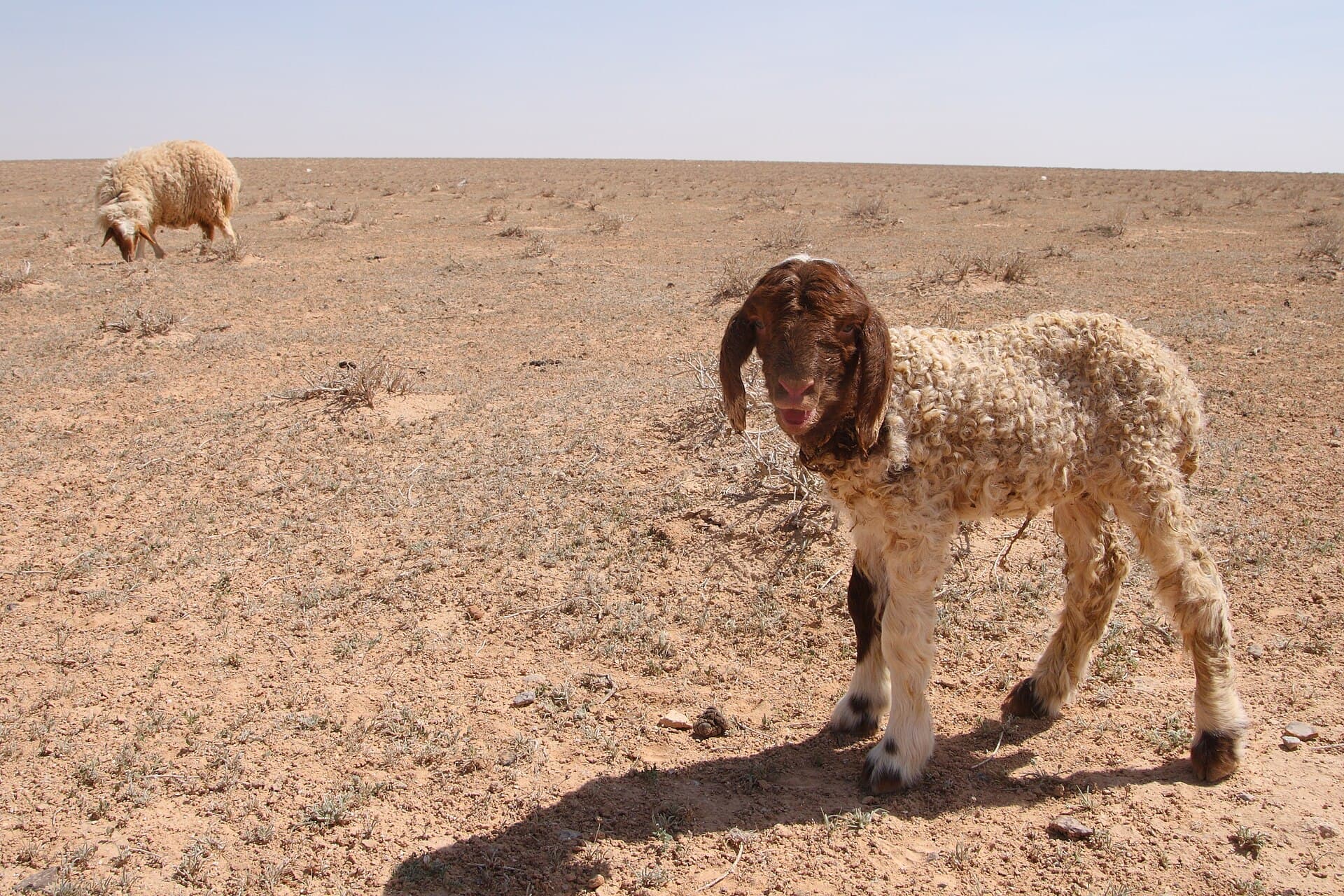
White body, brown head, drooping ears and a fat tail. This is the animal under Syrian kebab and kibbeh, and at the butcher’s counter it is called Naimi.
- Where to eat it
- At the butcher's counter under the name Naimi; behind every menu line that says lamb at a grill restaurant. The flocks are in the countryside of Hama and Homs.
- Price
- Variable — sold by the kilo; ask the counter for the day's price
- When it is eaten
- Spring and early summer; prices climb in the weeks around Eid
Almost every line in Syrian cooking that says lamb rests on one breed. The Awassi is a fat-tailed sheep: white body, brown head and legs, long pendulous ears, a slightly convex profile. Rams are usually horned and ewes more often polled. A ram weighs around 70 kg.
Where it comes from, where it is kept
Arabic sources place its origin in the Badiyat al-Sham, the Syrian steppe; English sources point to Mesopotamia and settle on no firm starting point. Today it is kept across Syria, Jordan, Iraq, Lebanon and Palestine, and the largest flock is in Turkey. In drought it lives off the fat in its tail, walks long distances and keeps giving milk through the hardest season — which is why nomadic and village herding both ended up with the same animal.
Why it is called Naimi
At the butcher’s counter this meat is usually called Naimi. The name comes from the Naim, a tribe known for its sheep around Homs and Hama, and it now works as a label: where the counter says Naimi, the price sits above the rest. Asking by that name gets you further than asking by the breed.
What it does in the kitchen
The tail fat — liyyeh locally — is the fat of kibbeh and kebab. Worked into minced meat it melts on the grill and bastes the meat from inside. That is one reason Syrian kebab does not taste like kebab elsewhere. The flock’s milk is the raw material of labneh, shanklish and kishk, and clarified butter comes from the same milk. The kitchen of Aleppo builds itself directly on two things: lamb, and animal clarified butter.
Where you see it
In the countryside of Hama and Homs, on the roads that open onto the steppe, flocks are an ordinary sight. At the butcher’s the whole carcass hangs and you choose your own cut; if you want mince, it pays to ask which cut it was taken from. Demand rises in the weeks around Eid, and the price rises with it.
Tips
- Ask for Naimi at the butcher; nobody uses the name of the breed
- Say which cut you want the mince from, and how much fat, when you order
- If you dislike tail fat, say at the outset that you want the kebab lean
- Ask the shepherd before you walk up to a flock out on the steppe
Transparency
- How this was chosen
- Two kinds of record live here: the dish itself, and the place that serves it. Both are chosen and written by hand; ranking is not for sale and there are no sponsored entries. If a price range is not known for certain, it says so. Venues that serve alcohol are not listed on this site at all.
- Facts checked
- September 2026
- Last updated
- September 15, 2026