Hama
A city built on both banks of the Orontes. The water wheels still turn, the Azm Palace still stands, and Apamea, Qasr Ibn Wardan and Masyaf lie around it.
- Founded
- Ancient Hamath — 2nd millennium BC
- Best season
- April–May, September–October
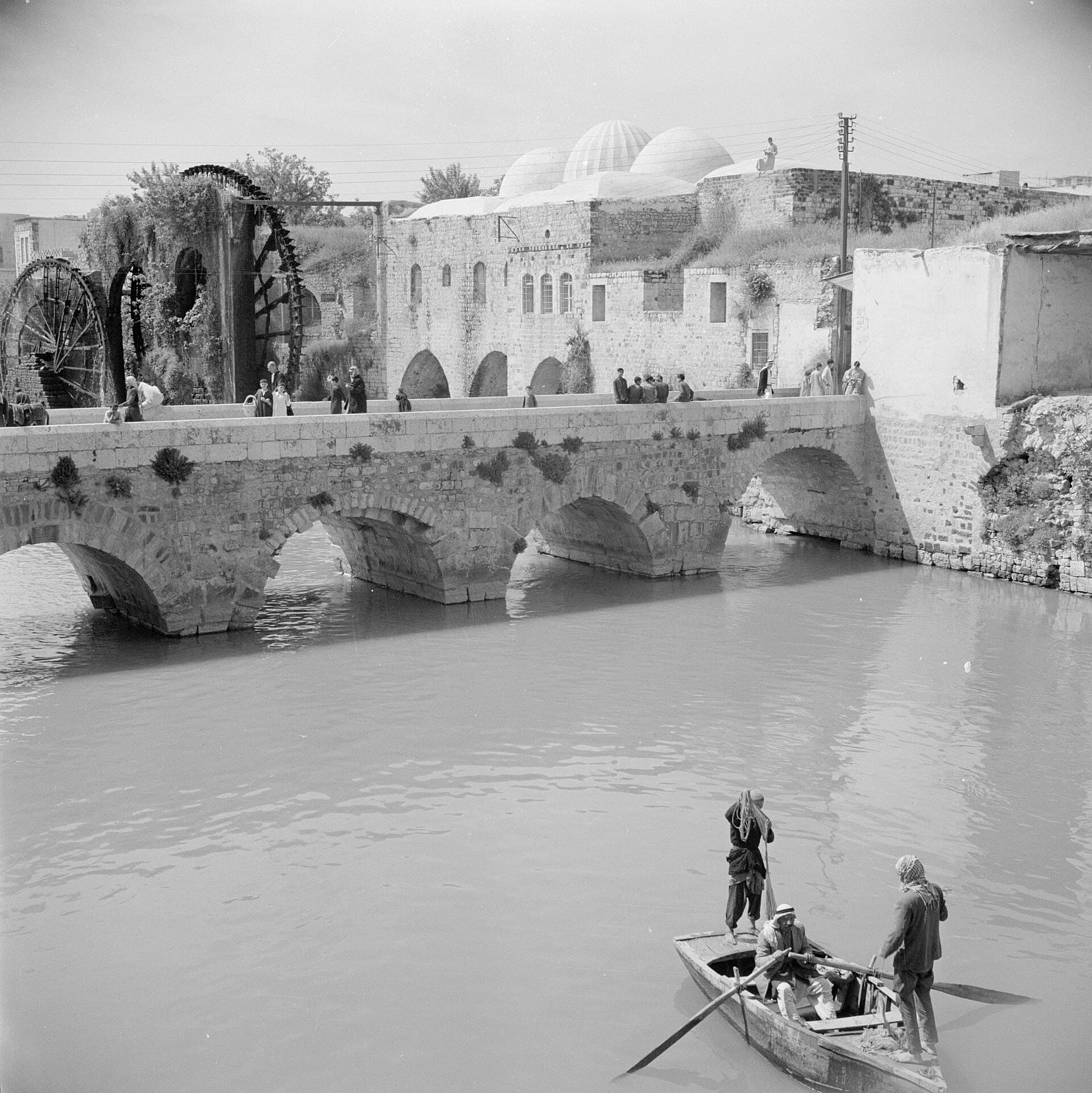
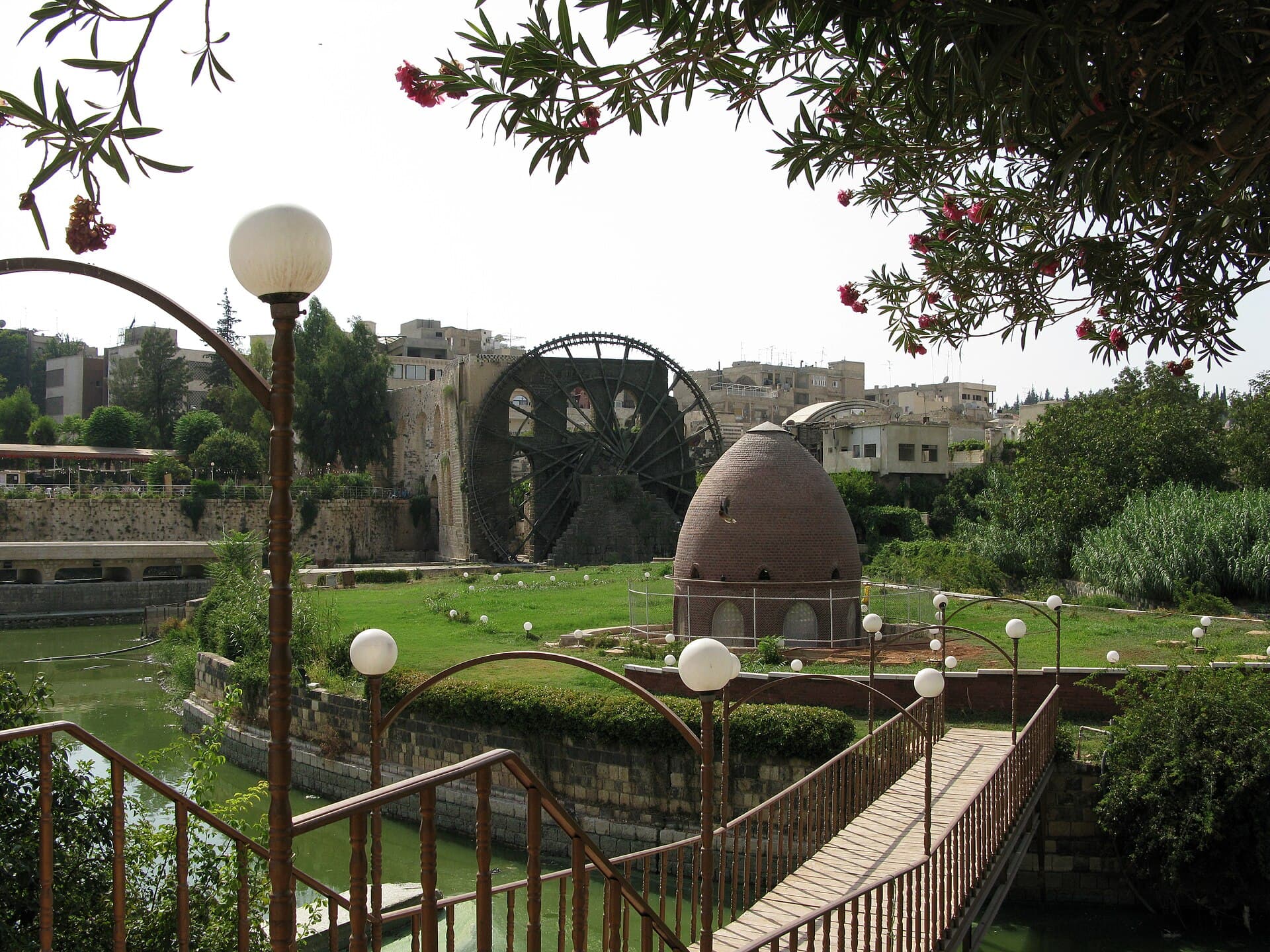
In the middle of Syria, between Homs and Aleppo, on both banks of the Orontes. What defines the city is the river and the wooden wheels standing in it: the norias. They lift water into the aqueducts and groan as they turn — that sound is Hama.
Where to start
At the riverbank. The largest wheels stand on the central stretch; the walkway passes both of them and carries on along the aqueduct. Then the Azm Palace, a governor’s mansion built in the eighteenth century, in the period before the Azm family moved on to Damascus.
In the city
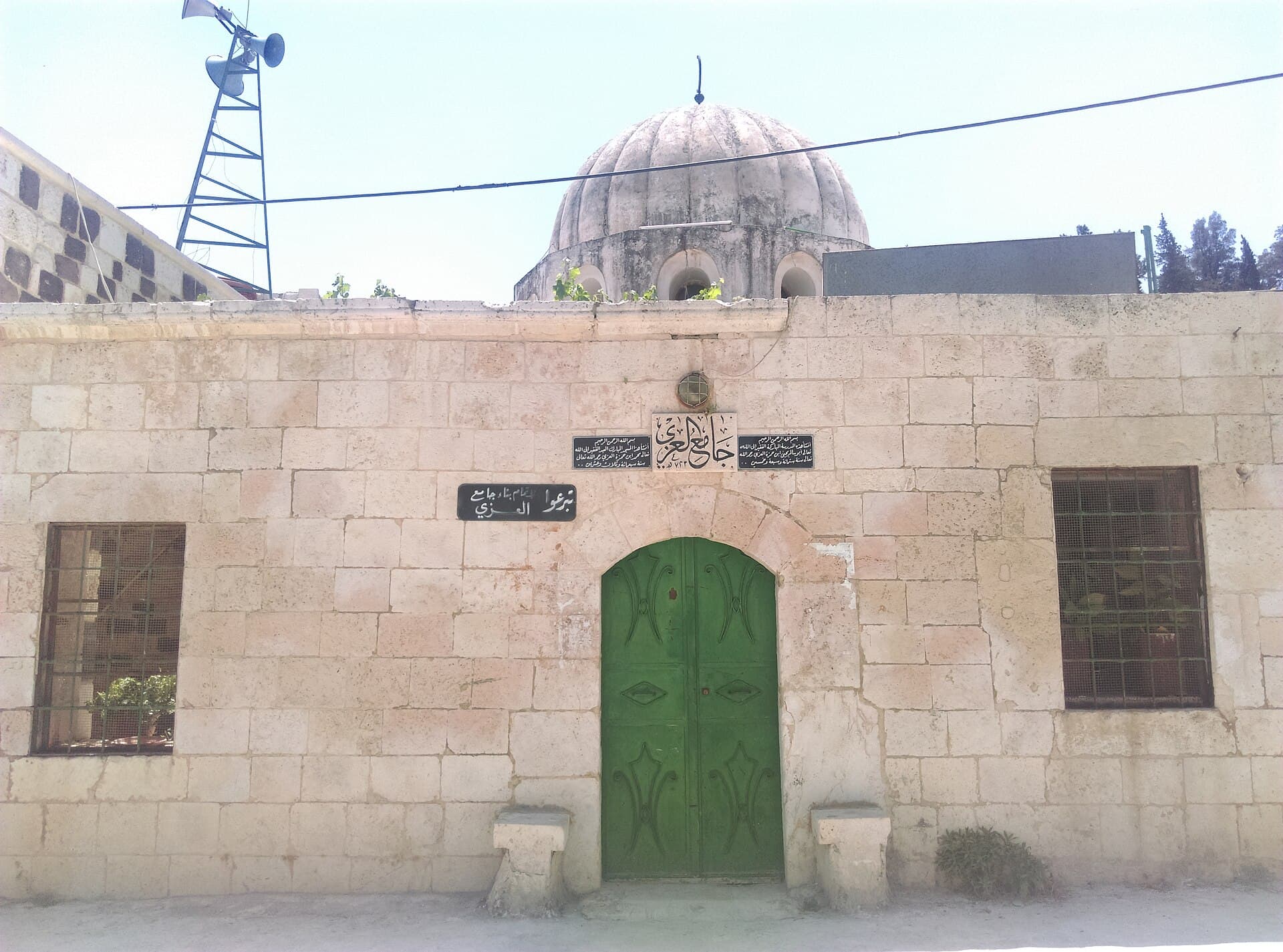
Most of the old quarters were destroyed in 1982 and new building stands where that fabric was. What you see in the centre is therefore not an unbroken old city like those of Damascus and Aleppo; what remains is the river line and individual monuments.
Around it
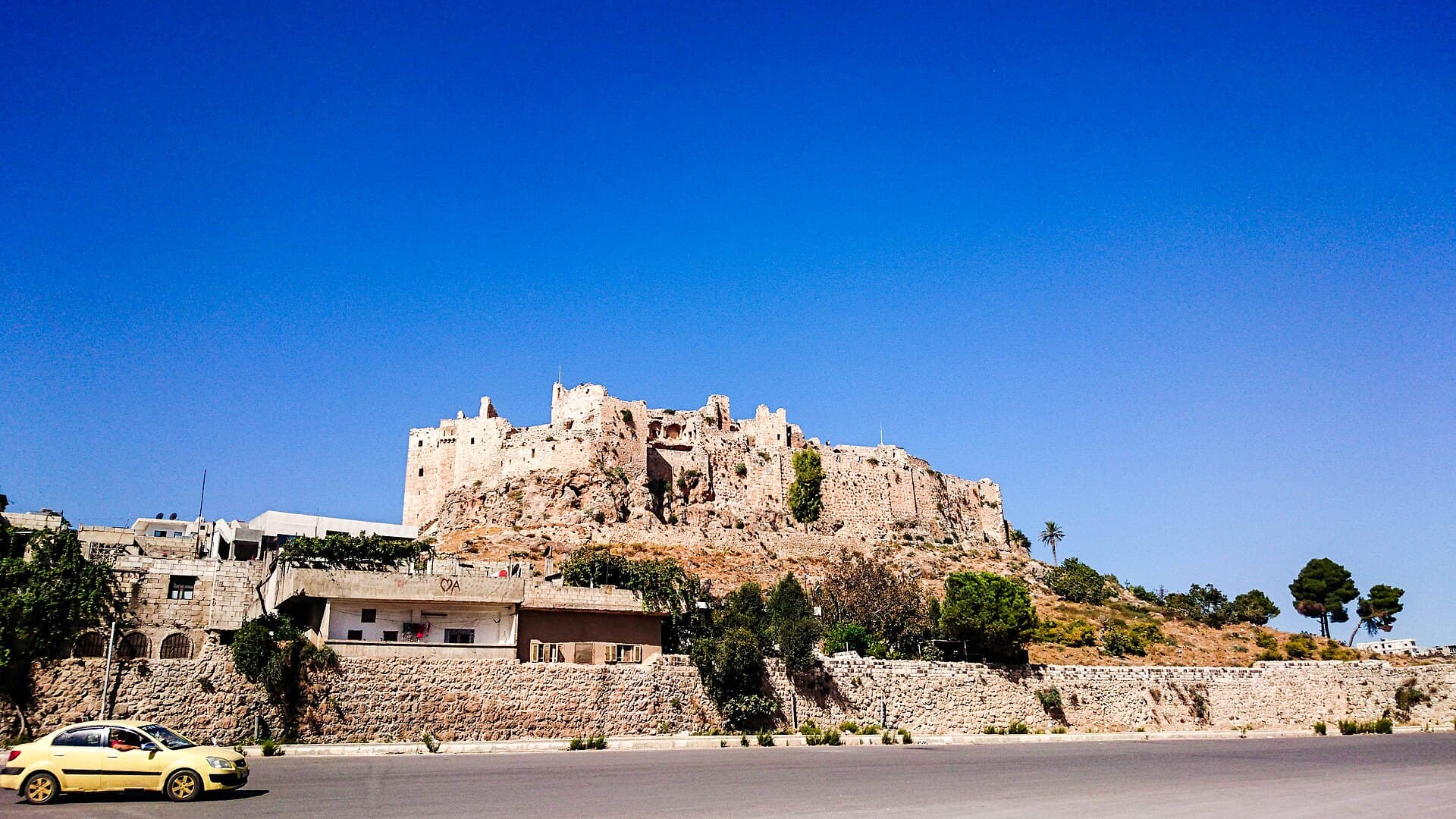
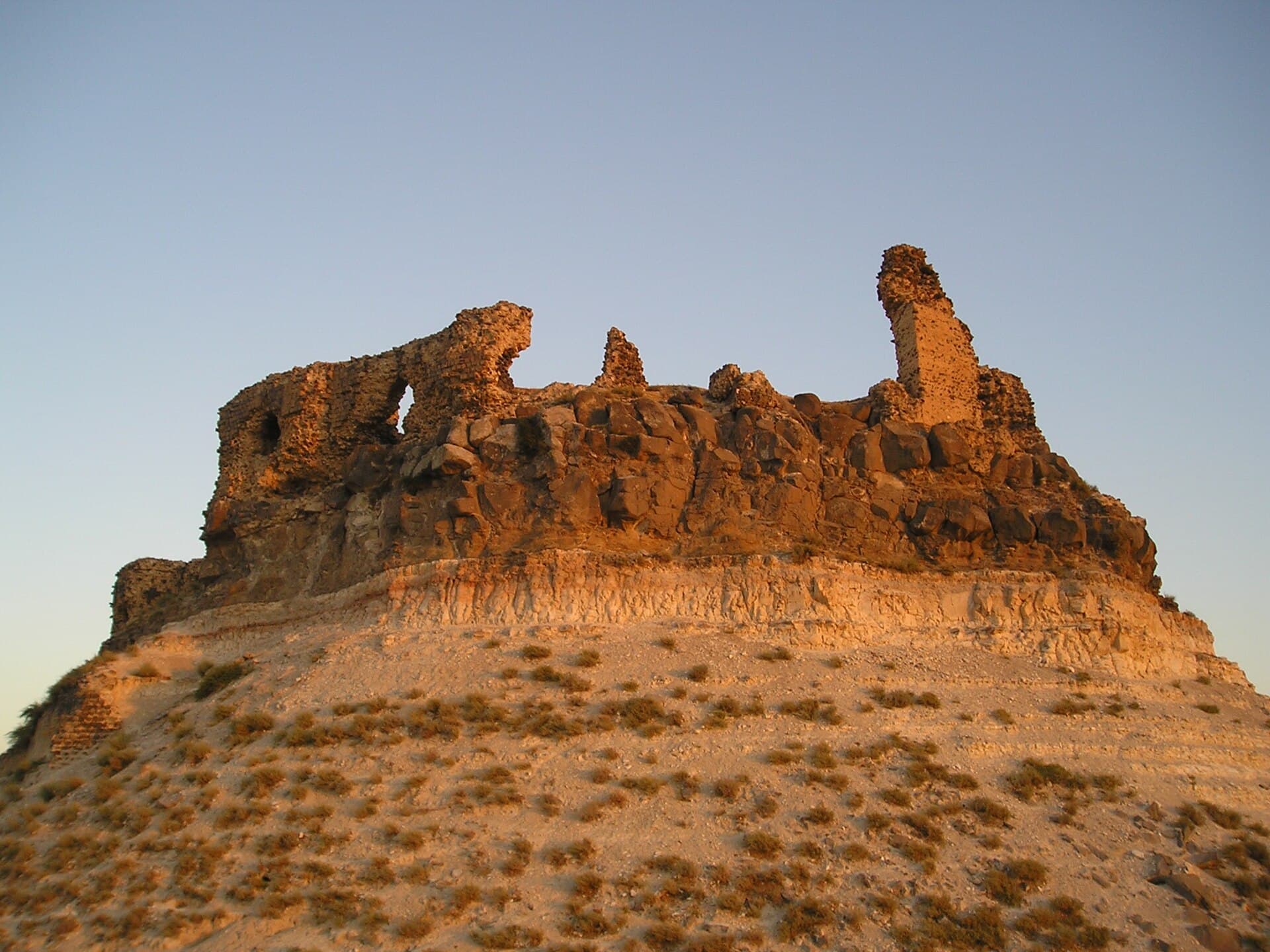
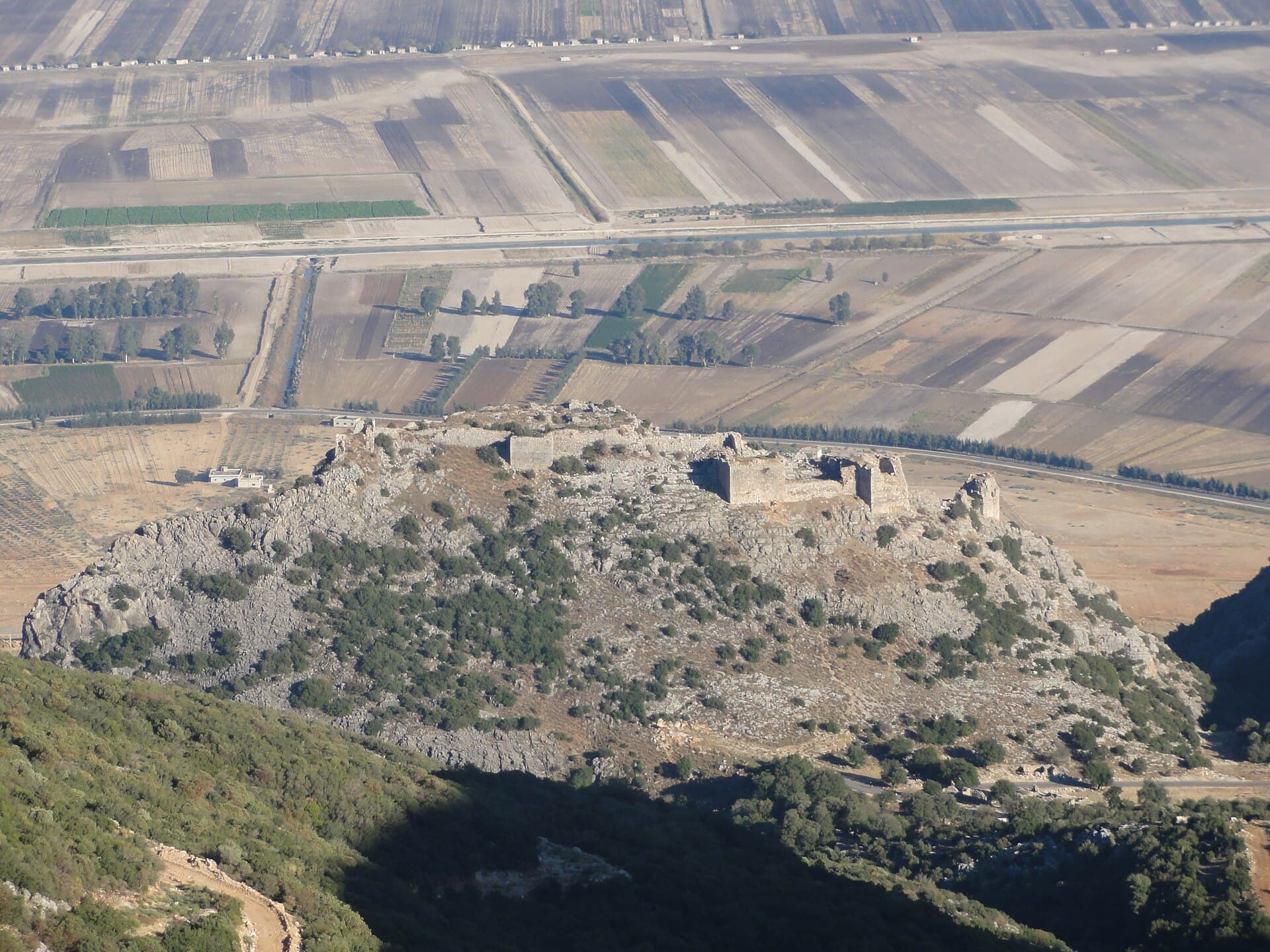
To the northwest lies Apamea, a Hellenistic city with a colonnaded street close to two kilometres long. To the northeast, out in the steppe, are the banded brick and basalt buildings of Qasr Ibn Wardan. To the west, at the foot of the mountains, Masyaf Castle. All three are done from Hama and back.
When to go
April–May and September–October. Whether the wheels turn depends on the flow: when the river drops some of them stand still, and that is usually late summer.
Getting there
45 kilometres north of Homs and about 210 kilometres north of Damascus on the M5; about 150 kilometres south of Aleppo.
Highlights
- The norias and the aqueduct on the Orontes
- The eighteenth-century Azm Palace
- The colonnaded street of Apamea to the northwest
- Qasr Ibn Wardan out in the steppe
- Masyaf Castle on its rock to the west
Where to stay
Stay by the river. Hama is small and walkable, and a place near the wheels, the aqueduct and the Azm Palace puts the whole city within walking distance. The groan of the norias carries at night — peace to some, noise to others; if you are a light sleeper ask for a room a street back from the water. Hama is the best base in central Syria: Apamea, Qasr Ibn Wardan and Masyaf are all done from here and back, so two nights save you hours on the road.