Bulgur
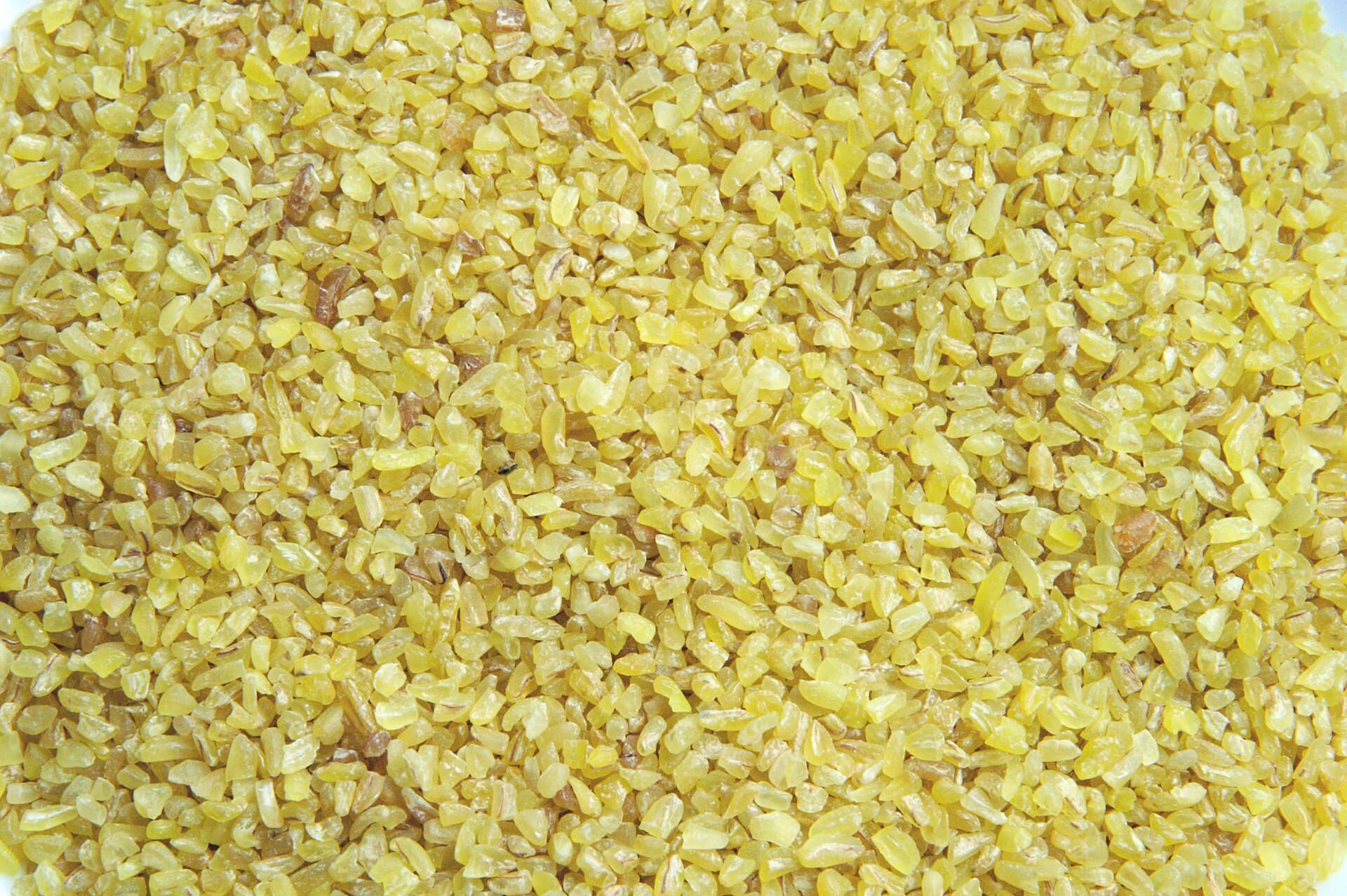
Wheat boiled, dried on a roof, hulled and cracked. In the Syrian pantry it stands where rice stands, and kibbeh, tabbouleh and kishk all rest on this grain.
- Where to eat it
- By weight at the spice merchants, coarse and fine kept apart; on the table inside kibbeh, tabbouleh, burghul bi dfeen and kishk.
- Price
- Variable — ask the price by weight at the stall
- When it is eaten
- Late summer, the weeks when the wheat is boiled and dried on the roofs
Bulgur is not one process but four laid end to end. The wheat is boiled, dried in the sun on a roof, hulled, and finally cracked either coarse or fine. Four steps, no more. They are what separate it from the grains beside it in the pantry. It occupies the place rice occupies elsewhere, and it is the most used grain in Syrian cooking.
How it differs from freekeh and jarish
All three are wheat, and the difference is in the handling. Freekeh is cut while the grain is still green and set alight in the field. Jarish is cracked without being boiled at all. Bulgur is boiled and dried before it is cracked, which means the starch inside is already cooked and the grain softens quickly in the pot.
Coarse or fine
The market keeps two sacks, and the dish decides which one you want. Coarse bulgur goes into pilaf and into the pounded dishes, and the grains stay separate. Fine bulgur goes into the shell of kibbeh and into tabbouleh; in both it only needs to soak and swell. No boiling. Buy the wrong grade and there is no rescuing the plate — tabbouleh made with the coarse kind clumps like dough.
The argument with rice
A saying runs through Syria: honour belongs to rice, and bulgur hanged itself. It sounds like a joke and describes the hierarchy of the table accurately — rice pilaf for guests, bulgur in the everyday pot. That order has begun to reverse in recent years. Bulgur stayed cheaper, and its share of the weekly table has grown.
Where to buy it
By weight at the spice merchants, coarse and fine in separate sacks. The colour runs from yellow to brown; the brown kind keeps part of the hull and cooks firmer. It is dry and light. It travels in a suitcase. Households that make kishk start from the same grain: bulgur kneaded with yoghurt and dried becomes kishk.
Tips
- Say coarse or fine; tabbouleh made with the coarse kind clumps
- Fine bulgur needs no boiling, only soaking until it swells
- The brown kind keeps part of the hull and cooks firmer
- Dry and light — one of the few things that travels well in a suitcase
Transparency
- How this was chosen
- Two kinds of record live here: the dish itself, and the place that serves it. Both are chosen and written by hand; ranking is not for sale and there are no sponsored entries. If a price range is not known for certain, it says so. Venues that serve alcohol are not listed on this site at all.
- Facts checked
- September 2026
- Last updated
- September 15, 2026