Hummus
Chickpeas, tahini, lemon and garlic. In Damascus hummus is not an evening dip but a morning plate, and the hummus and ful shops are built around that hour.
- Where to eat it
- At the hummus and ful shops of old Damascus from early morning until midday. Restaurants also serve it as a mezze plate in the evening.
- Price
- Variable — ask the price of a plate when you order
- When it is eaten
- Between 08:00 and midday
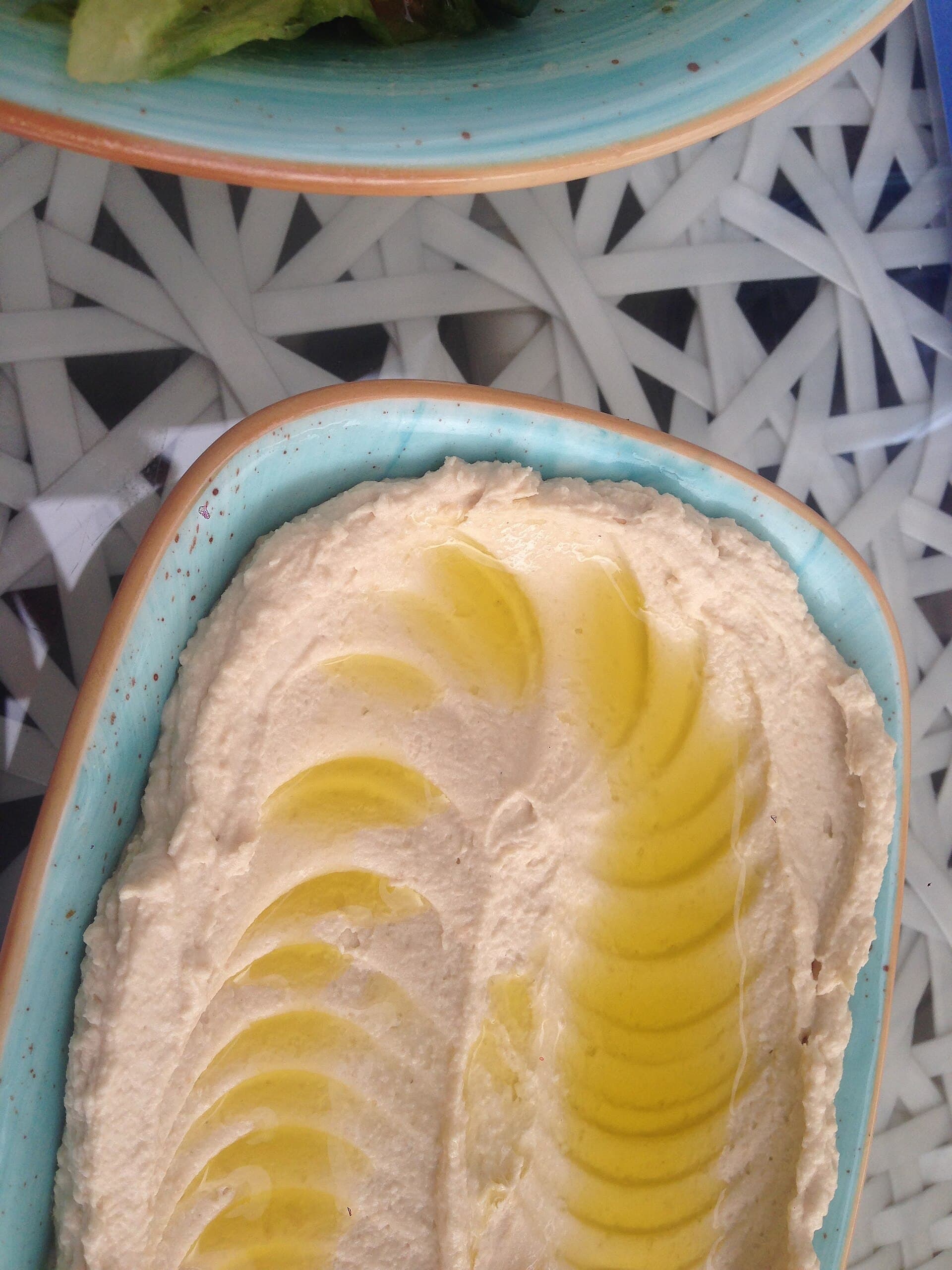
Four ingredients and one technique: boil the chickpeas long enough for the skins to loosen, then let the tahini down slowly with lemon. A well is pressed into the surface for olive oil, with a few whole chickpeas and sumac or paprika at the rim. In Damascus this plate is not an evening dip; it is the morning counter of the hummus and ful shops.
Where it comes from
The earliest written record of a dish that pairs chickpeas with tahini appears in a 13th-century cookbook attributed to Ibn al-Adim, a historian of Aleppo. The full name states the recipe: hummus bi tahina, chickpeas with tahini. In Arabic hummus on its own simply means chickpeas; without tahini you are talking about a pulse, not a plate.
How it is eaten in Damascus
In the morning. The shops open early, the pot bottoms out around midday, and the plate comes off long before the sign comes down. Ful, pickles, spring onions, mint and hot bread arrive with it; tea is ordered separately. There is also a version topped with minced lamb and pine nuts fried in butter, usually priced apart.
What msabbaha is
The second plate on the same counter. Here the chickpeas are left whole rather than crushed, sitting in tahini and olive oil — the name comes from sabaha, to swim. The Damascene version takes melted butter, pomegranate molasses or lemon, and toasted pine nuts or pistachios. Writing in 1960, Zafir al-Qasimi recorded that the city’s hummus shops sold hummus bi tahina, msabbaha and taskiyeh side by side. The line-up has not changed.
How it differs from Lebanon and Turkey
The ingredient list is nearly identical and the ownership argument is loud. The real difference is the clock. In Turkey hummus is an evening mezze, served warm with butter around Antakya. In Damascus it is eaten at first light, and what arrives beside it adds up to breakfast. Same plate, different table.
Tips
- Go in the morning; most hummus shops take this plate off by the afternoon
- Ask for msabbaha if you want the chickpeas whole, hummus bi tahina if crushed
- One plate feeds two; order ful and hot bread alongside
- The meat version is priced separately — ask before it arrives
Transparency
- How this was chosen
- Two kinds of record live here: the dish itself, and the place that serves it. Both are chosen and written by hand; ranking is not for sale and there are no sponsored entries. If a price range is not known for certain, it says so. Venues that serve alcohol are not listed on this site at all.
- Facts checked
- August 2026
- Last updated
- September 15, 2026