The Syrian Christian Fasting Table
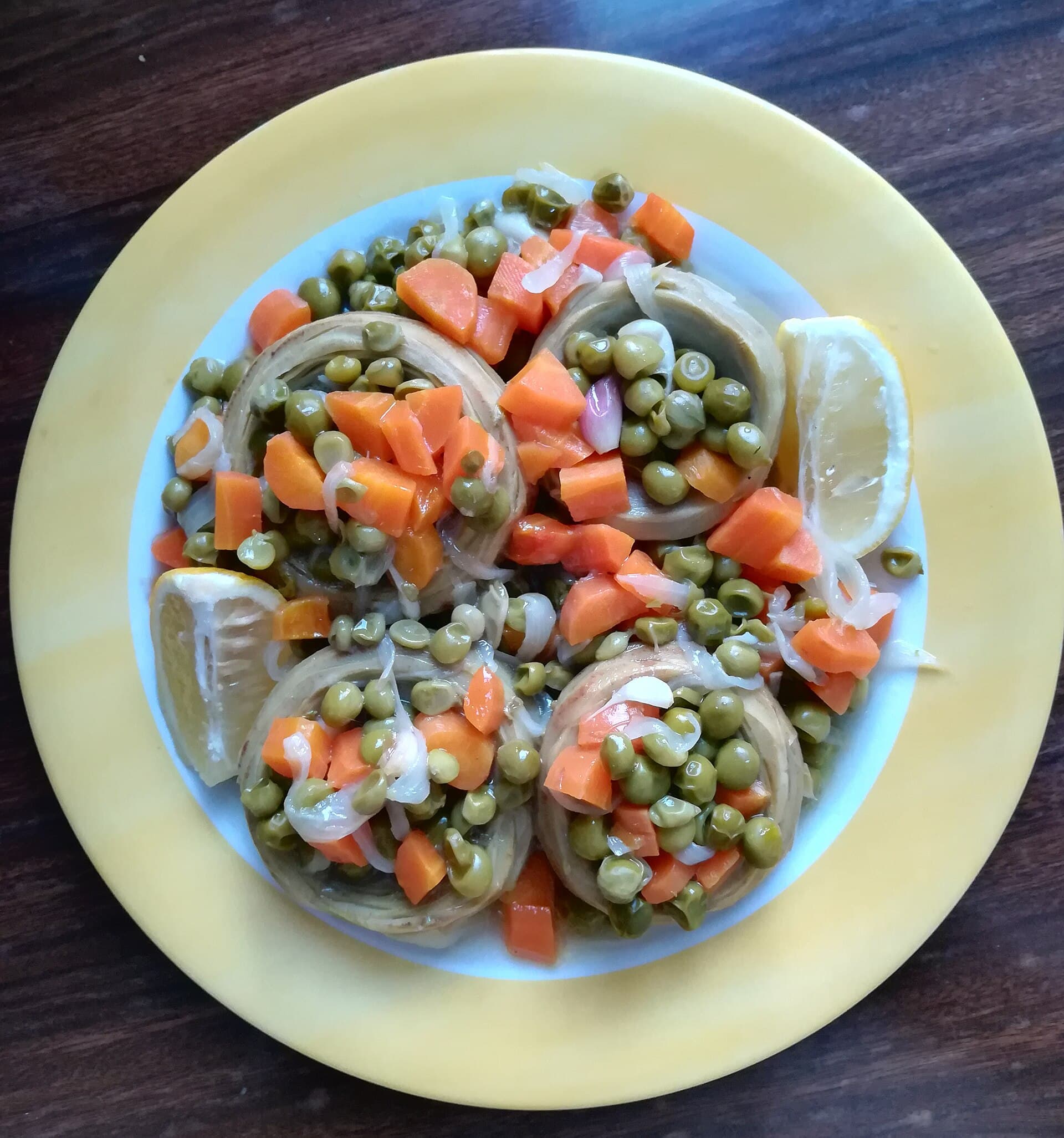
On fasting days meat, dairy and eggs leave the table and fish stays. Built on legumes and olive oil, this kitchen has its own name in Syria: the siyami kitchen.
- Where to eat it
- At home and monastery tables in the Valley of the Christians, Homs, Maaloula and Saidnaya during the fasting weeks. In the same season city restaurants carry more meatless lines.
- Price
- Variable — nothing is sold at a home or monastery table; in a restaurant, ask the price of a plate
- When it is eaten
- The weeks of Great Lent and Holy Week, before Easter
In Syria, Christian cooking goes by a name of its own: the siyami kitchen, the fasting kitchen. It is not a separate list of recipes but a way of laying a table that one restriction produced. On fasting days meat, dairy and eggs come off; the table is built on legumes and olive oil. One detail matters on the ground. In the rule of the Syriac Orthodox Church, fish, seafood and honey are not part of the fast. So on the coast and in the Valley of the Christians the table is far from narrow.
What is on the table
The fixtures: fatteh, falafel, ful, hummus, vine leaves rolled in olive oil, fattoush and tabbouleh. Each of these has its own entry on this site; what brings them to the same table is this calendar. In northern Syria the list takes in rishta, bulgur with tomato, mallow leaves in olive oil and rabi’iyeh. The sweets acknowledge the fast too: balouza, mushabbak, burma, walnut qatayef and khabisa made with grape molasses — not one of them contains dairy.
What comes off, and on which days
Great Lent is commonly called the forty days; the Syriac Orthodox Church counts it, with Holy Week, as seven weeks. Abstinence in the sense of going without food is not practised on Saturdays and Sundays. Beyond Great Lent there are Wednesdays and Fridays all year and the three days of the Fast of Nineveh. Then the August days of the Fast of the Virgin, and the fast that begins on 15 December and runs to Christmas. In other words, the fasting season is not one season.
Good Friday and the sorrowful kibbeh
In Syriac communities the dish of Good Friday is the sorrowful kibbeh: a kibbeh that is hollow, with no meat in it. The story behind the name rests on Christians who were pressed to break the fast and made something that looked like meat from the outside. The church treats this as folk tradition rather than doctrine, and the detail changes with whoever is telling it.
What it means for a visitor
If your visit falls in Great Lent, the table you meet around the Valley of the Christians, Maaloula, Saidnaya and Deir Mar Musa will have no meat on it. That is not a shortfall. It is the rule of that week. Easter falls on different dates for different churches, so the day the fast begins shifts as well. If you are planning a monastery visit, asking about the calendar in advance settles two things at once: the day the door is open, and what will be on the table.
Tips
- Before planning a monastery visit, ask which calendar the fast is being kept by
- Do not ask for a yoghurt dish in a fasting week; even if it is on the menu it will not come out
- Fish and seafood are not part of the fast; on the coast the table is built around them
- If you want a sweet, ask for one without dairy — balouza and molasses khabisa are in that group
Transparency
- How this was chosen
- Two kinds of record live here: the dish itself, and the place that serves it. Both are chosen and written by hand; ranking is not for sale and there are no sponsored entries. If a price range is not known for certain, it says so. Venues that serve alcohol are not listed on this site at all.
- Facts checked
- September 2026
- Last updated
- September 15, 2026