Olives and olive oil
The layer beneath the Syrian table. In bowls at breakfast, poured over the mezze, used for the cooking; Idlib and the Aleppo countryside are the groves.
- Where to eat it
- In bowls on every breakfast table, and poured over hummus, labneh and mutabbal in the mezze. Sold by weight at spice merchants, with oil in tins and bottles.
- Price
- Variable — ask the price per kilo and per tin at the counter
- When it is eaten
- The autumn weeks when the new oil comes out; the harvest is in autumn too
Not a dish but the layer under the dishes. Green and black olives arrive in separate bowls at breakfast; oil is poured into the middle of labneh, over hummus, along the edge of mutabbal, and the cooking fat is usually the same oil. Take olive oil out of a Syrian table and half the plates go with it.
Where it grows
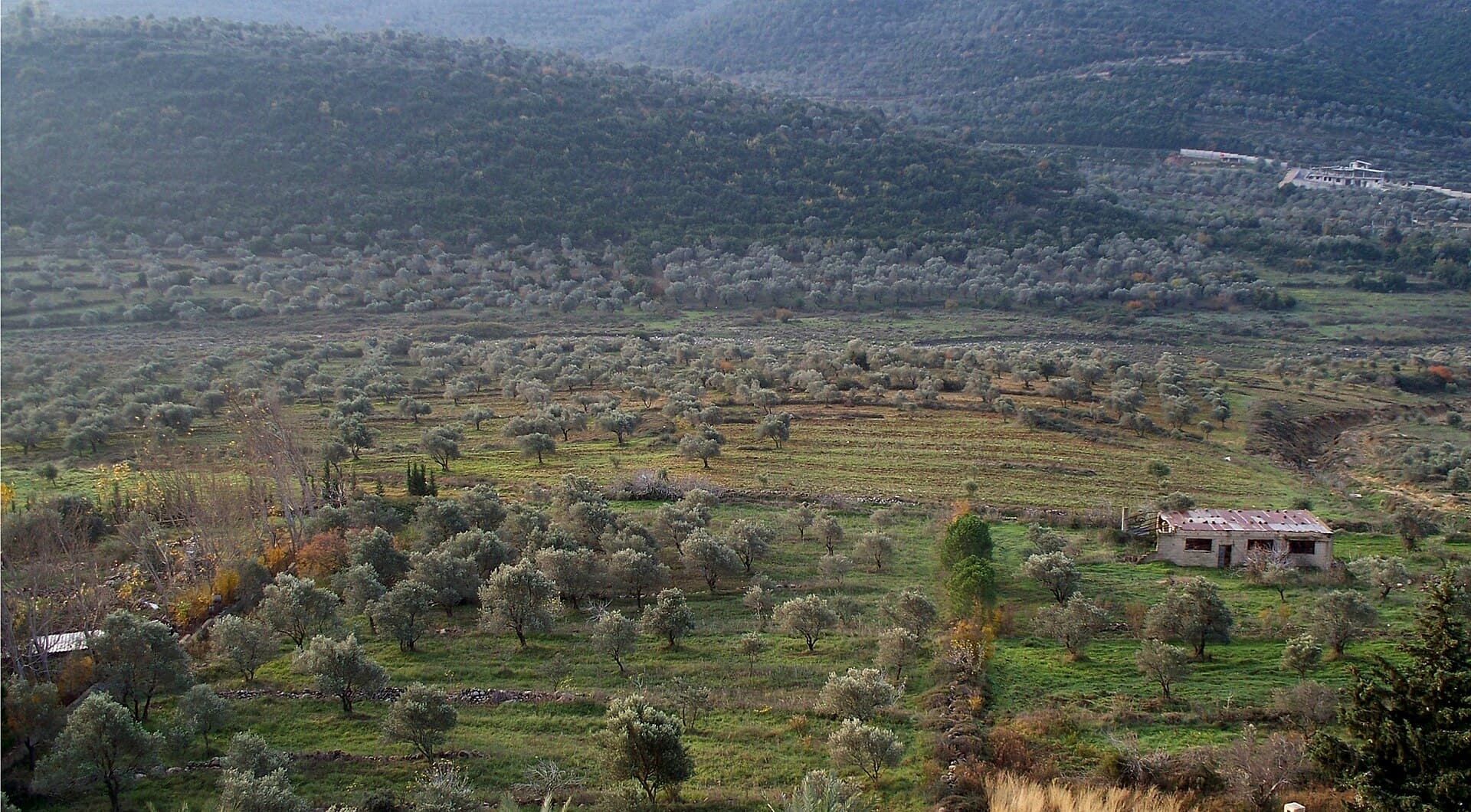
This is one of the landscapes counted as a homeland of the olive tree. There are around 90 million olive trees in the country and roughly 720 presses working the crop. Aleppo governorate is first in area and tree count, with Idlib immediately behind it, then Tartus, Latakia and Daraa. For a long time the trade was confined to the north and west — Aleppo, Idlib, Latakia, Tartus — and it spread across the rest of the country over the last two decades. Most of it is rainfed, growing on stony ground where little else takes.
Idlib’s own variety
Sourani is an olive variety spread mainly through Idlib and named with the region. Syria holds a long list of local varieties separated out over centuries: some for oil, some for curing, some for both.
Harvest and table
The harvest falls in autumn. Branches are raked and stripped by hand and the fruit goes to the press in sacks; pressing within a few days of picking is treated as the measure of quality. On the table, the weeks when the new oil comes out are a season of their own: the oil is green and faintly bitter, and it is eaten poured over bread with za’atar.
The soap connection
This oil is one of the two raw materials of Aleppo soap; the other is laurel berry oil. The soap is boiled for days in vats set into the ground, cut, stamped and left to dry for months. The craft of Aleppo ghar soap entered the UNESCO intangible cultural heritage list in 2024. So the olive leaves the country by way of the washbasin as well as the table.
Where a traveller buys it
Spice merchants and dried goods sellers in the market sell olives by weight and oil in tins and bottles. Buy the oil in glass and bag it separately against leaks; soap causes no trouble beyond its weight and is the easiest gift to carry.
Tips
- New oil is green and slightly bitter; that is freshness, not a fault
- Buy oil in glass and bag it separately in the case — tins cause trouble on flights
- Taste before you buy olives; every counter cures differently and the salt varies
- Aleppo soap is made from the same oil and travels far more easily than the oil
Transparency
- How this was chosen
- Two kinds of record live here: the dish itself, and the place that serves it. Both are chosen and written by hand; ranking is not for sale and there are no sponsored entries. If a price range is not known for certain, it says so. Venues that serve alcohol are not listed on this site at all.
- Facts checked
- August 2026
- Last updated
- September 15, 2026