Idlib
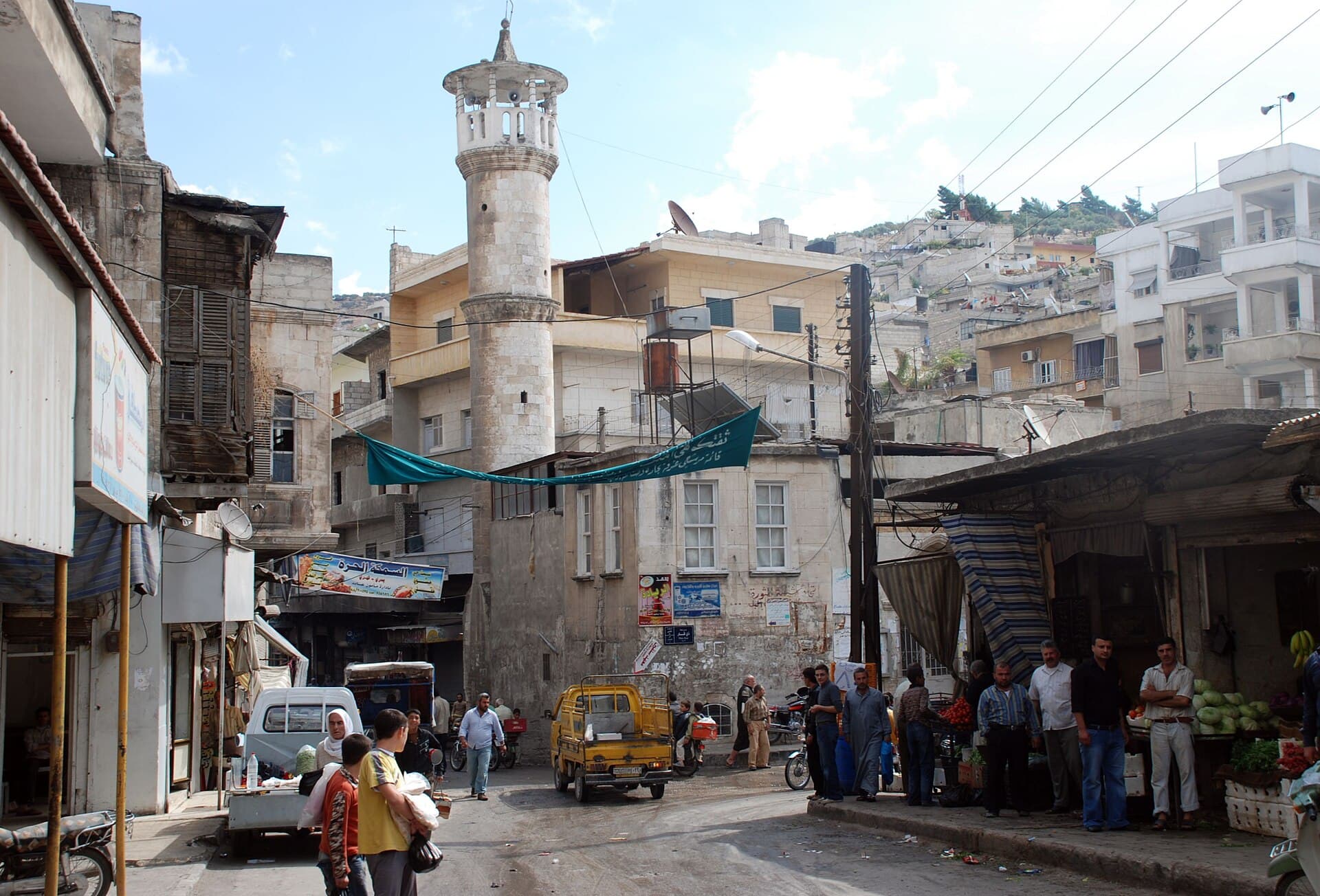
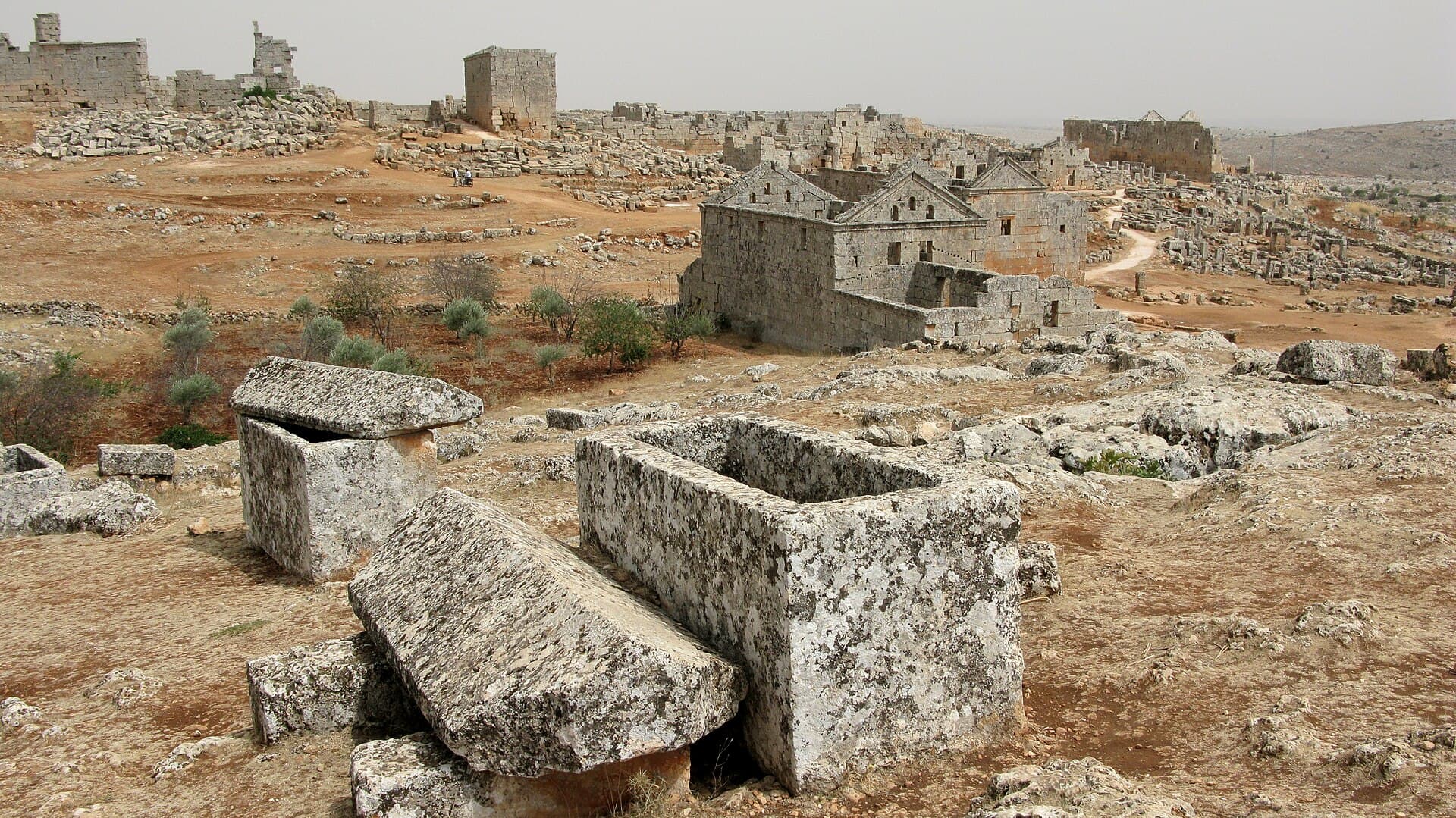
The way in to the Dead Cities: Byzantine villages built and abandoned between the 1st and 7th centuries. The city itself was damaged in the war; this page says so.
- Best season
- March–May, October–November
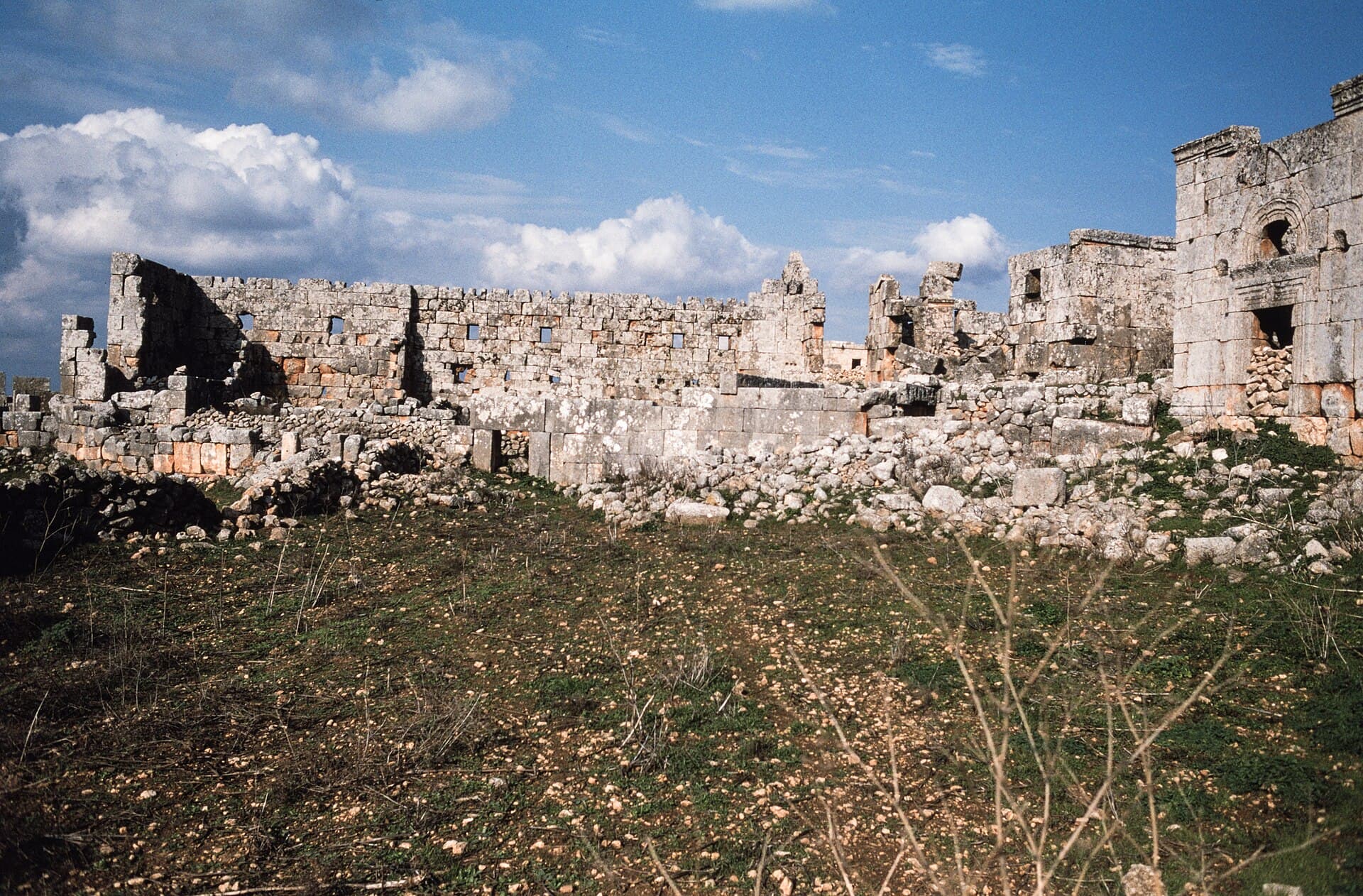
You do not come to Idlib for the city. You come for what is around it. On the slopes between the Jebel Zawiya and the Jebel al-A’la stand hundreds of villages built between the 1st and 7th centuries and then abandoned, most of them still walled and roofless. They grew rich on olive oil and wine, sold onto the road between Antioch and Apamea; when that road went, the villages emptied, and because nobody built on top of them they stand today as they were left. UNESCO listed them in 2011 as the Ancient Villages of Northern Syria and moved them to the List of World Heritage in Danger in 2013.
Where to start
In the south. Al-Bara and Serjilla in the Jebel Zawiya are 7 kilometres apart and fit into one morning: one is the largest of these sites, the other the best preserved. In the afternoon you cross north to the Jebel al-A’la for the church at Qalb Lozeh. Those three make a day, and on their own they answer what Idlib promises.
In the city
This needs saying plainly: the centre of Idlib was inside the fighting between 2011 and 2024 and was damaged by airstrikes. There is no old-city fabric to walk, no run of souqs, no line of monuments. The one thing in the city itself worth a visit is the museum: the Idlib Museum holds cuneiform tablets from the royal archive of Ebla. It closed in 2013, was looted and bombed, reopened two of its galleries in 2018, and took further damage in the earthquakes of 2023. Ask whether it is open before you go — that is the most current thing this page can verify.
Around it
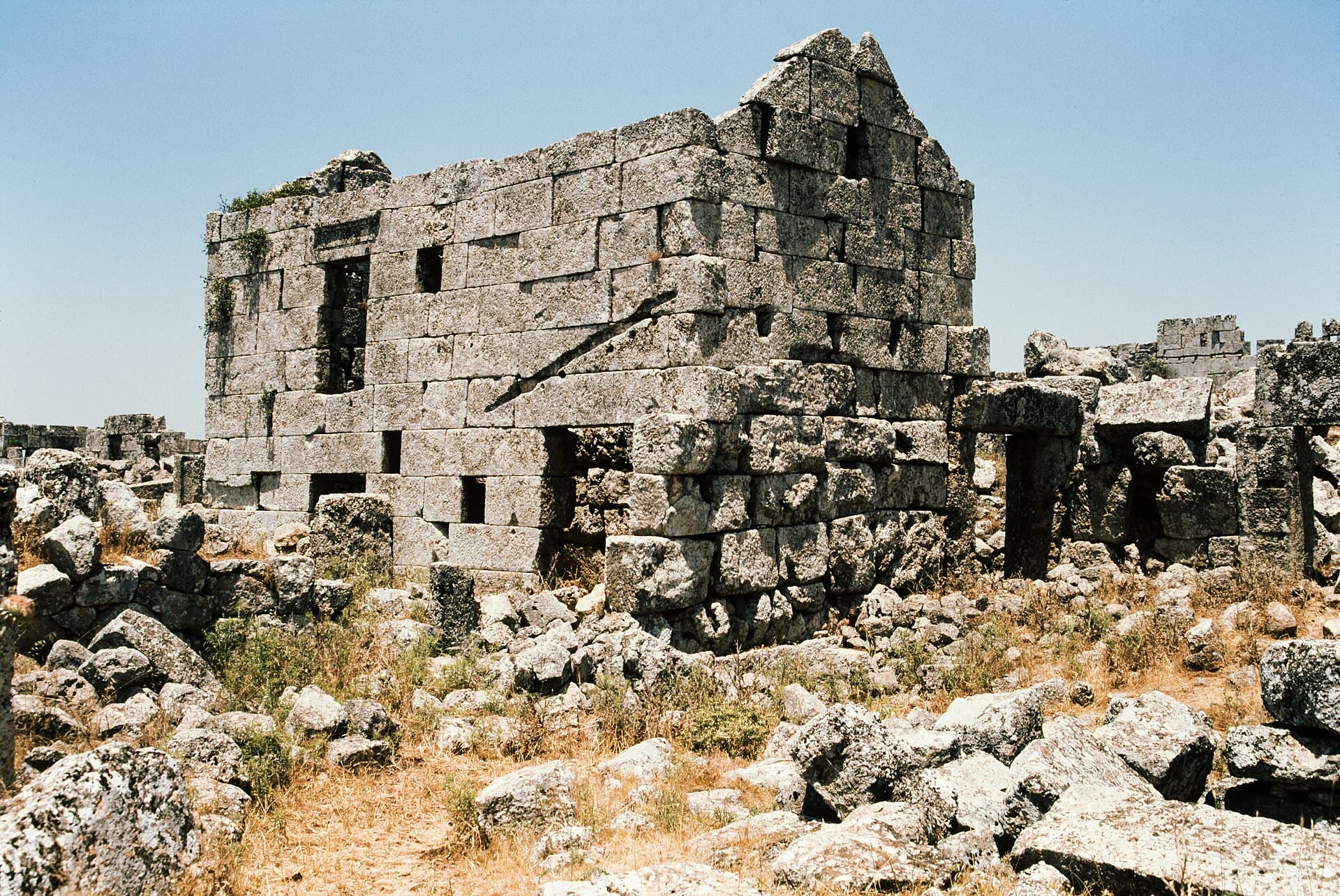
The bath house and the andron at Serjilla are the most complete pair of buildings anywhere in the Dead Cities. Al-Bara lies in olive groves and is known for its two pyramid-roofed tombs; the modern village stands on top of the ancient town. The west front of the church at Qalb Lozeh carries two towers with a wide arch between them, a face that appears in Europe four centuries later. To the north-east, over the governorate line, is the monastery of Saint Simeon; we file it under Aleppo, but it is the same stone and the same century.
When to go
March to May, and October to November. Spring is a reason in itself: the ground between the stones turns green, and the ruins never look better than they do then. Summer is hot and none of these sites has shade. In winter the dirt roads turn to mud after rain and are hard going without a high vehicle.
Getting there
70 kilometres south-west of Aleppo, about an hour by car. From Damascus it is roughly five hours on the M5. No public transport runs to the ruins; you hire a car and driver in Idlib or Aleppo, and the driver needs to know the area, because the sites are not signposted.
Take care
Unexploded ordnance is a reported hazard in rural Idlib. Stay on roads and paths, keep out of fields and out of collapsed buildings, and do not touch metal lying on the ground. Some of the Dead Cities sheltered displaced families during the war; do not walk into a structure someone is still living in. For the state of the area in any given week, ask a local guide or a hotel owner; for the country as a whole, read your own foreign ministry’s advice.
Highlights
- The bath house at Serjilla and the andron facing it: roofless, walls complete
- The pyramid-roofed tombs of al-Bara, standing in olive groves
- The twin-towered west front of the church at Qalb Lozeh
- Olive presses on an industrial scale among the ruins
- The Ebla tablets in the Idlib Museum — if it is open
Where to stay
Accommodation for visitors in Idlib city is limited and what exists changes from month to month. In practice most visitors stay in Aleppo and come out to the Dead Cities for the day: the drive is about an hour and the evening return is easy. If you do stay in Idlib, arrange it in advance and carry cash. There is no accommodation in the villages beside the ruins, and you do not want to be driving back on dirt roads in the dark.