Tarator, the tahini sauce
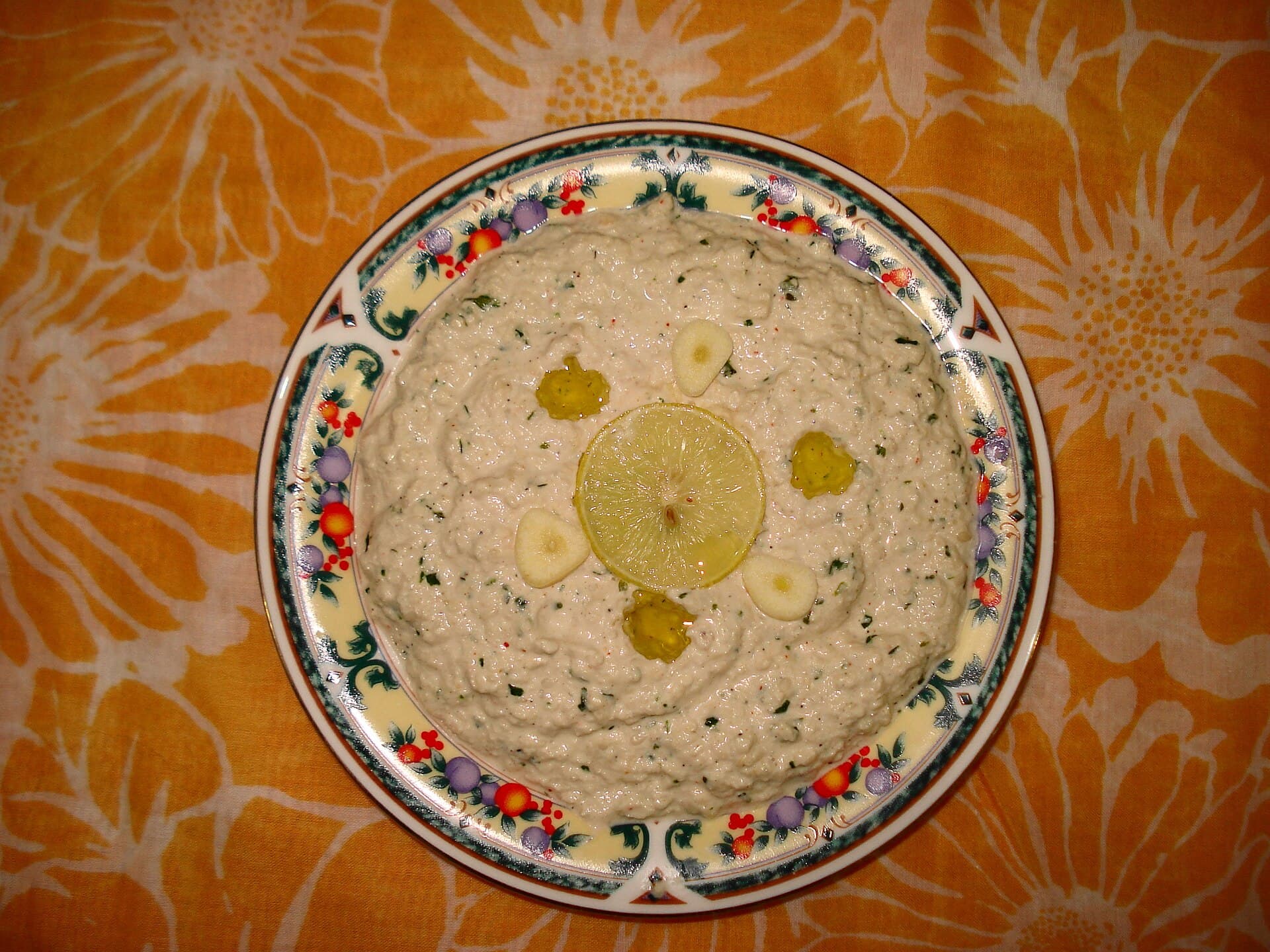
Tahini, lemon, garlic, salt and water, nothing else. The pale sauce that comes in its own bowl beside grilled fish on the coast and fried cauliflower inland.
- Where to eat it
- In Tartus and Latakia, in a separate bowl beside grilled and fried fish; inland with fried cauliflower, falafel and shawarma.
- Price
- Comes with the plate; ask the price if you want a bowl of your own
- When it is eaten
- Lunch and dinner, at a fish or fried-food table
Order fish on the Syrian coast and a small separate bowl comes with the plate: inside it is a pale sauce made from tahini and sharpened with lemon. It is called tarator. Four things are enough — tahini, lemon juice, garlic, salt — and the fifth is water.
What the water does
The whole trick of the recipe is water. Add lemon and water to tahini and the mixture first thickens and seizes like stone; an inexperienced kitchen thinks it has failed here and gives up. Keep stirring and the sauce opens out and turns to cream. The body depends on where you stop that turn.
Where the body goes
The sauce is set to suit the plate it is going to. Beside fish it goes out loose, pourable. For fried cauliflower and for falafel it is kept thick, because it has to stay on the mouthful. In the fridge it stiffens within hours, so it is loosened again with a spoon of water before serving.
Where you meet it
On the coast, in Tartus and Latakia, it sits in its own bowl beside grilled and fried fish; it is also the base of the sauce in samke harra, the spiced fish plate. Inland it comes with fried cauliflower, with falafel and with shawarma. The version with chopped parsley is called tarator bi bakdounis and shows up flecked with green.
Not the walnut tarator
In Turkish, tarator usually means a walnut sauce, and that is where the confusion starts. Syrian tarator is built on tahini, not walnuts. There is a northern version with walnuts added, and the two kitchens meet at exactly that point; but the sauce that arrives in a bowl on the coast has no walnuts in it.
Tips
- If it comes out thick, a spoon of water opens it; sauce left in the fridge stiffens
- The garlic is raw; take it from the tip if you do not want it over the fish
- The parsley version is not a separate sauce, only the green state of the same recipe
- Walnut tarator is another thing; the bowl on the coast is the tahini one
Transparency
- How this was chosen
- Two kinds of record live here: the dish itself, and the place that serves it. Both are chosen and written by hand; ranking is not for sale and there are no sponsored entries. If a price range is not known for certain, it says so. Venues that serve alcohol are not listed on this site at all.
- Facts checked
- September 2026
- Last updated
- September 15, 2026