Yabrak
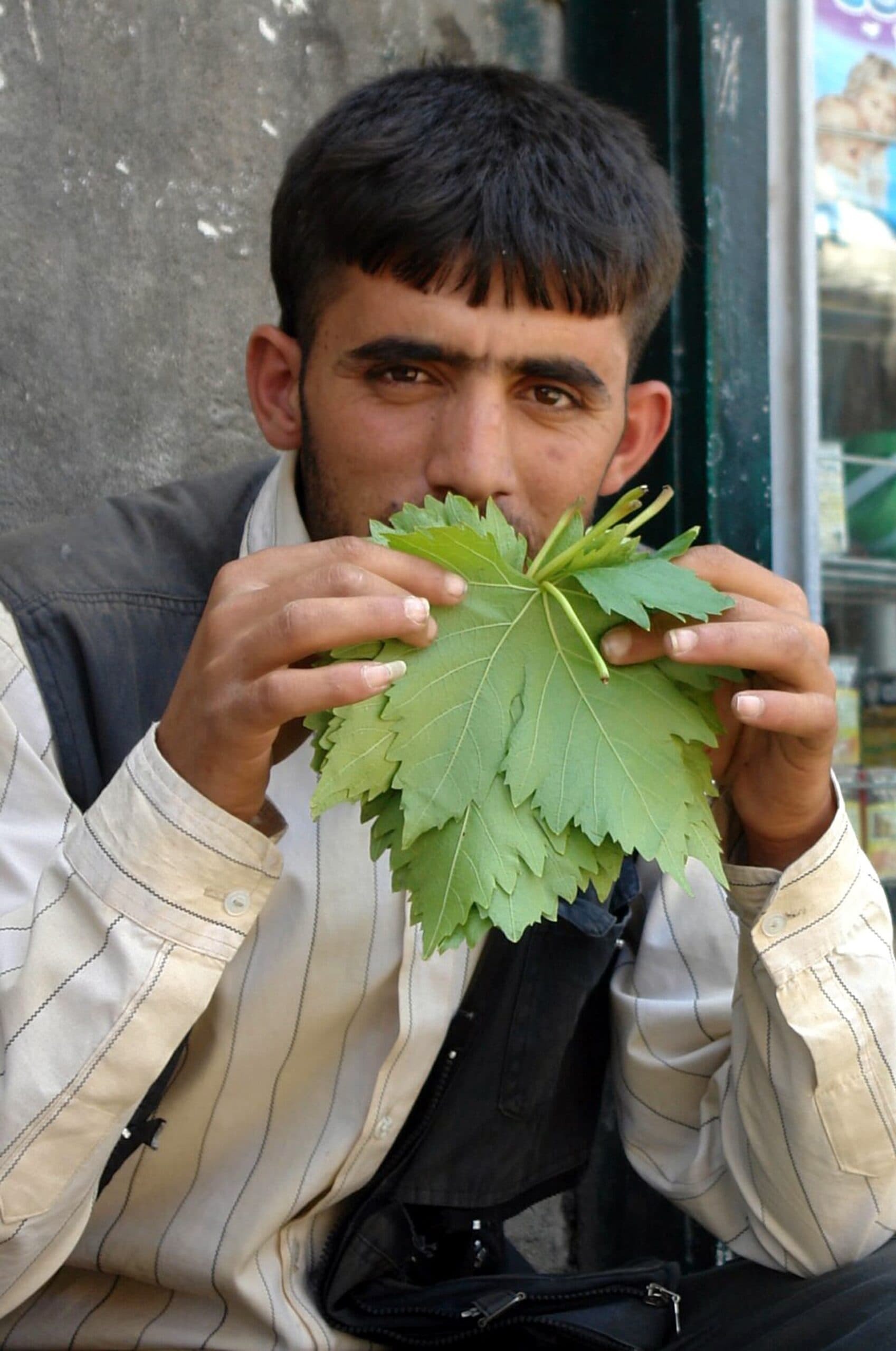
Vine leaves rolled to the thickness of a finger. With meat it is a hot main course; without, it is cold and heavy with olive oil. Two plates, two names.
- Where to eat it
- Yalanji is on almost every mezze table, among the cold plates. The meat version is at home-style pot kitchens, usually at lunch.
- Price
- Variable — ask whether it is the cold mezze or the hot plate, then the price
- When it is eaten
- Fresh leaves in April and May, brined the rest of the year. Meat version at lunch, yalanji in summer
A vine leaf is opened flat on the palm, a line of filling is laid across it, the sides are folded in and it is rolled to the thickness of a finger. In Damascus the plate is called yabrak. What is rolled here is the leaf; hollowed vegetables belong under mahshi on this site, and the two are counted as separate dishes in the kitchen as well as at the table.
With meat and without
Two different dishes from the same leaf. The meat version is filled with rice and minced lamb and cooked in the pot over lamb ribs with lemon and garlic; it is served hot, with yoghurt alongside. The other is called yalanji, a word that came into Arabic from Turkish and means the false one. It is filled with rice, tomato, onion, parsley and a lot of olive oil, then left to cool and served as a mezze plate. If you do not say which one you want, there is no telling which arrives.
Where the leaf comes from
In spring it is fresh. The young leaves picked from the vines in April and May are thin and soft and need only a short blanching; they are sold in bunches in the Damascus markets. The rest of the year the leaf is brined: saltier, thicker, rinsed before use. The difference shows on the plate, because a fresh leaf falls apart in the mouth.
When it is eaten
The meat version is lunch and party food; it takes hours to prepare and counts as one of the heavier jobs in a household kitchen. Yalanji belongs to summer and to the mezze round, cold. During Ramadan and the holidays both appear on the same table.
Where a traveller finds it
Yalanji is on almost every mezze table, among the cold plates. The meat version is easier to find at home-style pot kitchens at lunchtime and is often absent from evening menus. In the market, fresh leaves in season and brined leaves all year.
Tips
- Say whether you want it with meat or as yalanji; they are two plates
- Yalanji arrives cold and is meant to — do not wait for it to warm
- Ask for yoghurt with the meat version; it balances the lemon in the pot
- If you are after hollowed courgette or aubergine, ask for mahshi instead
Transparency
- How this was chosen
- Two kinds of record live here: the dish itself, and the place that serves it. Both are chosen and written by hand; ranking is not for sale and there are no sponsored entries. If a price range is not known for certain, it says so. Venues that serve alcohol are not listed on this site at all.
- Facts checked
- August 2026
- Last updated
- September 15, 2026