The desert and the Euphrates: Palmyra, Raqqa, Deir ez-Zor
Long distances, thin infrastructure, information that ages fast. The stops on this line, the kilometres between them, and what to arrange for water, fuel and safety.
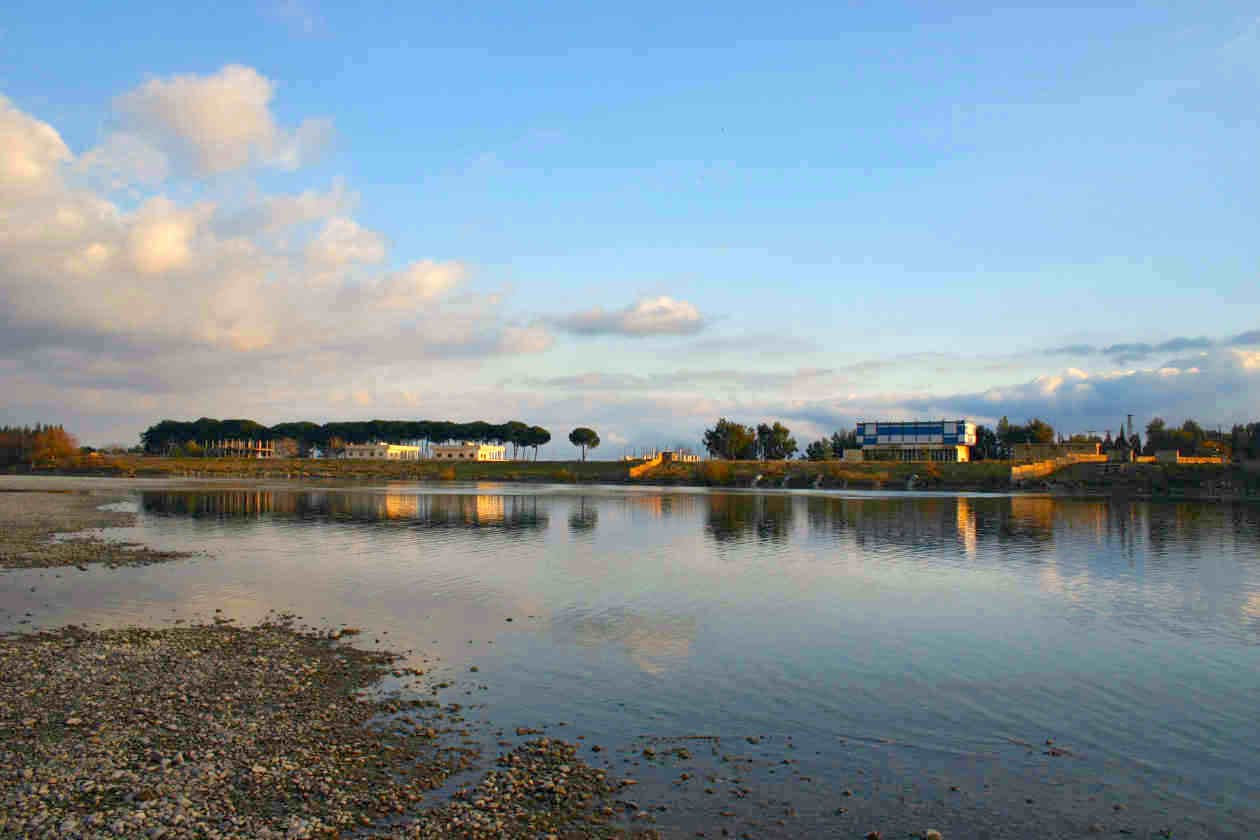
The east of Syria is not travelled the way the west is. In the west the stops are an hour apart and every city has a hotel. In the east there are a hundred kilometres of steppe between two stops, no fuel or water in between, and accommodation that changes month by month. This page is for planning around that difference. The stops are places with records on this site; none of them is dressed up and none of them is hidden.
What this line assumes
A car with a driver who knows the region. Most of the sites are unsigned and some are tens of kilometres from the nearest town. The second assumption is daylight: you do not drive the intercity roads at night, and the return is planned for before dark. The third is season — March to May and October to November are the only sensible windows, because high summer is not a time to be out in the countryside and none of these sites has any shade.
Palmyra: the western end of the line
It is 250 kilometres from Damascus, across desert. There and back barely fits into a day, so Palmyra wants a day of its own. One full day covers the colonnaded street, the Roman theatre and the tower tombs; the order is set by the desert light rather than by distance, and midday is dead time. With a second day the programme changes: the spring that made the oasis, the army camp, the valley of tombs and the Umayyad palace out in the steppe — two days and 245 kilometres.
The desert palaces: the two Qasr al-Hayr
They are twins and both were built for the Umayyad caliph Hisham. Qasr al-Hayr al-Sharqi is 115 kilometres northeast of Palmyra: two large rectangular courts, decorative towers, a bath and a water channel brought in from kilometres away. The road crosses open steppe with no fuel or water on it, so set out with a full tank.
Qasr al-Hayr al-Gharbi lies the other way, 75 kilometres southwest of Palmyra. The oddity here is that the palace facade is not on site: it was rebuilt as the doorway of the National Museum in Damascus. If you went into the museum there, you have already seen this building. What stayed behind is the water cistern, the bath and the khan, with stone foundations marking where mud-brick walls once ran. The site is unmarked and you need a driver who knows the road.
Raqqa: half a day, not two
Do not plan Raqqa as a multi-day stop. The four buildings still standing inside the Abbasid wall fit into a single morning: Bab Baghdad, the vaulted halls of Qasr al-Banat, the brick minaret left from the Great Mosque, and the museum. The walk between them does not reach 2500 metres. Go in the morning, when the brick runs red.
Treat the city not as a destination in itself but as the stop in the middle of the Euphrates line: 200 kilometres from Aleppo and over four hours, then 190 kilometres to Deir ez-Zor. What the war left of the city is set out on its own page and is not repeated here. What matters for planning is this: the rubble is still there, unexploded ordnance is a reported risk, and accommodation is not what it was before the war.
Deir ez-Zor and south along the river
Deir ez-Zor is 450 kilometres from Damascus and the largest city in eastern Syria. It wants two days and they do two different jobs. Day one is the city. The museum comes in the morning: most of the cuneiform tablets from Mari are there, along with a full-scale copy of the painted facade of the palace of Zimri-Lim. The afternoon goes to the riverbank and the four piers left from the suspension bridge.
Day two goes southeast. Dura Europos is 95 kilometres out, on a bluff 90 metres above the Euphrates: a synagogue, one of the earliest known house churches and a temple of Mithras all came out of the same city. Mari is at 125 kilometres; the two sit on the same road with 30 kilometres between them, so they join into one day. The order matters: the museum first, the mound second. Sections of mud brick say nothing to an eye that has not seen the museum. Both sites were looted after 2011 and the ground is pitted; stay on the paths and keep away from the edges of the holes.
Halabiye: the other direction, its own half day
Halabiye is 57 kilometres northwest of Deir ez-Zor, that is, the opposite way from Dura and Mari. Do not squeeze it into the same day. This is the walled city holding the gorge where the Euphrates narrows between basalt outcrops: the north and south walls are largely sound and the praetorium set into the wall is still standing. Walking the site takes two hours, with another half hour to climb to the citadel. Go late in the day; at sunset the hill in the western corner stands against the river.
Water, fuel, a bed
All three are on your own account. Water and a hat belong with you at every stop, because nothing is sold at any of them and none of them has shade. Fill the tank on the way out of town; there are no stations on the steppe branches and the one that exists may be dry. Accommodation in the east is not what it was before the war and the options change month by month: arrange your room in advance, carry cash, and confirm by phone that the place is open before you arrive. There is nowhere to sleep beside the excavation sites; Dura Europos and Mari are visited and left the same day.
Safety and permission, plainly
This page says what this region is. It does not say that it is safe today. Official travel advice sits at its highest level for the whole of Syria, and the northeast is named separately within it. Attacks are reported in rural areas, and unexploded ordnance and improvised devices are a reported risk. At the excavation sites the presence of a guard and the state of entry permission both vary; ask locally how a site stands that day, because news read from a distance will not tell you. Do not take photographs at checkpoints, keep your passport to hand, and do not take intercity roads at night. The decision is yours, your insurer’s and your consulate’s.
Tips
- Fill the tank leaving town; there are no stations on the steppe branches
- Carry water and a hat at every stop; nothing is sold and there is no shade
- Plan Raqqa as half a day, the stop in the middle of the Euphrates line
- In Deir ez-Zor see the museum first, then go out to the mounds
- Do not drive intercity roads at night; plan the return before dark
Transparency
- How this was chosen
- This page carries the fastest-ageing information on the site: visa rules, exchange rates, border crossings and SIM prices change several times a year. The verification date above says when the facts were last put through their sources; for anything later, check your own foreign ministry travel advice and a Syrian consulate. No figure that is not known for certain is written here.
- Facts checked
- September 2026
- Last updated
- September 15, 2026