Young Syria and everyday life
Parks, the seafront, mate, wedding convoys, match nights and campus streets. Reading the half of the country that no monument covers, and what not to ask.
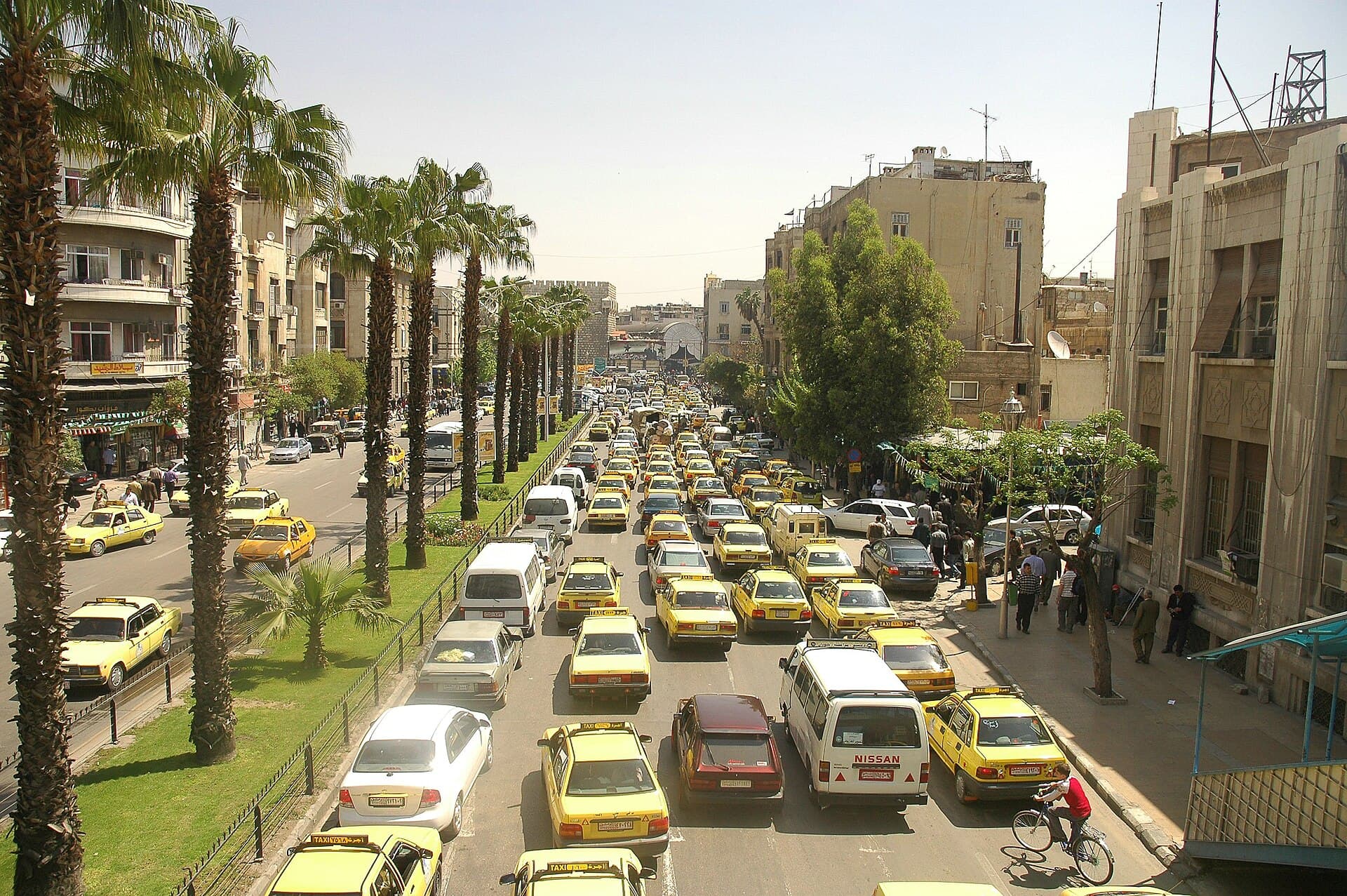
A programme of monuments shows you half of Syria. The other half is out on the street: families walking the seafront at dusk, students on a park bench, a wedding convoy going past on its horn, roads emptying on the night of a match. This page is about that fabric. You do not need a ticket for it, only attention.
The shape of the day
Mornings start early. Bakery queues, shutters going up in the souq and school runs all happen between seven and nine. In the interior the streets empty in the midday heat; shops stay open but nobody is walking. The real crowd comes out in the late afternoon, once the sun has softened, and stays out late.
That rhythm should shape your day too. If you want to see a quarter as it actually is, go after five in the afternoon. The same street looks dead at noon and full in the evening, and can easily be taken for two different places.
Parks and the seafront
The shared living room of a Syrian city is the park. The public park in Aleppo opened in 1949, just north of Saadallah al-Jabiri Square, over the bed of the Queiq, spread between the Jamiliyah and Aziziyah quarters. In Damascus the largest is Tishreen Park beside Umayyad Square; before the war its annual flower show drew hundreds of thousands of people.
On the coast the corniche does the work of the park. In Latakia and Tartus the evening walk runs along the water: families, ice cream, benches in a line facing the sea. From the Tartus corniche you can watch the boats to Arwad Island and the cargo ships waiting offshore. If you have half an hour and want to see a city’s daily life, this is where to spend it.
Sitting is the event
In Syria sitting is an activity in itself. The coffee house is the best-known form of it and has its own page on this site. On the coast and in the Druze areas mate does the same job: a gourd, a metal straw, one cup passed around. Walk into a house in Latakia and you will be offered mate before tea.
What they share is that the sitting lasts for hours and has no purpose. If you are pulled into it, do not hurry. Inventing an early reason to leave reads as turning down the invitation itself.
You hear a wedding before you see it
The convoy goes past on its horn, drums and a pipe start up at the door, and a procession moves into the house or the hall to clapping. This is the zaffe, and the bride and groom walk in the middle of it.
Stopping to watch is fine. Photographing is a different matter. A wide frame of the crowd is usually taken well, a close shot of the women is not. If you are unsure, do not take it.
Football
The national league was founded in 1966 and is played today by 16 clubs; it was reorganised under a new name in 2025. One of the oldest clubs is Al-Karamah of Homs, founded in 1928, which plays at the Khaled Ibn al-Walid Stadium — the same name as the city’s best-known mosque.
The national side is nicknamed the Eagles of Qasioun, after the mountain above Damascus. After December 2024 the shirt changed from red to green. On match nights the coffee houses fill and the street goes quiet, which makes those two hours the quickest way for a visitor to read a city.
Universities and a young country
The oldest university is in Damascus. It was founded in 1923 as the Syrian University, out of a merger between the medical school and the institute of law, and took its present name once the University of Aleppo opened. Aleppo is the second largest. Tishreen University in Latakia opened in 1971 and now has more than seventy thousand students. The university in Homs was established in 1979 and took the city’s name in 2024.
These campuses set the texture of their cities. The streets around them are full of cheap food, print shops, stationers and coffee places, and are often the youngest and liveliest part of town. Prices are lowest there too.
Phones, social media and the wish to talk to you
Young Syrians are on their phones and heavy users of social media; where to eat, what is open and what has happened all arrive that way. The effect on a visitor is direct. Someone helping you will show you the place on a screen rather than describe the turning.
Interest in foreigners is high and usually well meant. You will be asked where you are from, how you find your own country, and how you find Syria. If you do not want a long conversation, a smile and a thank you are enough. Nobody presses.
What is asked and what is not
Openings are easy: where you are from, food, football, coffee, the city itself. Those work anywhere.
The ones to leave alone are equally clear: politics, religious community, the war years, and who went where. People raise these themselves if they want to, and then you listen. When they do not, asking turns the guest into a weight on the host.
Tips
- To see a quarter as it is, go after five in the afternoon; at noon it looks dead
- With half an hour to spare, take the corniche or the city park
- Sit in a coffee house on a match night; it is the fastest read of a city
- At a wedding a wide frame is fine, a close shot of the women is not
- Home, food and football open any conversation; politics and religion do not
Transparency
- How this was chosen
- This page carries the fastest-ageing information on the site: visa rules, exchange rates, border crossings and SIM prices change several times a year. The verification date above says when the facts were last put through their sources; for anything later, check your own foreign ministry travel advice and a Syrian consulate. No figure that is not known for certain is written here.
- Facts checked
- September 2026
- Last updated
- September 15, 2026