Light and timing: what to photograph when
Which building looks right at which hour: courtyards in the morning, west fronts late, shafts in the souq, two windows in the desert. Drawn from the site’s records.
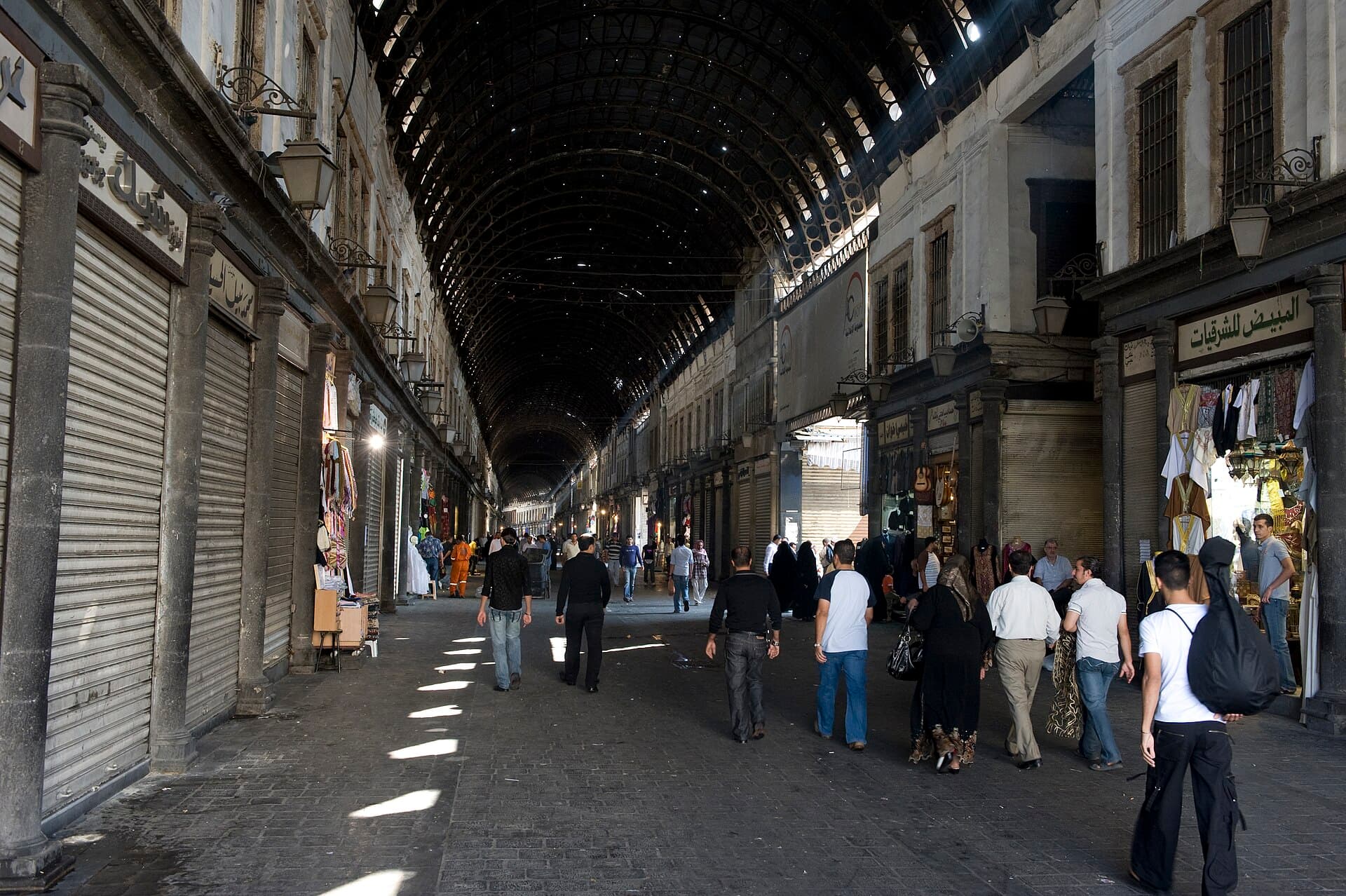
The hour is the variable that decides a photograph in Syria. Not the light. The hour. The same courtyard looks like two different buildings between morning and noon, and in most interiors artificial light is either absent or goes out with the power. This page is not about what you may photograph but about what looks right when; permissions and prohibitions have their own page on this site.
The one rule: know which way the building faces
Before you go, find out which way the facade faces; the hour follows from that. An east-facing front takes the morning, a west-facing one the late afternoon. In Damascus, Bab Kisan faces southeast and takes its light head-on in the morning. The west fronts of Tartus Cathedral and the church at Qalb Lozeh light up late in the day. Arrive at the wrong hour and the facade sits in its own shadow, with the texture of the stone flattened out.
Courtyards in the morning, facades late
In a courtyard building, morning means shade and midday means flat white light. In Damascus the Azm Palace, Beit Nizam and Maktab Anbar are photographed in the morning while the courtyards are shaded; the pool is still at that hour too. In the courtyard of the Great Mosque of Aleppo, early morning leaves the stone pattern without shadow and the square empty. The Umayyad Mosque wants early morning or late afternoon; in between, the white stone of the courtyard throws the light back and the exposure goes wrong. In small courtyards the problem is not light but crowding — the Nur al-Din Bimaristan and the Bimaristan Arghuni fill up with a few people.
Low light in the souq
Covered markets are the hardest light in the country. The gap between a shaft falling through a hole in the vault and the shadow beside it runs to several stops, and an automatic setting picks something in between. In Damascus the shafts in the Hamidiyeh Souq steepen in the afternoon. In Aleppo the Medina Souq is both cool and thin in the morning, as the shops open. In Khan As’ad Pasha the light drops straight down through the openings of the domes, and the hour for that is around noon. Flash helps in none of the three: expose for the shaft and let the shadow be shadow.
Two extreme hours in the desert
At Palmyra the day splits in two. In the first two hours of the morning the stone has not warmed and the columns throw long shadows; that is the hour for the ruins and the Temple of Bel. Roughly between 11:00 and 15:00 the light comes from overhead, everything flattens, and there is no shade left in the desert. Sit that hour out. An hour before sunset the second window opens: the Great Colonnade turns orange, and from the castle the oasis and the desert sit in one frame.
Evening on the coast and at the lake
On the coast the light turns towards the sea in the afternoon. Marqab Castle is at its best as the sea light swings west. Lake Qattinah takes the late afternoon, with the light coming from the west. At Homs Citadel the side light after mid-afternoon brings out the stone facing; at midday the same mound reads as a plain heap of earth. Here too the hour is everything. On Mount Qasioun the late afternoon and the night are two different views: one gives you the shape of the city, the other its lights.
How the stone takes the light
The material moves the hour. The black basalt of Bosra flattens under midday light; go to the theatre in the first hour of the morning, when the tiers are shaded and the stone is still cool. The sandstone of Qalaat Yahmur turns red late in the day. The banded black and white front of the Khalid ibn al-Walid Mosque reads in the morning, with the garden empty and the facade unshadowed. Tilework asks for the opposite: the tiles of the Darwish Pasha Mosque give their colours truly when they sit in afternoon shade, while the tiled minaret of the Sinan Pasha Mosque takes the sun before noon.
Season and winter light
Spring and autumn give two things at once: a low angle and clean air. In the Dead Cities, al-Bara and Serjilla are photographed on a spring morning, while there is still green between the stones. The norias of Hama turn while the river runs high, which again means spring; in the dry season the wheel stops and the subject of the photograph goes with it. Winter days are short but the light stays low all day, so there is usable side light even at noon. In summer, count on losing part of the afternoon before you start.
A short list by the hour
Early morning: Bab Sharqi, the Great Mosque of Aleppo, the Medina Souq, the ruins of Palmyra, Mar Semaan. Morning: courtyards and museum gardens. Midday: the coloured glass of the Hejaz Station striking the hall, the vertical light in Khan As’ad Pasha. Afternoon: the shafts in Hamidiyeh, the inner courtyard of Krak des Chevaliers, Marqab Castle. Late afternoon: the columns of Apamea, Tartus Cathedral, Qalaat Najm, Homs Citadel. Evening: Lake Qattinah, Qasioun, and the Bab al-Faraj clock tower once it is lit.
What to carry
Spare batteries and a power bank, because the power is cut on a schedule and the charging window at a hotel is narrow. A second memory card: do not keep the backup in one place. A wide lens covers the souq and the courtyards, a long one the castles and the hilltops. Tripods need a separate permit in many places and the person at the door decides what counts as professional, so learn the settings that let you work handheld. Dust gets everywhere in the desert and on the mounds; change lenses inside the car. Anything more is weight.
Tips
- Find out which way the facade faces; the hour follows from that
- Shoot courtyards in the morning; midday white stone wrecks the exposure
- In the souq expose for the shaft and let the shadow be shadow
- At Palmyra: the first two hours of the day and the hour before sunset
- Carry spare batteries; power is cut on a schedule and charging time is short
Transparency
- How this was chosen
- This page carries the fastest-ageing information on the site: visa rules, exchange rates, border crossings and SIM prices change several times a year. The verification date above says when the facts were last put through their sources; for anything later, check your own foreign ministry travel advice and a Syrian consulate. No figure that is not known for certain is written here.
- Facts checked
- August 2026
- Last updated
- September 15, 2026