A reading list and the archives for Syria
Photographic archives, DGAM, medieval memoirs and public domain travel writing. What each archive gives, which one is closed to commercial use, and the addresses.
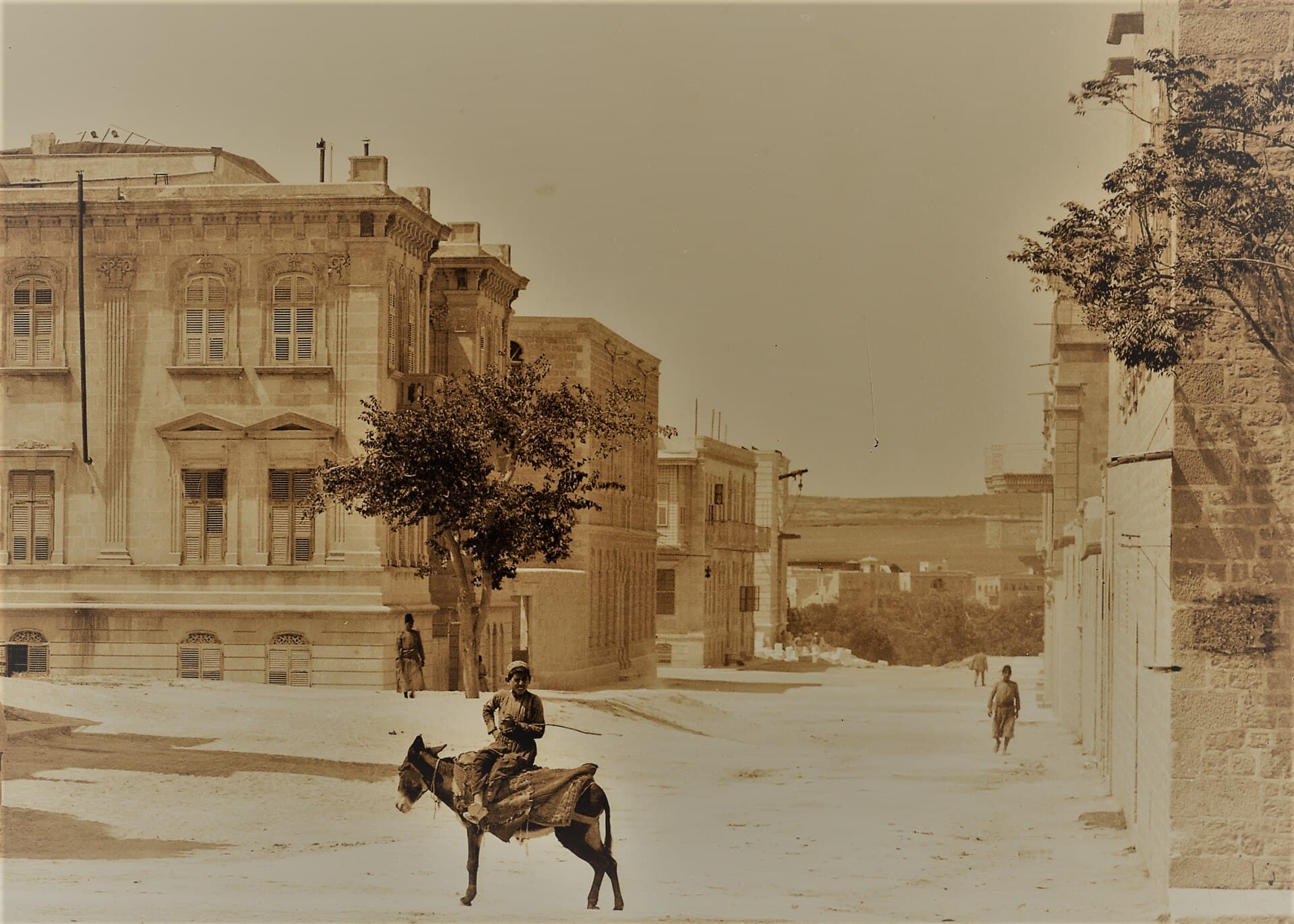
For anyone who wants to read about Syria the problem is not a shortage of sources but how scattered they are. The photographs are at a university, the field drawings in a publication, the excavation reports with a state body, the travel accounts in a scanning archive. This page says what is where and which of it is genuinely open.
Every address in the list was tested before publication. Links do move, though. If one fails, searching by the name of the archive is usually enough.
Photographic archives
The largest academic set is Manar al-Athar at Oxford. It covers the lands of Rome that later came under Islamic rule: Syria and Palestine, Egypt, North Africa. There are over ninety thousand high-resolution photographs and the labels are written in Arabic and English side by side. For Syria at the level of individual buildings this is the richest collection there is.
Next comes the Syrian Heritage Archive, a joint project of the Museum of Islamic Art in Berlin and the German Archaeological Institute, used through a map and a gallery. For the Byzantine period the image collections at Dumbarton Oaks are a separate resource. Satellite monitoring of sites at risk sits in the EAMENA database.
For early photography there is the Matson collection at the Library of Congress. The frames taken by the American Colony photographers are in the public domain, and some of the images on this site come from there.
The licence question
An archive being open does not make it usable. All of Manar al-Athar is under a Creative Commons Attribution-NonCommercial-ShareAlike licence, which closes it to commercial use. This site counts as a commercial publication, so it cannot take a single frame from there. The collection being the richest Syrian set does not change that.
The usable side is this: public domain images, CC0, CC BY and CC BY-SA. That is why the Syria categories on Wikimedia Commons are in practice the working source. Read the licence line before you use a frame. Freely downloadable and open to commercial use are not the same thing.
DGAM and the field bodies
Syria’s own body is the Directorate-General of Antiquities and Museums, DGAM for short. Excavation announcements, museum news and site conditions come out through it, and the site runs in Arabic and English. If you want to know whether a museum is open or whether work is going on at a site, that is the first place to look.
Two more alongside it: EAMENA tracks sites under threat, and the Syrian Heritage Archive digitises pre-war documentation. Read together, the three give you what a building was, what happened to it, and where it stands now.
Two books from the medieval period
The first is the memoir of Usama ibn Munqidh, a knight, poet and diplomat from the Munqidh family who held Shayzar. The Kitab al-I’tibar, written as a gift for Saladin, tells the story of ninety years alongside the Crusaders from the inside. Shayzar Castle, covered on this site, was his family’s castle, and he died in Damascus in 1188. No other text looks this closely at daily life in medieval Syria.
The second is the travel account of Ibn Jubayr. The Andalusian writer entered Damascus in 1184 and wrote up the city, the Umayyad Mosque and the souq in detail. The text was so good that the scribe who compiled Ibn Battuta’s travels lifted the Damascus section straight from it. It is the best description you can have in hand while looking at the Umayyad Mosque.
Travel writing and field publication
The earliest scholarly book on Aleppo comes from a physician. Alexander Russell went to Aleppo in 1740 as doctor to the English merchant colony, stayed fourteen years, and published his natural history of the city in 1756: the town, the climate, the people, the diseases and the plague. The first description of the golden hamster is in the second edition of that book.
The book that drew the Dead Cities is de Vogue’s Syrie centrale of 1865. Most of the churches you now see on the Idlib plateau were measured and drawn there for the first time. The same work continues in the publications of the Princeton expedition to Syria, and both carry detail that is no longer on the ground.
Gertrude Bell rode north out of Damascus in 1905 and published what she saw in 1907 as Syria: The Desert and the Sown. The book is illustrated and the text is written with an archaeologist’s eye. Bell’s photographs, letters and diaries are gathered in a separate archive at Newcastle University; it holds over twelve thousand records and is inscribed on the UNESCO Memory of the World register.
Where to read them
Manar al-Athar: manar.arch.ox.ac.uk. Syrian Heritage Archive: syrian-heritage.org. EAMENA: eamena.org. DGAM: dgam.gov.sy. Dumbarton Oaks: doaks.org. The Matson collection: on loc.gov, under the collection name.
The Gertrude Bell archive: gertrudebell.ncl.ac.uk. Scans of the public domain books are on archive.org: Bell’s book under in.ernet.dli.2015.165953, Russell’s Aleppo under naturalhistoryof01russ, de Vogue’s Syrie centrale under syriecentralearc02vogu, Ibn Jubayr’s travels under travelsofibnjuba05ibnjuoft and the Princeton expedition publications under publicationsdivi01prinuoft. For freely licensed images, commons.wikimedia.org.
Crediting
Three things go with a photograph when you use it: the photographer’s name, the name of the archive, the licence. Manar al-Athar requires this explicitly and Commons gives you the ready line on every file page. A missing credit is the commonest reason an image later has to be dropped.
And keep a record: save the page address and the licence with every file you download. If you cannot answer where it came from six months later, the image becomes unusable.
Tips
- Manar al-Athar is the richest Syrian set but is NonCommercial, so this site cannot use it
- For images open to commercial use, Wikimedia Commons is in practice the only working source
- To find out whether a museum is open or work is under way, check the DGAM site first
- Ibn Jubayr's account of Damascus from 1184 is still the best text for the Umayyad Mosque
- Save the page address and the licence with every file you download
Transparency
- How this was chosen
- This page carries the fastest-ageing information on the site: visa rules, exchange rates, border crossings and SIM prices change several times a year. The verification date above says when the facts were last put through their sources; for anything later, check your own foreign ministry travel advice and a Syrian consulate. No figure that is not known for certain is written here.
- Facts checked
- September 2026
- Last updated
- September 15, 2026