A year in Syria, month by month
What happens where in each month: weather, harvest, holidays, crowds and closed doors. One frame for all twelve months, and which region actually works when.
Three calendars sit on top of each other when you plan a year in Syria. The solar calendar sets the weather and the harvest and does not move. The Hijri calendar carries Ramadan and the two Eids and slips back 11 days every year. The third is the Christian calendar, kept by two different reckonings in this country, so in some years there are two Easters. This page lays all three onto the months.
One warning first: the farming calendar shifts by two or three weeks with altitude — earlier on the coast, later in the mountains — and Hijri dates are fixed only when the crescent is sighted. The festival days below are approximate.
January
Weather. Damascus reaches 13 degrees by day and around zero at night; Aleppo 11, with a day or two of snow every winter; the coast 16, though most of its 760 millimetres of annual rain falls in these months. The light goes around 17:00.
What happens. 1 January is a public holiday. Mountain roads are foggy and slow, which affects the approaches to Krak des Chevaliers and Saladin Castle. Boats to Arwad do not sail in rough seas. In 2028 Ramadan begins on 28 January.
What to do. Old city, souq, bathhouse and museum. When choosing a hotel the question is not the view but the heating: the grid is intermittent and hotels run on generators.
February
Weather. As January, softening towards the end. The coast stays wet.
What happens. Ramadan begins on 8 February in 2027 and on 18 February in 2026. Some restaurants are closed by day and those open work behind a curtain; the souq opens late in the morning and trades until midnight after the fast breaks.
What to do. Vaulted souqs and courtyard buildings. In Aleppo the stone vault of Souq al-Madina is the most useful roof of the month.
March
Weather. The month the desert opens. Palmyra and Qasr Ibn Wardan can be walked all day in March-April and October-November.
What happens. 18 March is Syrian Revolution Day, 21 March is Nowruz and Mother’s Day. Eid al-Fitr falls around 9 March in 2027 and 20-22 March in 2026. Western Easter falls on 28 March in 2027.
What to do. A first run into the desert. Rain is still possible, so keep the plan loose; a closed road is ordinary this month.
April
Weather. One of the two best months of the year: all four climate zones work at once. Cool enough to walk by day, mild enough to sit outside in the evening.
What happens. 17 April is Independence Day. In 2026 Easter falls on two separate days — 5 April in the west, 12 April in the east; in 2028 both fall on 16 April. Around Bab Touma in Damascus and in Maaloula you see the difference directly.
What to do. Castles and ruins while the plain is green. The climb at Qalaat Burzey and the view over the Ghab are at their best now.
May
Weather. April continued; the interior begins to heat up towards the end of the month. The coastal season opens.
What happens. The roses bloom at Mrah in the Damascus countryside and picking starts that week, with the village rose festival on the same days. The practice entered the UNESCO intangible heritage list in 2019. Late in the month freekeh is burned in the Idlib and Aleppo countryside: the wheat is cut while still green and set alight in the field, and the smoke you see from the road is a harvest, not a fire. 1 May is Labour Day. Eid al-Adha falls around 16 May in 2027 and 26-30 May in 2026. Eastern Easter falls on 2 May in 2027.
What to do. If you are in Damascus, spend a day in the countryside. Banks and exchange offices close over the Eid; arrange your cash in advance.
June
Weather. The coast is good, the interior is heating, the desert is closing.
What happens. Apricot season. The apricots of the Ghouta are held to be the source of qamar al-din — the sun-dried purée pressed into sheets — and it is sold by the box in the markets.
What to do. Coast and mountain: Kessab, Saladin Castle, Ugarit. Do not plan Palmyra beyond this month.
July
Weather. 38 degrees in Damascus, 37 in Aleppo, 39 in Palmyra. The coast is cooler but humid, and the nights do not cool down.
What happens. The day splits in two: between 11:00 and 16:00 walking in the open is exhausting and there is no shade in a castle.
What to do. Give the midday hours to courtyards, mosques and vaulted souqs; leave ruins for morning and evening. Palmyra and the eastern desert are not advised this month.
August
Weather. The hardest month of the year. The coast sits at 31 degrees and humid.
What happens. The mouneh season starts: kishk is laid out on the roofs, yoghurt mixed with bulgur and dried in the sun. In Hama the water drops and some of the norias stop turning.
What to do. Stay in the city and push the day to its two ends. Looking at a roof and seeing what is spread on it tells you the date.
September
Weather. The sea is still warm and the rain has not started; the easiest month of the year for the coast. The interior is cooling.
What happens. Kishk drying continues. The desert weather is only just settling.
What to do. The coastal line: Tartus, Amrit, Arwad, Latakia, Jableh. Crossing to the island is easy while the sea is calm.
October
Weather. The second window opens and all four regions work again.
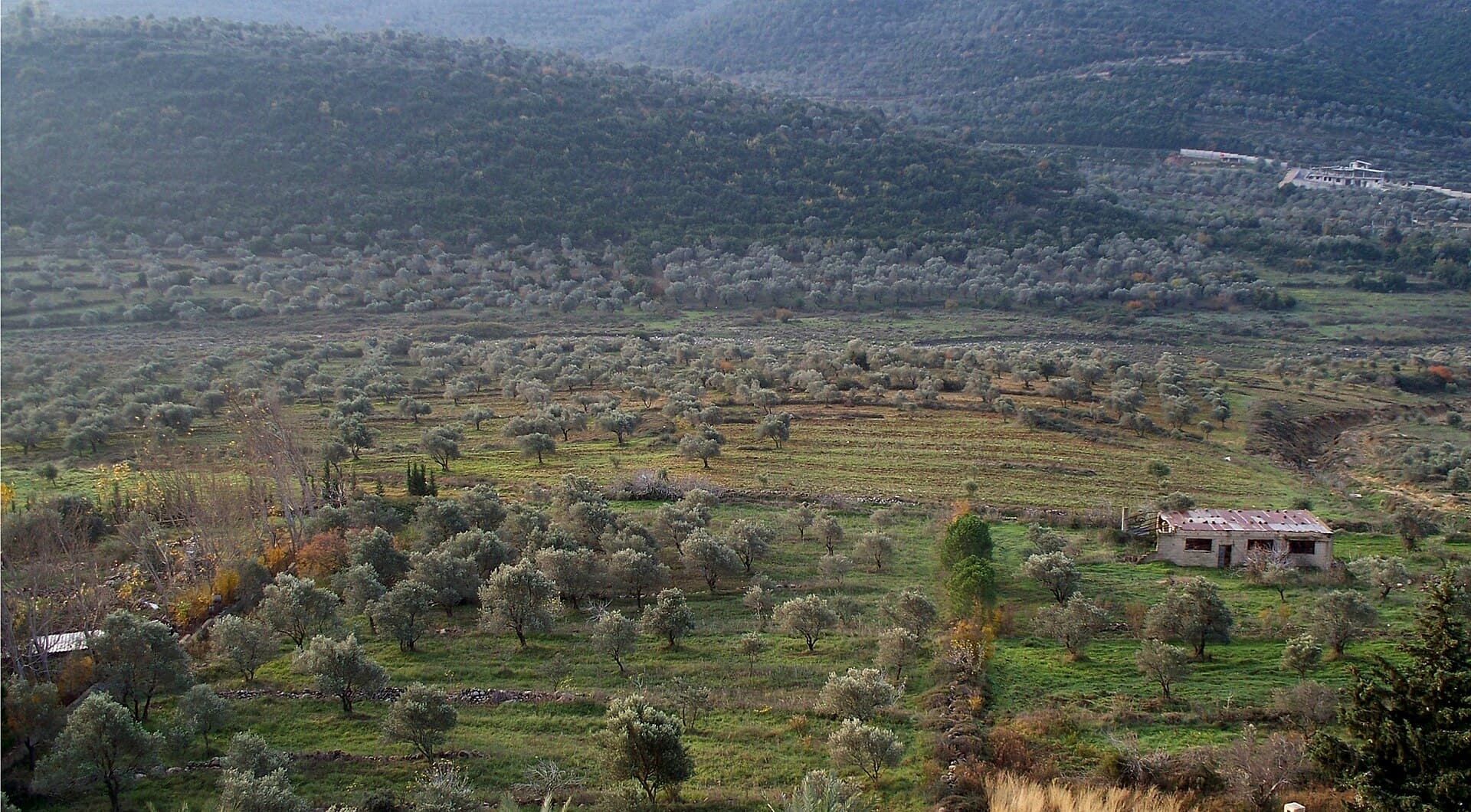
What happens. The olive harvest. Branches are combed and stripped by hand, the crop goes to the press in sacks, and pressing within a few days of picking is the measure of quality. The weeks when the new oil comes out are a season of their own. In the same weeks makdous is cured, tomato paste is spread and pomegranate molasses is boiled down.
What to do. Desert and north: Palmyra, the Dead Cities, Qasr Ibn Wardan. If you pass a working press, stop and ask; you can usually go in.
November
Weather. The last month of the window. Rain increases and the days shorten.
What happens. The olive harvest continues and the presses are running.
What to do. Start day trips to distant points at first light; darkness comes early by the end of November and nobody drives between cities at night.
December
Weather. Winter. The shortest days of the year, and sites go dark early.
What happens. 8 December, Liberation Day, and 25 December, Christmas, are public holidays. Power is intermittent and hotels heat on generators.
What to do. Old city, museum and bathhouse. Snow is a possibility rather than a plan: Damascus sees it every few years, Aleppo for a day or two each winter.
Three things true every month
The weekend is Friday and Saturday, and the working week runs Sunday to Thursday. At Friday midday prayer the souq and the shops close for an hour or two and mosques are shut to visitors. On the first day of an Eid, museums are closed and transport and hotels are full. And the harvest calendar gives no exact day — walking into a coffee house in the region you are heading for and asking is the most dependable source there is.
The short answer
For the whole country, April-May and October-November. For the desert, March-April and October-November. For the coast, May-June and September. The old cities work all year; at midsummer what changes is not the place but the shape of the day.
Tips
- April-May and October-November work across all four climate zones at once
- Smoke seen from the road in late May is a freekeh harvest, not a fire
- The olive presses run in October; if you pass one, stop and ask
- In winter ask a hotel about the generator and heating hours, not the view
- Hijri festivals slip back 11 days a year; take the date from that year's announcement
Transparency
- How this was chosen
- This page carries the fastest-ageing information on the site: visa rules, exchange rates, border crossings and SIM prices change several times a year. The verification date above says when the facts were last put through their sources; for anything later, check your own foreign ministry travel advice and a Syrian consulate. No figure that is not known for certain is written here.
- Facts checked
- September 2026
- Last updated
- September 15, 2026