Railway heritage in Syria: the Hejaz line and the Baghdad railway
Three networks, two track gauges and stations that mostly stand empty. What was built when, what still runs today, and which station is worth the walk.
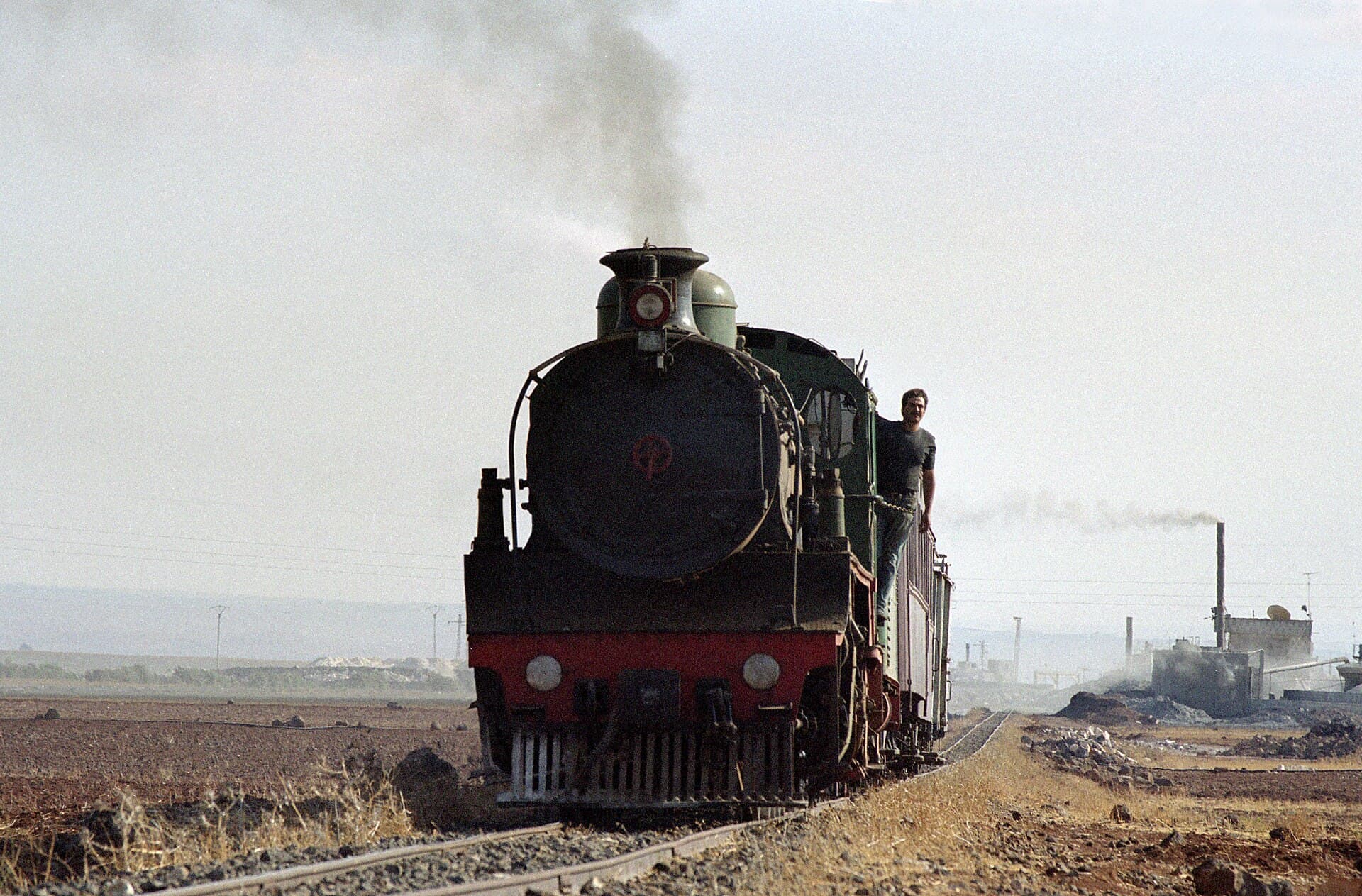
The railway in Syria is not a way of getting around but an inheritance. Most of the lines that once held the country together were laid a century ago, stopped in the first quarter of the twenty-first century, and are now the subject of reopening plans. This page separates what was built when from what a traveller can actually see today.
Three networks, two gauges
There is no single railway here but three networks that never quite fitted together. The first is the narrow line in the south: the Hejaz railway and its branches, laid to a gauge of 1050 millimetres. The second links Damascus to Beirut and to the north; the Damascus to Beirut section opened in 1895 and the stretch over the mountain worked on a rack rail. The third is the Baghdad railway in the north, on broad gauge.
The difference in gauge is not a technical footnote. It shaped the country. A wagon on the narrow southern line cannot run on the broad northern one, so freight and passengers had to change trains. It is the first problem the corridor schemes now under discussion have to solve.
The Hejaz line: rails along the pilgrim road
Work began in 1900 by order of Sultan Abdul Hamid the Second, to move pilgrims off camels and onto trains. The section from Damascus to Deraa was finished in 1903 and the rails reached Medina in 1908. A year earlier, in 1902, a branch had already run west from Deraa down to the port of Haifa, which turned Deraa, a town in the middle of the Hauran, into the knot where the pilgrim road met the sea.
In Damascus the first section entered service in 1907 and the passenger building you see today on Hejaz Square was completed in 1913. The line to Medina has not run since 1917. Measured against the effort of building it, the working life of that railway was short.
Two stations in Damascus: one for show, one for work
The railway in Damascus splits in two and travellers usually see only half of it. Hejaz Station beside Marjeh Square was the shop window: a carved wooden ceiling, coloured glass and a facade standing in the middle of the city. Its platforms are closed, while the ticket window and the signs are still in place.
The work was done in the south of the city, at Qadam. A dark basalt facade, a marble panel under the gable carrying the station name in Ottoman Turkish, workshops and old rolling stock behind. The building was badly damaged in the fighting of 2013. The yard counts as an operating facility, so going inside needs permission; looking from outside does not.
The Baghdad railway and Aleppo station
The northern line belongs to an entirely different project, the railway meant to run from Berlin to Baghdad. Aleppo’s station was built for it by German engineers in 1912, and the city still calls it the Baghdad Station. The first service out of the building ran to Jarabulus on the Euphrates.
The line changed hands twice as borders were drawn, and for a period it was split along the rails between Turkey and Syria. The branch connecting Aleppo to Turkey and onwards to Europe left from Maydan Ekbes, and part of why the city long felt closer to Anatolia than to the Mediterranean lies in that track.
The Barada valley line and Serghaya
Another line ran west out of Damascus and followed the Barada valley up to Zabadani: Rabweh, Dummar, Hameh, Ain Khadra, Wadi Barada, Zabadani and Serghaya. Through the twentieth century this was the train Damascenes took to the high ground in summer, and it met the narrow line coming from Beirut through Rayak in the Bekaa.
At the end of the line in Serghaya there was a turntable for swinging the locomotive round, pushed by three men on the end of a long arm. Nothing runs on the line now. Zabadani and Serghaya are reached by road, and the state of the track is a question to ask in the town.
Do trains run today
The short answer is barely, and confirm anything you are told. Before 2011 daily services left Aleppo for Damascus, Latakia, Hama, Homs, Qamishli and Deir ez-Zor. Traffic stopped in 2012. Limited services resumed at Aleppo in January 2017, and services from Aleppo to Hama and Damascus opened again in August 2025.
What that means for a traveller is limited. Timetables are not published dependably, the line opens and closes, and resting a plan on a train is a risk. Efforts to revive the network have picked up: agreements were announced in September 2025 for the missing section running from Jordan through Syria to Turkey, and in June 2026 for a corridor linking the Gulf to Europe. None of it has yet produced a regular passenger network.
What to look at, what to ask
Three things repay attention at a station. First the inscriptions and panels: the text under the gable at Qadam is one of the few legible Ottoman traces left on the line. Second the gauge — judging the distance between the rails by eye tells you which network you are standing on. Third the relation of the track to the town, since at Deraa the rails run straight through the market street.
Two rules come with all of it. Railway property in Syria is usually treated as official ground, which means you do not walk in without speaking to a member of staff. And you ask before photographing; in this field photography is what gets visitors into trouble.
Tips
- The Hejaz line is narrow gauge, the northern Baghdad line broad; no wagon runs on both
- In Damascus the Hejaz Station was the shop window, the work happened at Qadam
- Aleppo's station is still called the Baghdad Station in the city
- Do not build a plan on a train; timetables are not published dependably
- Stations and track count as official ground — get permission, ask before photographing
Transparency
- How this was chosen
- This page carries the fastest-ageing information on the site: visa rules, exchange rates, border crossings and SIM prices change several times a year. The verification date above says when the facts were last put through their sources; for anything later, check your own foreign ministry travel advice and a Syrian consulate. No figure that is not known for certain is written here.
- Facts checked
- September 2026
- Last updated
- September 15, 2026