Syrian crafts: how they are made and where to see them
Mother-of-pearl inlay, ajami woodwork, brocade, glassblowing, copper, soap and the Damascene rose. How each is made, where the workshops are and how to judge one.
Craft in Syria is not a museum subject but a working economy — shrunken, displaced, in some branches down to a few families, but working. This page is about how the crafts are made and where you can see them being made. What to buy, how to bargain and what may not leave the country are on the shopping page in this section.
Mother-of-pearl inlay
The best known Damascus trade. Shell, bone and ebony are set into a body of walnut or rosewood; the pattern is geometric and every piece is cut and seated one by one. Two techniques get mixed up: in inlay a bed is cut and the piece is sunk into it, in veneer thin sheets are glued onto the surface. That is where the price difference comes from.
The fastest test is touch: in good inlay the shell is flush with the surface and a fingernail does not catch. At the Azm Palace, furniture and household pieces with shell inlay are shown in a room of their own, and it is the best place to see how far the work goes.
Ajami: painted and moulded wood
The painted woodwork that lines the reception halls of Damascus and Aleppo houses is called ajami. Relief is built up in a gesso paste on poplar, cypress or mulberry boards, then paint and metal leaf go on; script, flowers and landscape appear together. Panelled from floor to ceiling, a room turns into a jewel box.
Part of the panelling at Beit Ghazaleh was stripped out during the war and is missing today. You can see examples still in place at the Azm Palace, at Beit Nizam and at the Azm Palace in Hama. The work is still done, but there are few masters left.
Brocade and damask silk
Damask takes its name straight from Damascus: the pattern is woven by reversing the roles of warp and weft, which is why the cloth reads from the back as well. True damask is silk throughout; today the same name also covers cotton, linen and synthetic blends.
Damascus brocade goes a step further: thread wound with gold or silver runs through the silk, and a metre on a hand loom takes days. You can watch a loom working, but the workshops are not on the visible face of the souq; you have to ask.
Glassblowing
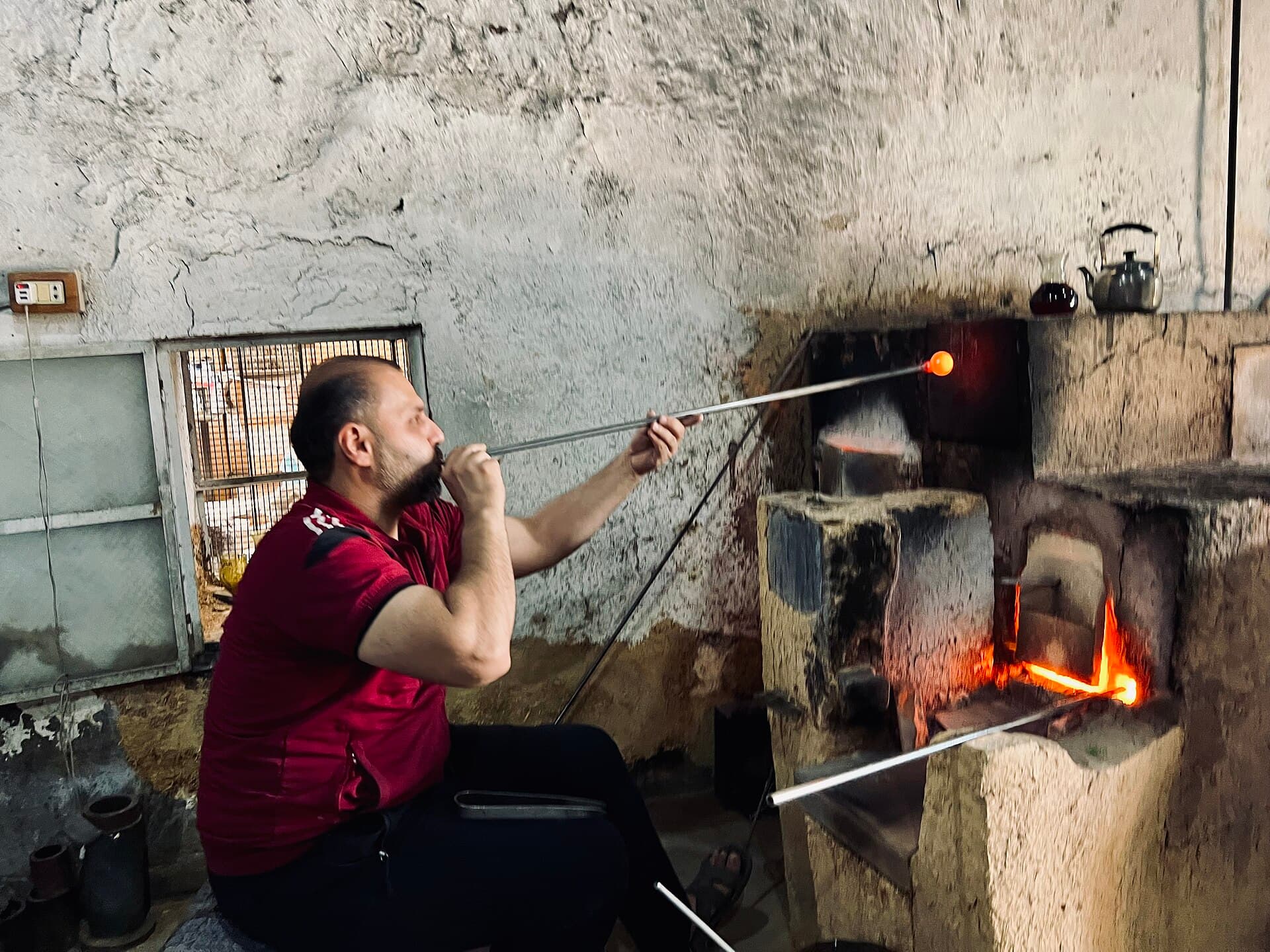
Syrian glassblowing was added in 2023 to the UNESCO list of heritage in need of urgent safeguarding. The method: broken glass is melted in a hand-built brick oven, the craftsman winds the molten glass onto the end of a hollow iron rod, blows, and shapes it with tongs. The raw material is recycling from the start.
The result is not flawless and should not be: small bubbles inside and a slightly uneven surface are the signs of hand blowing. A perfectly smooth, evenly coloured glass is most likely factory work.
Copper and tin
The coppersmiths’ lane is the easiest in the souq to find, because you find it by sound. Trays, coffee pots, bowls and cauldrons are beaten into shape from sheet, then tinned inside. The tin is there for colour and for safety: untinned copper does not agree with food and the lining has to be renewed periodically.
Hammer marks around the rim of a used tray show it was raised by hand; a pressed piece has an even surface.
Aleppo soap
Olive oil, laurel oil and lye; days of boiling in a sunken vat, spreading on the floor, cutting, stamping and months of curing. The craft was inscribed on the UNESCO intangible heritage list in 2024. The soap has its own record on this site and the making is described there in detail.
The Damascene rose
The growing and processing of the Damascene rose went onto the UNESCO list in 2019, with the file written around the village of Al-Mrah in the Qalamoun mountains. The roses are picked in April and May at first light — once the heat rises the scent goes. What is picked becomes rose water, dried buds and preserve the same day.
Maaloula is in the same range of hills. So the rose season on its own justifies a day up in the Qalamoun.
A craft that is only a name now
Damascus steel is a trap of a name. That watered, banded sword steel was made by the crucible process and the technique originated in India and Sri Lanka; the Damascus label comes largely from trade rather than production. You will not find that steel in the souq today.
The second confusion is damascening: gold or silver wire inlaid into darkened steel. That is a different craft and it too takes its name from the city. Most of the knives offered as “Damascus steel” on a stall are neither.
Where to watch the work
There are plenty of shop windows and few workshops. Six places do the job.
- The courtyard of the Tekkiye Suleymaniye: inlay, brocade and copper workshops line the arcades.
- Souq al-Madina in Aleppo: soapmakers and coppersmiths on separate lanes; repairs continue and the open sections change.
- Souq al-Hamidiyah and the khans around it: cloth and brocade are on this line.
- Souq al-Bzuriyah: spices and herbalists, and rose water too.
- Sahat al-Hatab: the Jdeideh square in Aleppo, handwork and antique dealers.
- The Azm Palace: not a workshop, but the finest examples of the work are shown there.
Ask before entering a workshop and ask separately before photographing. A craftsman is used to being watched at work, not to being photographed without a word.
Tips
- Fingernail test on inlay: good work is flush and does not catch
- Damask reads from the back as well; the name comes straight from Damascus
- Hand-blown glass has bubbles and an uneven surface — flawless means factory
- Hammer marks on a copper tray mean it was raised by hand
- Most "Damascus steel" on a stall is neither that steel nor damascening
Transparency
- How this was chosen
- This page carries the fastest-ageing information on the site: visa rules, exchange rates, border crossings and SIM prices change several times a year. The verification date above says when the facts were last put through their sources; for anything later, check your own foreign ministry travel advice and a Syrian consulate. No figure that is not known for certain is written here.
- Facts checked
- August 2026
- Last updated
- September 15, 2026