Taxis in Syria: fares, bargaining and apps
Meters do not run, there is no tariff, and the fare is agreed before you get in. City fare bands, the local ride-hailing apps and what changes at night.
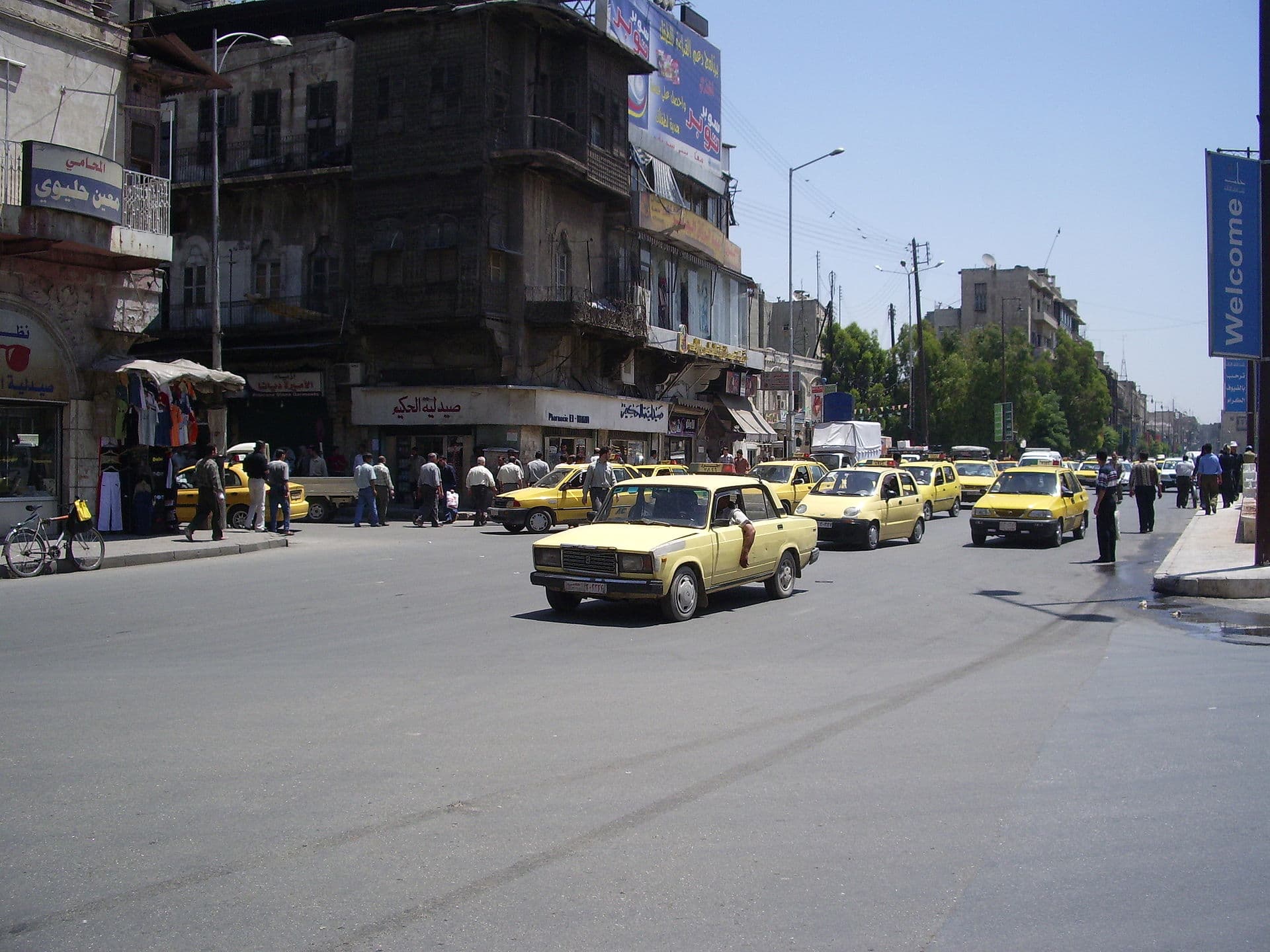
Taxis in Syria are everywhere and cheap. One rule turns them expensive when it slips: if the fare is not agreed before you get in, it gets agreed as you get out, and that conversation never goes your way. This page keeps the subject to three questions — how to settle a price, what the apps give you, and roughly what the number should be.
Why the meters do not run
The taxis are yellow and they are on every street. Most cars have a meter fitted and nobody switches it on; as the exchange rate moves the tariff goes stale, and no driver wants to work on a stale tariff. What operates instead is a spoken agreement: you name where you are going, the driver names a figure, and you either take it or look at the next car. That does not mean the system is broken. It means the rule is not written down.
How to settle the fare
Three steps are enough. First, learn the number before you need it: ask at your hotel or in a shop what a ride from here to there should cost, and the answer becomes the floor you argue from. Second, ask before you open the door; once you are sitting in the car your position is gone. Third, carry small notes — hand over a large one and “no change” rounds the fare upwards.
One more thing: when you hear a figure, ask which pound it is in. Two zeros came off the currency in January 2026 and both systems are still spoken aloud. Someone saying “fifty thousand” means old pounds. Our page on tipping and bargaining sets out the tone of that exchange: here haggling is not a fight, it is a form of courtesy.
What a ride costs
If a concrete figure is needed, here is one. For a cross-town ride inside Damascus or Aleppo the band in circulation is 400 to 600 new pounds. At the rate of 28 August 2026, with 1 dollar buying 131 pounds, that is roughly 3 to 5 dollars. Short hops fall below that. The figure comes from a single source and it goes stale quickly — take it as an order of magnitude, not a price. Airport runs are priced separately, and our pages on the Damascus and Aleppo airport transfers give those bands on their own.
The ride-hailing apps
Uber and Yango do not operate in Syria. Local apps have taken that place, and all of them show the price on screen before you move, which removes the bargaining entirely. YallaGo was the country’s first homegrown ride-hailing app, founded in Damascus in 2018. Shahm covers Damascus, Aleppo, Homs, Hama, Latakia and Tartus among other cities. Tfadal was the first in the country to offer a female driver option. ZAKINN sits on the cheaper side and reaches into the Damascus countryside.
All three need one thing: internet. No SIM card, no app, and our page on SIM cards and internet in Syria explains what the shop asks for. Payment is cash; the app names the price and you hand the money to the driver. When you get in, check the plate against the one on your screen.
After dark
Fares go up at night, and that is not the driver being difficult: there are fewer cars, the route runs longer, and the return leg is empty. The apps also lift prices in heavy traffic and bad weather. If you are out late, two things help — arrange the return with a car you already know, and carry the name of where you are staying written in Arabic.
Hiring a car with its driver
The same yellow taxi can be hired by the day, and that is the most useful thing you can do with one. It is the practical way to reach places public transport does not serve — Krak des Chevaliers, Qasr ibn Wardan, Palmyra. When agreeing a daily rate, settle three points: who pays for fuel, whether waiting hours are included, and whether leaving the city costs extra. Our page on driving and car hire in Syria sets out that negotiation in full. Working with the same driver on a second day usually brings the first day’s price down.
For women travelling
The settled habit is to sit in the back and not to take the front seat when travelling alone. Tfadal’s female driver option is a real choice, though a car is not always available at every hour. The apps carry live location sharing; use it. Our page for women travelling in Syria covers this in its section on taxis and intercity roads.
Where a taxi cannot go
The souq lanes inside old Damascus and old Aleppo are either closed to cars or impassable in practice. The driver leaves you at the nearest gate and the rest is on foot. When giving an address, use the quarter and a landmark rather than a street name — our page on maps and navigation in Syria explains that habit. And do not confuse an intercity shared taxi with a city cab; that is a separate arrangement, covered on our page about getting around Syria.
Tips
- Agree the fare before you open the door — inside the car you have no position
- A cross-town ride runs 400-600 new pounds, roughly 3-5 dollars
- When you hear a figure, ask whether it is new pounds or old
- The apps price up front: YallaGo, Shahm, Tfadal, ZAKINN
- Carry small notes; a big one rounds the fare upwards
Transparency
- How this was chosen
- This page carries the fastest-ageing information on the site: visa rules, exchange rates, border crossings and SIM prices change several times a year. The verification date above says when the facts were last put through their sources; for anything later, check your own foreign ministry travel advice and a Syrian consulate. No figure that is not known for certain is written here.
- Facts checked
- September 2026
- Last updated
- September 15, 2026