What to drink in Syria
Which glass belongs to which season, where you order it and what it is called. From the street sharbat vendor to the Ramadan table and the mate of the coast.
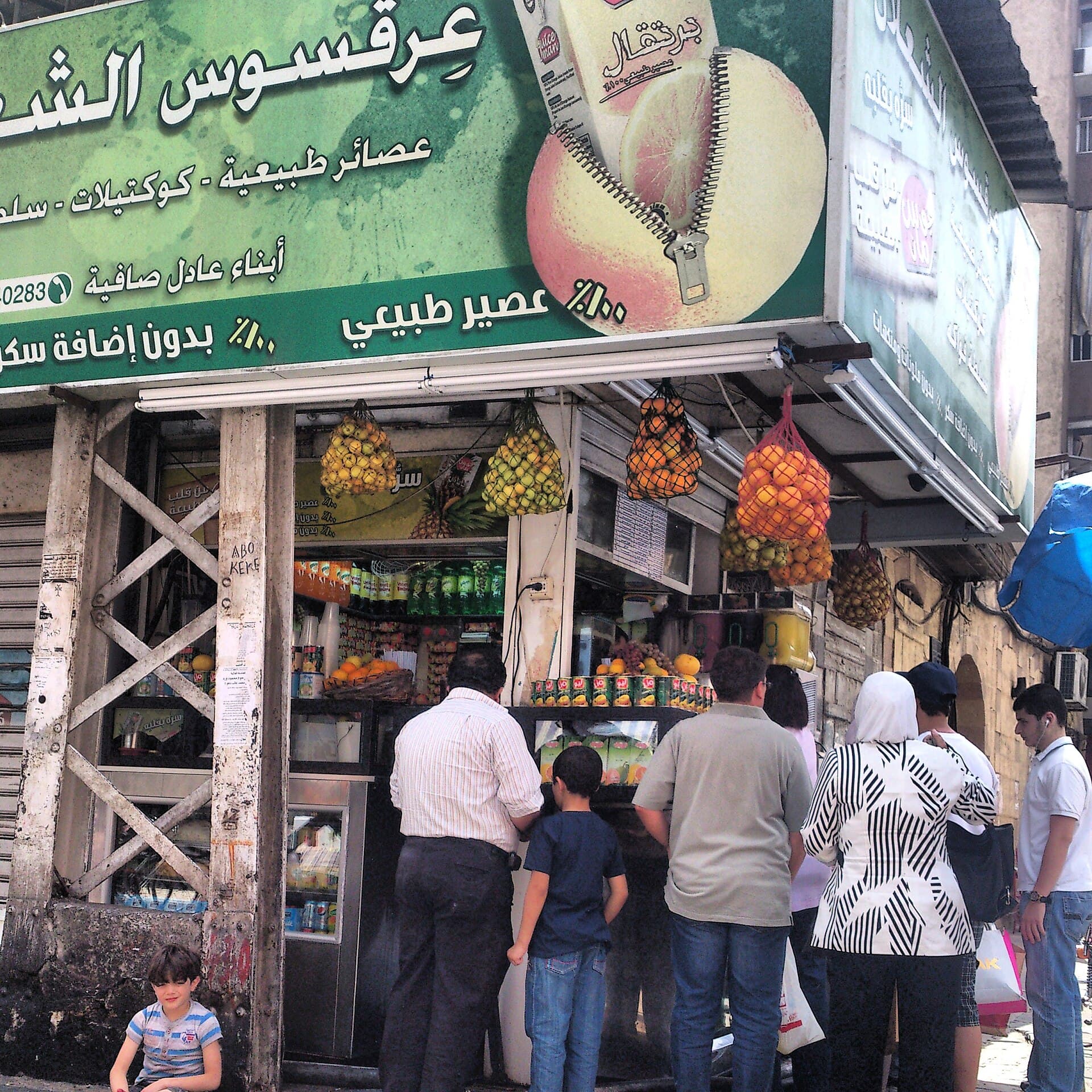
What people drink in Syria changes with the season and the place: a brass urn on the street in summer, the sahlab pot at the sweet shop in winter, the jallab stall through Ramadan, a mate set on the coast. This page lines up a list that is otherwise scattered — which glass, when, where, and under what name. Everything here is alcohol-free; that is the scope of this site.
Summer drinks
The summer glass is cold and syrupy. Erk sous, liquorice root steeped in cold water, comes from a brass urn on the street: foamy, sweet first and bitter after. Tamarind sharbat is sweet-sour and served over ice. Mulberry sharbat and mint lemonade lean towards the home table, while the fruit cocktail is the shop’s own work — layers of fruit purée in a tall glass, topped with clotted cream and pistachio. In September pomegranate juice joins the list, and in November it leaves with the season. On the yoghurt side there is shanina: home yoghurt let down with cold water and salted, brought to the table in a jug.
Winter drinks
Sahlab runs from November to March at sweet shops and from carts at the souq exits: thickened milk with cinnamon and crushed pistachio on top. Zuhurat is a dried flower blend — chamomile, sage, rosebud, thyme — and it is steeped rather than boiled. Tea is on the table all winter anyway. Carob sharbat, in its hot version, belongs to these months too.
The glasses of Ramadan
Ramadan brings its own list. Jallab is a dark syrup of date and raisin molasses, let down with iced water, with pine nuts and raisins floating on top. Qamar al-din is apricot purée dried in the sun into sheets, then softened in water and drunk. Erk sous and tamarind are on the street all summer, but their real crowds gather in the late afternoons of Ramadan. Carob sharbat belongs to this table as well.
Drinks that mark an occasion
Some glasses belong to an event rather than a season. In Aleppo the almond drink comes out at weddings, engagements, births and holidays; in the same city a house in mourning offers plain coffee. Murra — the unsweetened, cardamom-heavy coffee of the bedouin tradition — is the coffee of the guest room and the condolence visit, not of the coffee house. White coffee is a name that misleads: there is no coffee in it, only hot water with a few drops of orange blossom water, served after a meal.
Where to order what
Four kinds of place, four different lists. The travelling sharbat vendor walks with a brass urn on his back and clacks the cups in his hand; between al-Hamidiyah and al-Bzouriyah he carries liquorice and tamarind, and he works in cash. The coffee house has tea, Damascene coffee with its grounds, and murra; sugar is settled when you order — sada, wasat, hilweh. The cocktail shop does fruit: Abu Shaker in Salhiyeh has been in the same shop since 1953. Juice shops put up the seasonal presses. The rest belongs to the family table: zuhurat, shanina, almond drink, mate.
What each city is known for
The coast and the Jabal are mate country: a gourd, a metal straw, a sitting that runs for hours, and it is a home drink rather than a café order. Damascus is the city of the sharbat vendor and the coffee house. Aleppo is known for its almond drink and its coffee. Inland and in the east, tea is on every table. The line is not sharp, but it shows the moment a table is laid.
Knowing what to ask for
Half the work is the name. Sharab covers the syrup drinks, asir the fresh juices. For mint tea, shay bi-na’na is enough. Sugar is the default everywhere and it goes in at the counter, so say it when you order if you take it light; it cannot be fixed afterwards. Most stalls have no price list on the wall, and asking what a glass costs before it is poured is the short route.
Tips
- Sugar is the default; say it when you order if you take it light
- The travelling sharbat vendor works in cash — keep small notes
- On the coast you may be handed mate instead of tea; it is the daily drink there
- Pomegranate juice is seasonal: no fresh glass outside September to November
- Most stalls have no price list; ask what a glass costs before it is poured
Transparency
- How this was chosen
- This page carries the fastest-ageing information on the site: visa rules, exchange rates, border crossings and SIM prices change several times a year. The verification date above says when the facts were last put through their sources; for anything later, check your own foreign ministry travel advice and a Syrian consulate. No figure that is not known for certain is written here.
- Facts checked
- September 2026
- Last updated
- September 15, 2026