Aish as-Saraya
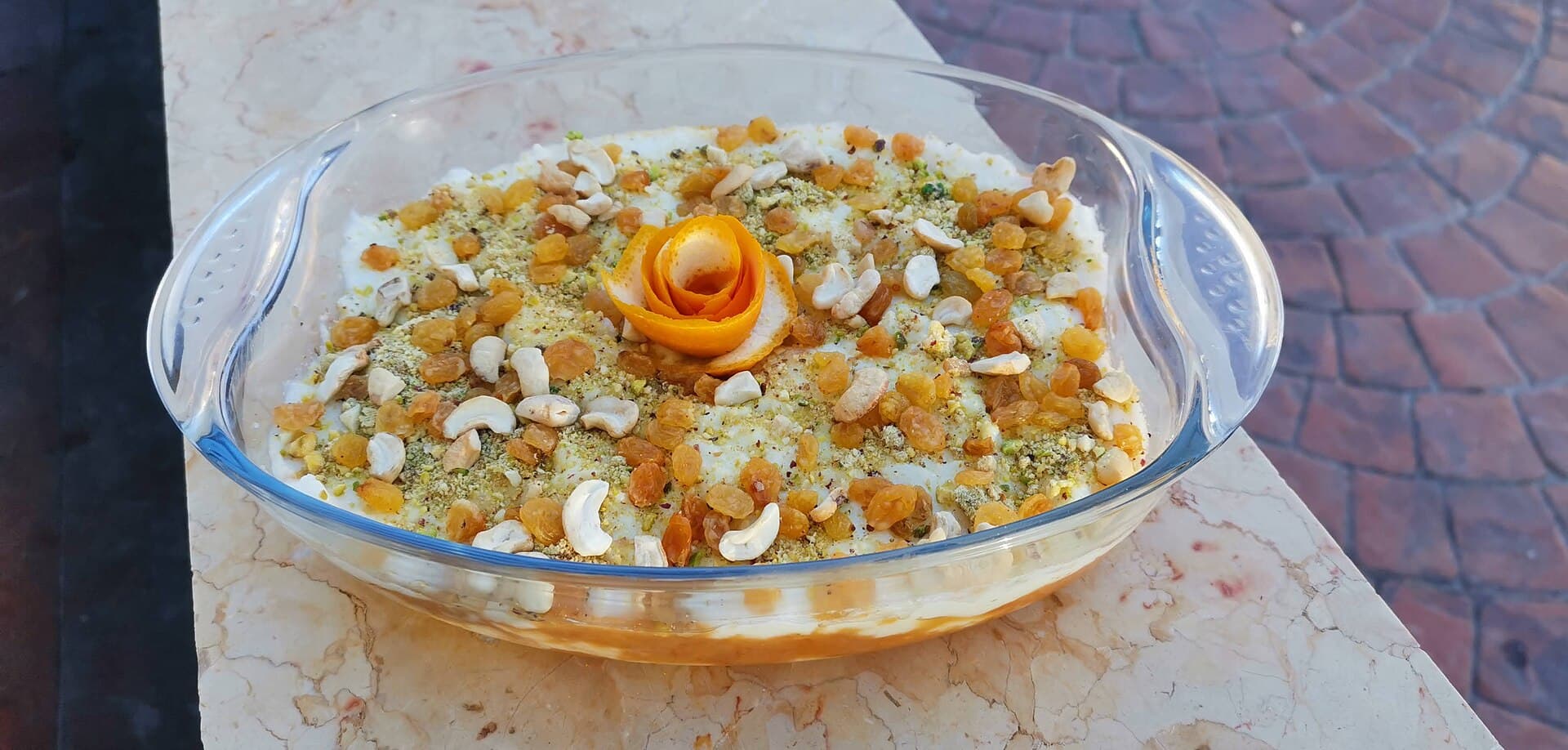
Crumbled bread soaked in syrup, a layer of clotted cream over it, crushed pistachio on top. The name means bread of the palaces; no egg binds it. Cut from the tray.
- Where to eat it
- In the chilled display of sweet shops in Damascus and Aleppo, cut from the tray; also made at home.
- Price
- Variable — ask the price per portion or per kilo at the counter
- When it is eaten
- The day it is made, straight from the chilled display
Crumbled white bread soaked in syrup, a layer of qishta clotted cream over it, crushed pistachio on top. The name comes from two words: aish is bread, saraya is palace, so bread of the palaces. Sweet shops keep it in the chilled display and cut it from the tray.
What goes into it
The base is bread. Today it is usually sliced sandwich bread with the crusts off, crumbled, soaked in syrup and pressed into the tray. The cream is spread over it and the crushed pistachio goes on last. Arabic sources add burnt sugar, that is caramel, and orange blossom water to the list. No egg. No butter. Most bread desserts are bound with egg; this one is not, and that is exactly why the texture stays wet and loose.
Where the name comes from
Saray is a Turkish word for palace, and the name says so plainly. The food historian Mary Isin records a 19th century Ottoman dish called saray etmegi, a milk pudding made with clotted cream and the crusts of the white loaf baked in the sultan’s kitchen. The bread was later replaced by a dry rusk known as Damascus rusk. A dictionary printed by Socrates Spiro in 1895 describes aish as-saraya as a kind of Turkish cake eaten with cream.
Whose dessert it is
Three claims sit side by side: Ottoman, Fatimid and Levantine. Arabic sources pass the argument on without closing it, and nothing on record settles one against the others. What is certain is something else. The dessert belongs to the sweet shops of Damascus and Aleppo today, one member of the family built on clotted cream.
Where to eat it
At a sweet shop, from the chilled display, cut square from the tray. Go early. Because the cream has to be fresh, a tray made in the morning rarely lasts to the evening. Plain coffee alongside works well and cuts the weight of the syrup. It is made at home too, and a home tray may carry walnut or cashew instead of pistachio.
Tips
- Skip a tray that has sat and dried at the edges — the cream has to be fresh
- The syrup is heavy; plain coffee alongside balances it
- The nuts on top vary by shop, and pistachio is not a rule
- Bread, cream and syrup — both gluten and lactose are in it
Transparency
- How this was chosen
- Two kinds of record live here: the dish itself, and the place that serves it. Both are chosen and written by hand; ranking is not for sale and there are no sponsored entries. If a price range is not known for certain, it says so. Venues that serve alcohol are not listed on this site at all.
- Facts checked
- September 2026
- Last updated
- September 15, 2026