Al-Nawfara Café
At the foot of the steps below the Umayyad Mosque’s eastern gate. The hakawati climbs onto his chair at 20:00 and reads for half an hour. Tea, coffee, narghile.
- What to order
- Tea, coffee and narghile — no food, this is a coffee house
- Price
- Variable — ask the price of tea and narghile when you sit down
- Opening hours
- Daily, closes late; the hakawati at 20:00
- Duration
- 60 minutes
- Best time
- 19:30 — the hakawati starts at 20:00 and the tables fill
Leave the Umayyad Mosque by the eastern gate, go down the steps, and the low tables at the bottom are Al-Nawfara. The name comes from a fountain that once ran beside it. The fountain is gone; the name stayed. Sources disagree about the café’s age — some say 250 years, others 500 — but they agree on one thing. When television reached Syria in 1960, the coffee houses of Damascus traded their storytellers for a screen. This one did not.
Getting there
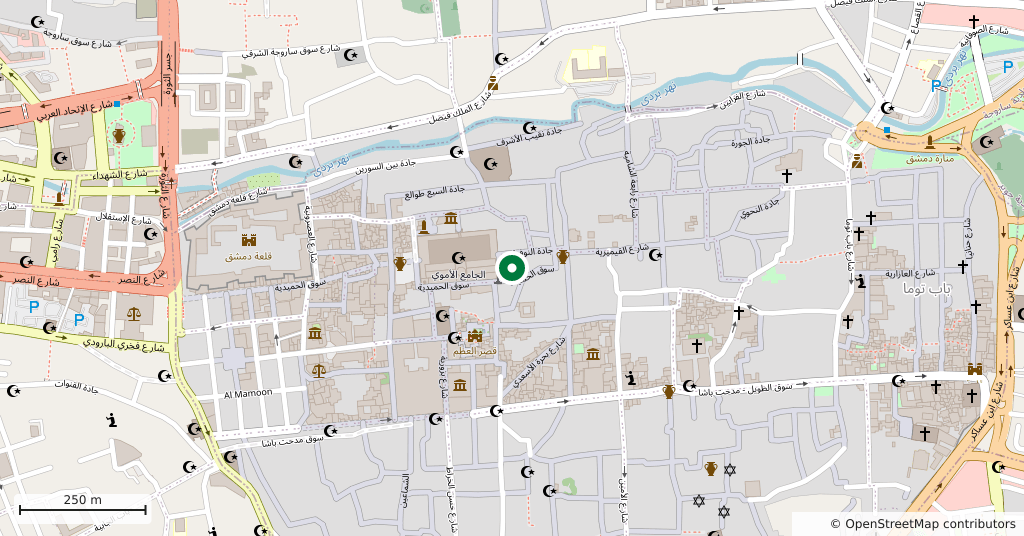
On foot only. Leave the mosque by the eastern gate, take the steps down, and the café is at the bottom on your left. Souq al-Hamidiyah drops you at the western end of the mosque instead; from there you cross the whole courtyard, about ten minutes.
What to order
Tea, coffee, narghile. There is no food; this is a coffee house and it does nothing else. The indoor room is about 60 square metres with 24 tables of four, and outside another 12 tables sit on 30 square metres that spill onto the steps. Outside is cooler in summer, inside is smokier.
The hakawati
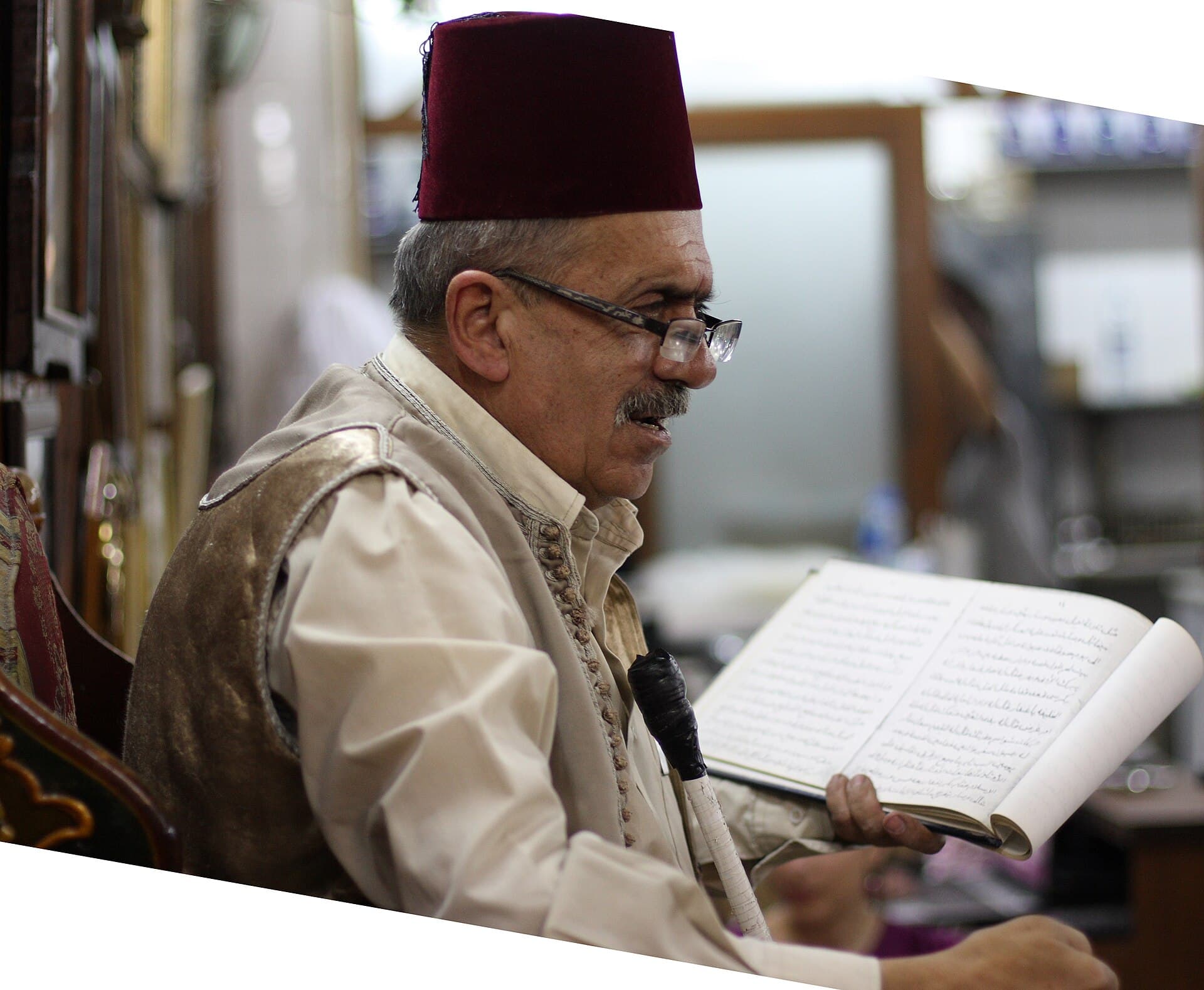
The storyteller arrives at 20:00. He climbs onto a raised chair in a red tarbush and a silk robe, opens his book and reads for half an hour — half an hour every day, the same story carried forward. Two epics alternate: Sultan al-Zahir Baybars and Antar ibn Shaddad. At half an hour a night, one epic takes about a year and a half to finish, so whichever evening you come you walk in on the middle of something. The hakawati today is Ahmad al-Laham; before him Abu Shady (Rashid al-Hallak) read here for years, until he left Damascus during the war.
The reading is in Arabic and only in Arabic. Even if you cannot follow it, watching the room is half the point: the voice rising, the laughter, the answer shouted from the back.
When to go
For the hakawati, come at 19:30; at 20:00 a table is hard to find. By day the café is quiet and the steps are empty, and the mosque wall throws shade that makes the afternoon good for sitting. It closes late. Ask about the opening hour while you are in the old city — of everything on this page, that is what goes out of date first.
Tips
- Take your seat by 19:30; at 20:00 there are no tables left
- The reading is in Arabic only — without the language, watch how the room answers it
- The outside tables on the steps are cooler in summer; the indoor room is full of narghile smoke
- Two zeros were dropped from the pound in January 2026 — prices in older sources look 100 times today's figure
Transparency
- How this was chosen
- Two kinds of record live here: the dish itself, and the place that serves it. Both are chosen and written by hand; ranking is not for sale and there are no sponsored entries. If a price range is not known for certain, it says so. Venues that serve alcohol are not listed on this site at all.
- Facts checked
- August 2026
- Last updated
- September 15, 2026