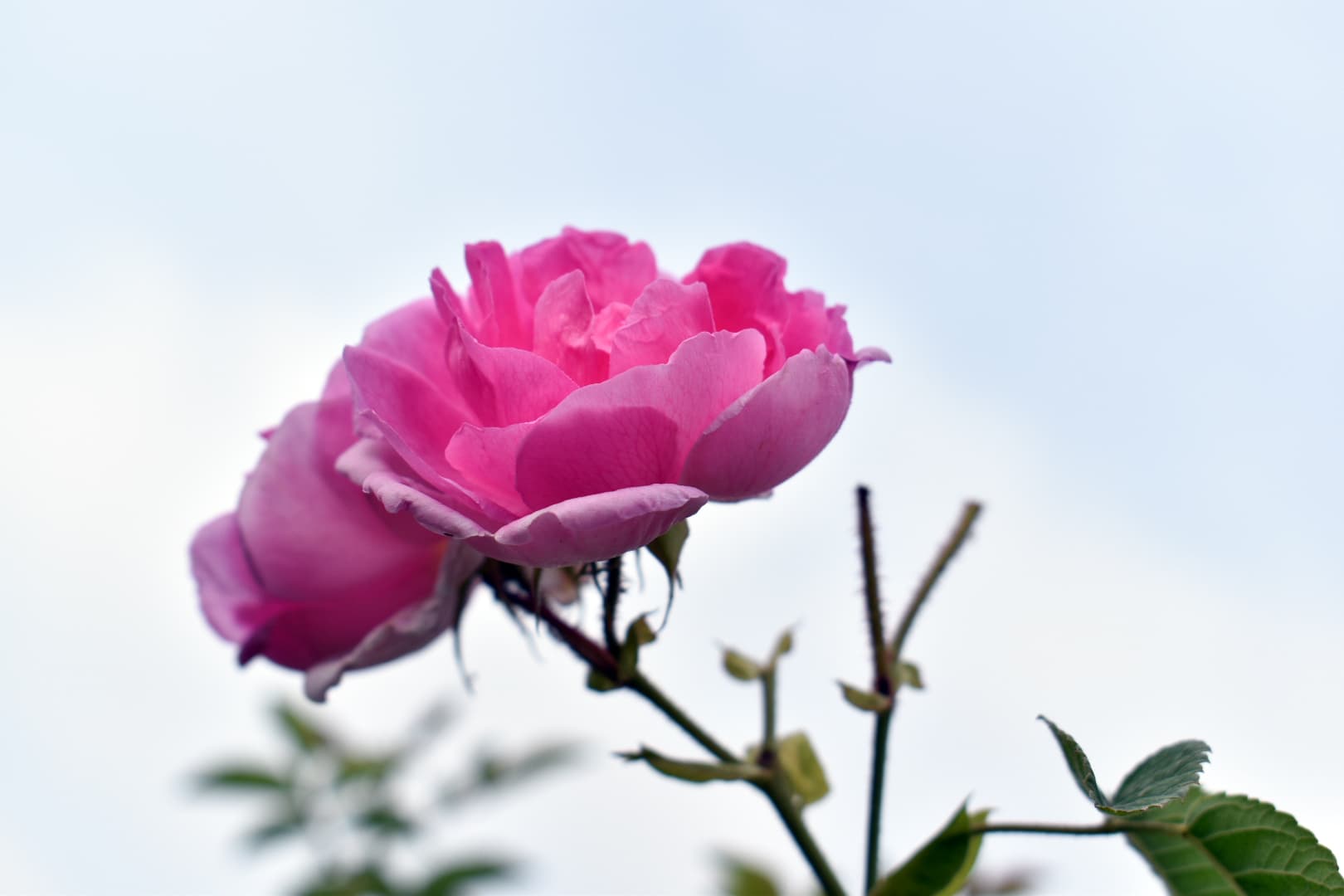
The Damascene Rose
A rose that blooms in May, is picked before noon and entered the UNESCO list in 2019. Dried for tea, distilled into rose water, boiled down into a jam.
- Where to eat it
- At apothecaries and the Bzourieh market as dried buds, bottled rose water and jam; in pastry shops through maamoul, halawet el-jibn and milk puddings.
- Price
- Variable — ask the price per kilo for buds and per bottle for rose water
- When it is eaten
- May, when the rose opens and both the picking and the village festival take place
The Damascene rose is not a wild flower but a cultivated hybrid, Rosa × damascena, and it carries the name of the city. Its journey to Europe is tied to a siege: Robert de Brie, who joined the siege of Damascus in 1148, is often credited with taking a plant home. The knowledge and craft around the flower today run through Al-Mrah, a village in the Damascus countryside, whose practices UNESCO added to the intangible heritage list in 2019.
What happens in May
The rose opens in May and the picking begins that week. Families go out to the fields early in the morning and are back by the afternoon, when the buds are sorted at home: some are dried for tea, the rest of the petals are set aside for distilling. The village rose festival falls in the same days. Neighbouring villages come for it, rose-scented dishes are served, and the songs are about the flower.
What the flower turns into
Distilling the petals produces rose oil, and rose water is the by-product of that distillation. Dried buds are sold by apothecaries as a remedy and go into the zhourat herbal blend. In the same season the women of the village make rose syrup, rose jam and rose pastries. One flower ends up on four different shelves: dried buds, rose water, jam and syrup.
Where you meet it
Rose water is the smell of Damascene pastry: in the dough of maamoul, in the syrup poured over halawet el-jibn, across the top of a milk pudding. The jam sits on the breakfast table next to clotted cream, floral rather than heavily sweet. The dried bud is the piece you will recognise first when you open a bag of zhourat.
Buying it and getting it home
The easiest address is the Bzourieh spice market in Damascus and the apothecary stalls around it: buds by weight, rose water by the bottle, jam by the jar. Turn the bottle over before you buy. A single-line ingredient list means distilled rose water; a list with flavouring and preservative means the cheaper, sharper-smelling kind. Rose water counts as a liquid, so it hits the 100 millilitre cabin limit — pack it in the hold and bag the neck separately.
Tips
- Turn the bottle over: a single-line ingredient list means distilled rose water
- Rose water is a liquid and hits the 100 millilitre cabin limit — pack it in the hold
- Buy dried buds by weight; being dry, they travel better than jam
- Taste the jam before buying, the sugar level differs sharply between stalls
- Outside May there are no roses in the field, but buds and bottles sell all year
Transparency
- How this was chosen
- Two kinds of record live here: the dish itself, and the place that serves it. Both are chosen and written by hand; ranking is not for sale and there are no sponsored entries. If a price range is not known for certain, it says so. Venues that serve alcohol are not listed on this site at all.
- Facts checked
- September 2026
- Last updated
- September 15, 2026