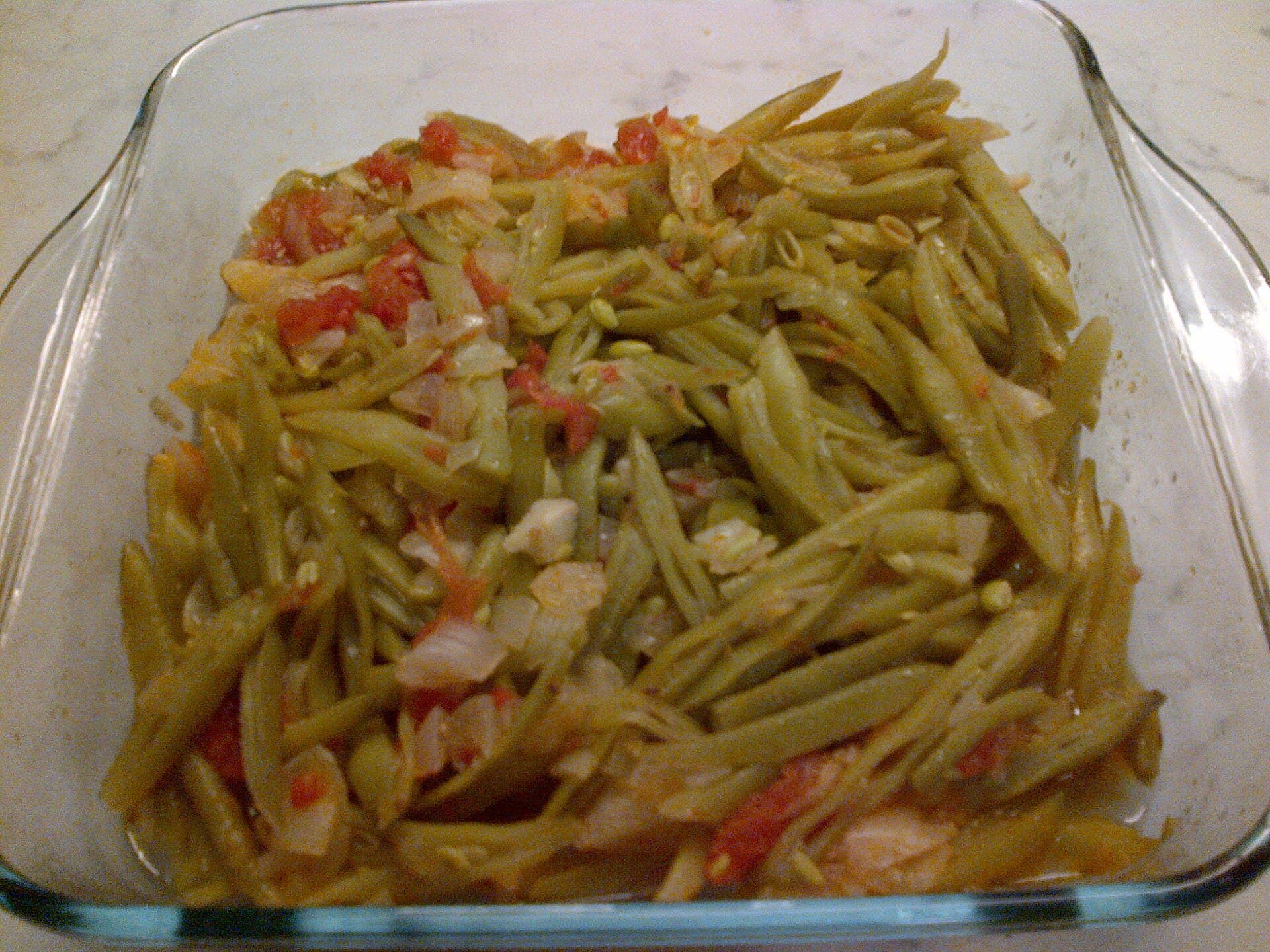
Fasoulia bi zeit, green beans in olive oil
Green beans cooked down with onion, garlic, tomato and plenty of olive oil. No meat in it, served at room temperature, a fixture of the Damascus mezze table.
- Where to eat it
- On mezze tables and in home kitchens in Damascus; in restaurants it comes among the olive oil dishes, in a cold bowl.
- Price
- Mezze prices; it arrives by the bowl, so ask when you order
- When it is eaten
- A summer lunch table, at room temperature
Green beans go into the pot with onion, garlic, tomato and a generous amount of olive oil, and cook until the liquid has gone. There is no meat in it. It is not served hot: the pot is left to stand and the dish is eaten at room temperature, as one item on a mezze table.
Why it is eaten cold
Hot olive oil weighs the plate down; once the dish cools to room temperature the beans and tomato come forward instead. Home kitchens know this and cook the pot the night before, for the next meal. Standing does the dish no harm — it settles it.
The bi zeit family
On the Syrian table bi zeit, meaning in olive oil, is a family name. Stuffed vine leaves, okra bi zeit and makdous sit on the same table on the same logic: a vegetable, olive oil, served cold, no meat. Green beans are the most everyday member of that family, and the easiest to find.
Two states of one name
Here is the distinction not to confuse. The bi zeit version is meatless, cold and a mezze; the version cooked with white beans and lamb is called fasoulia bi lahme, and that one is eaten hot with rice. When ordering, say which you want, or the meat pot is what arrives.
The season chooses
In summer the dish is made with fresh green beans. In winter, when there are none, the kitchen turns to the dried beans in the store cupboard and the dish becomes heavier, more of a stew. So the season decides not only the price but which version is on the stove.
Tips
- Do not ask for it hot; it is eaten at room temperature and that is where the taste opens
- For the meatless one say bi zeit; bi lahme is the name of the meat version
- It is eaten with bread; a fork is not much use in this bowl
- Oil risen to the top means the pot has cooked down, not that something is wrong
Transparency
- How this was chosen
- Two kinds of record live here: the dish itself, and the place that serves it. Both are chosen and written by hand; ranking is not for sale and there are no sponsored entries. If a price range is not known for certain, it says so. Venues that serve alcohol are not listed on this site at all.
- Facts checked
- September 2026
- Last updated
- September 15, 2026