Ijjeh
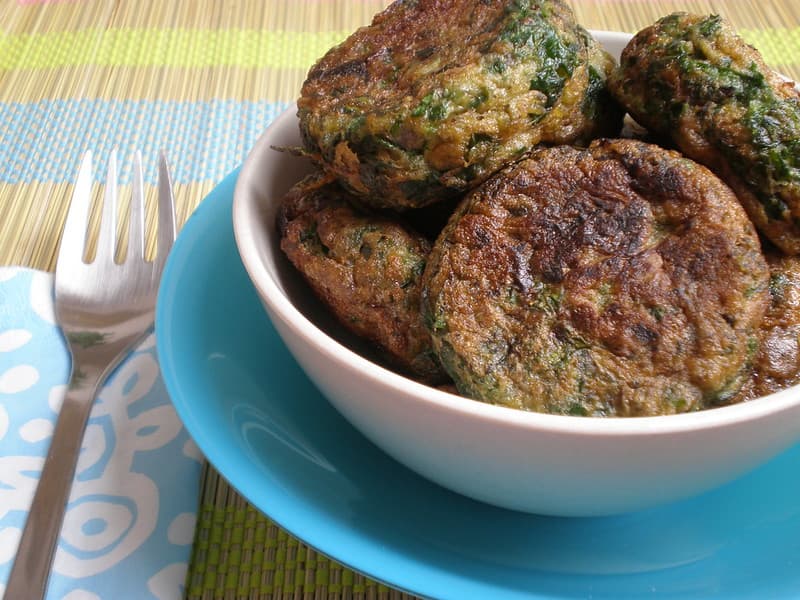
Parsley, spring onion and dried mint held together by egg, dropped into hot oil by the spoonful. On the breakfast plate, the mezze tray and inside bread.
- Where to eat it
- At breakfast restaurants and on the mezze tray in Damascus; in the street as a wrap inside bread. In homes at suhoor and as a light supper.
- Price
- Variable — a wrap and a plate are priced separately, ask when you order
- When it is eaten
- Breakfast; suhoor during Ramadan
In ijjeh the egg is not the main ingredient but the binder. The greens make the dish: plenty of parsley, spring onion or leek, dried mint, spice, sometimes a spoon of flour. The mixture goes into hot oil a spoonful at a time and fries into small green patties. Firmer than a French omelette, and crusted on the outside.
What the egg is doing
Holding the greens. The proportions say it: there is more parsley on the plate than egg, and just enough egg to keep the mixture from falling apart in the pan. That is why ijjeh comes out green rather than yellow, and why it does not stay soft inside when you cut it. The oil has to be hot for the crust to set. In warm oil the mixture opens up and the plate is lost.
Where you meet it
In three places. On the breakfast plate beside olives and labneh, on the mezze tray as a small dish, and inside bread. The last is the most common: it is rolled into a wrap with pickles and lemon, and it is eaten cold as well. That is why it travels. A cold ijjeh wrap on a bus or by the road is ordinary.
It appears often at suhoor during Ramadan, and during Lent on the days when eggs are allowed. Since it takes minutes at home, the pan also comes out for a light supper.
The versions
The one with potato is the best known; grated potato joins the greens and the plate turns filling. Courgette in summer, minced lamb at the evening table. There is also an oven version cooked in one piece in a pan and cut into slices; then ijjeh is not a patty but something closer to a thick flatbread.
Not the same as jaz maz
Both have egg and both come out of a pan, but they are separate dishes. Jaz maz belongs to the coast and is built on tomato: eggs are broken over tomatoes cooking in fat. Ijjeh is built on greens and is fried; no tomato goes in, and the mixture is made up first and then dropped into the oil. In Latakia you ask for jaz maz. In Damascus, for ijjeh.
Tips
- Say so if you want it inside bread; a plate is what arrives by default
- If pickles and lemon do not come with it, ask — they complete the wrap
- It is eaten cold too, one of the few things worth taking on the road
- The potato version is filling and the plain one light; they count as two dishes
Transparency
- How this was chosen
- Two kinds of record live here: the dish itself, and the place that serves it. Both are chosen and written by hand; ranking is not for sale and there are no sponsored entries. If a price range is not known for certain, it says so. Venues that serve alcohol are not listed on this site at all.
- Facts checked
- September 2026
- Last updated
- September 15, 2026