Jameed, the Hauran’s dried yoghurt
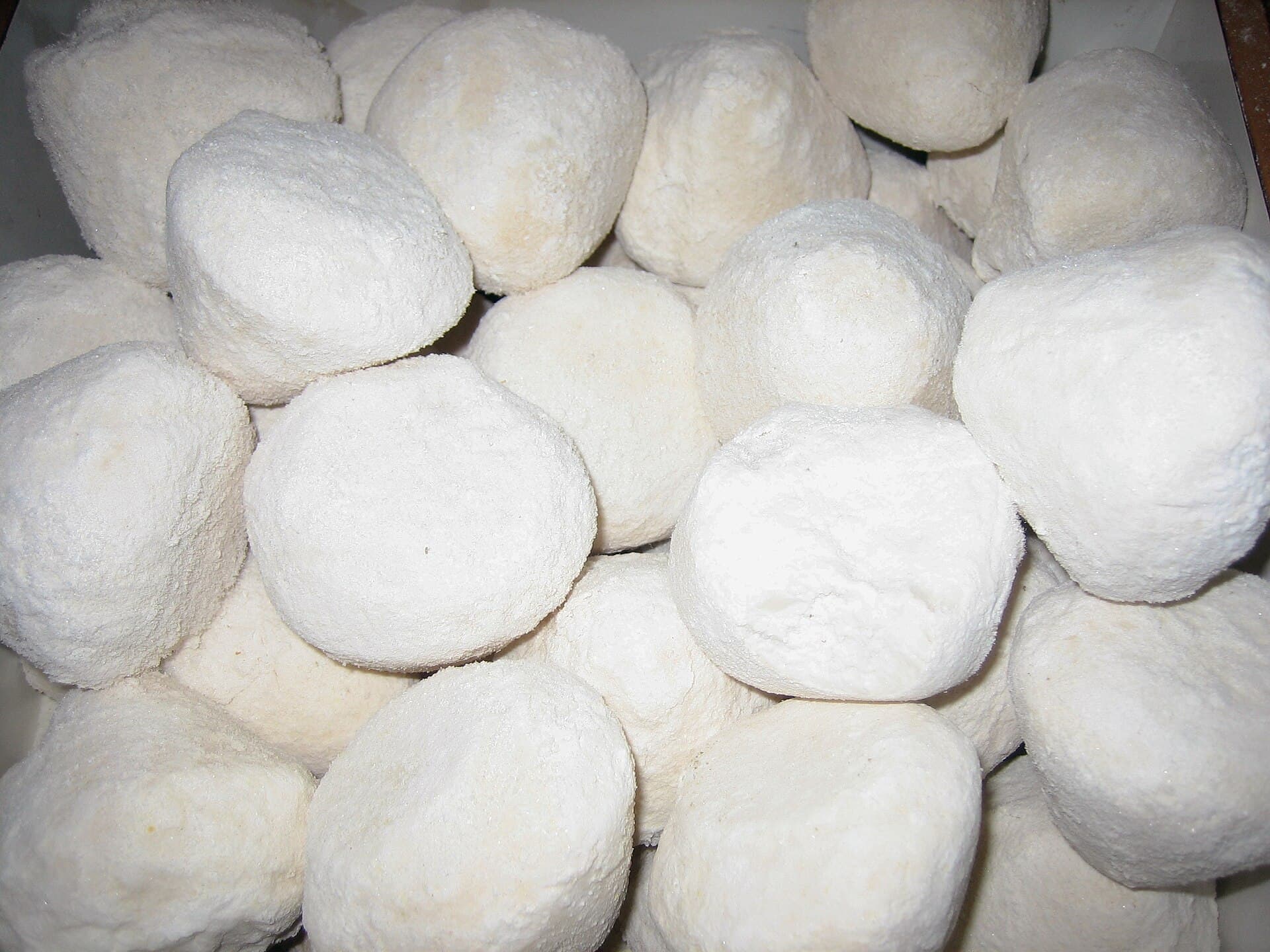
Skimmed yoghurt strained, salted, rolled into balls and dried stone-hard on the roof. Jameed is the base of mansaf and malihi in the Hauran and keeps over a year.
- Where to eat it
- Made at home in Daraa and the Hauran villages; dairies sell it ready-made as balls. You eat it in the sauce of mansaf, malihi and rashouf; also used in As-Suwayda cooking.
- Price
- Varies — ask at the dairy
- When it is eaten
- All year; it keeps in the pantry for more than a year
Jameed is salted balls of skimmed yoghurt, dried in the sun until they are hard as stone. It is a pantry staple of the Hauran, where it also goes by the names kathi and haqt. It is not a dish on its own. The sauce of the region’s best-known dishes is built from it.
How it is made
The work starts with churning. In the past a skin bag made from sheepskin, the saan, was rocked back and forth until the butter separated. The buttermilk left behind, called shinineh in the Hauran, is warmed over a low fire. It goes into a white cloth bag and is pressed between two stones for three or four days so the whey runs out; this stage is called jabjabeh.
It is then salted and kneaded, and shaped into balls or palm-sized discs. These are laid out on a floured sheet on the roof and left for days in the sun and air. Kept in a thick white cloth bag away from damp, jameed lasts more than a year. Women help one another with the work; the steps above follow the account eSyria recorded in Tafas.
How it is used
A ball is broken up, dissolved in warm water, strained and added to the pot. Mansaf, malihi, hafeet, shakriyeh, shish barak and rashouf are all built on this sauce. Jameed made with fenugreek turns yellow; that kind is not cooked but eaten as it is.
How it differs from kishk
Both are dried yoghurt. Both keep for winter. For kishk, yoghurt is dried together with bulgur and ground to a powder. Jameed has no bulgur. It is strained, salted yoghurt alone, kept as balls rather than powder.
Where to find it
It is made at home in Daraa and the villages of the Hauran, and it is used in As-Suwayda cooking too. Dairies now sell ready-made jameed, but some village women still make their own.
Tips
- Do not mistake it for kishk: jameed has no bulgur, only strained yoghurt
- The yellow, fenugreek balls are for eating as they are; the white ones go into sauce
- It is stored in a cloth bag somewhere dry; damp spoils it
Transparency
- How this was chosen
- Two kinds of record live here: the dish itself, and the place that serves it. Both are chosen and written by hand; ranking is not for sale and there are no sponsored entries. If a price range is not known for certain, it says so. Venues that serve alcohol are not listed on this site at all.
- Facts checked
- September 2026
- Last updated
- September 15, 2026