Raqaqa (Makmoura), Hauran layered chicken pie
Thin sheets of dough layered with chicken and onion cooked in olive oil, baked slowly and cut into triangles: the Hauran’s dish for guests and Fridays, with yoghurt.
- Where to eat it
- At home tables in the Daraa countryside and the villages of the Hauran plain (Yadudeh, Butayha), for weddings, feasts and the Friday gathering. Not on restaurant menus.
- Price
- Not a plate you buy — it belongs to the home table
- When it is eaten
- The cold months; weddings, guests and Fridays
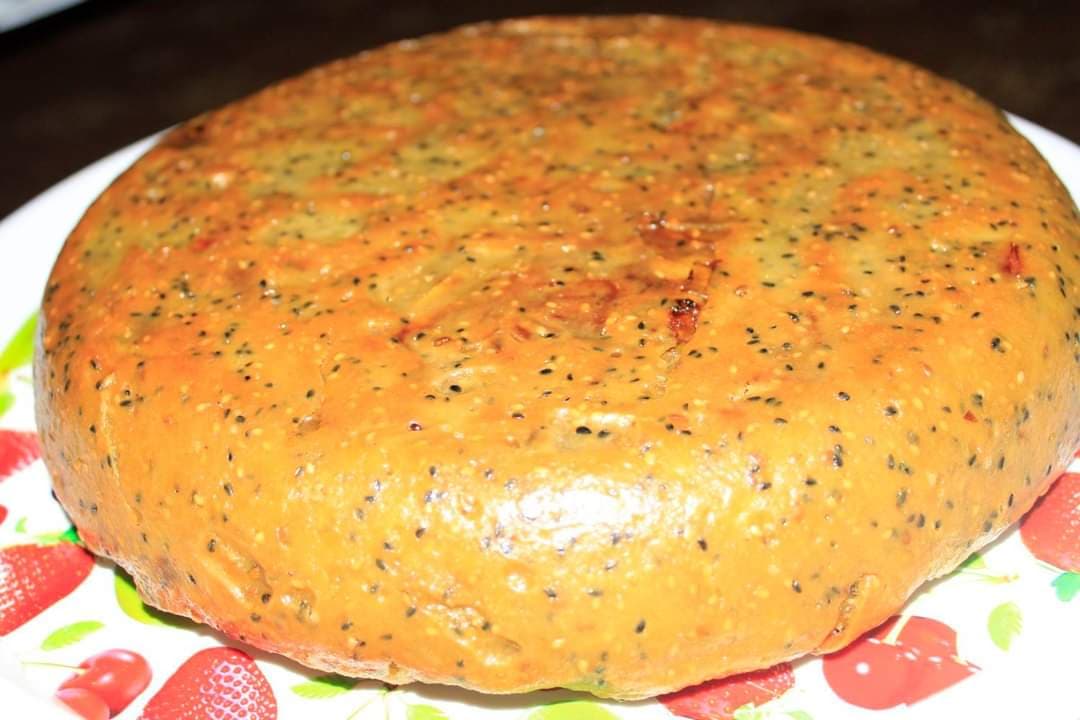
Raqaqa is a layered dish from the Hauran, the farming plain around Daraa: thin sheets of dough stacked with onion and chicken cooked in olive oil, then baked until brown. Some villages in the Daraa countryside call it makamir. It comes out for weddings, feasts and the Friday family gathering, cut from the tray in triangles and eaten with yoghurt.
How it is made
The dough mixes brown and white wheat flour, with nigella and fennel seeds worked in; some households add anise and sesame too. A large amount of chopped onion cooks in olive oil with the chicken until soft, and meat sometimes takes the place of the chicken. The dough is split into four or five pieces, oiled, and rolled out to the size of the tray with a thin rolling pin known in the Hauran as the shobak.
The first sheet goes into an oiled tray, the onion and chicken on top, then a fresh sheet. The stack reaches four or five layers. The tray is covered so the top sheet does not dry out, and it stays in the oven on low heat until it browns.
Where the name comes from
Raqaqa comes from raqiq, Arabic for thin; what defines the dish is how fine the sheets are rolled. Across the border, in the villages of Irbid and Ramtha in northern Jordan, a branch of the same family is made under the name makmoura.
How it differs from musakhan
Both are built on onion and chicken, and both belong to the same plain. Palestinian musakhan is laid on ready-baked taboon or shrak bread. Raqaqa uses no ready bread: the sheets are rolled from raw dough, and the layers bake into each other in the oven.
Where to eat it
It is a home dish. Neighbouring women gather to make it together, and part of what comes out of the oven is sent to neighbours and relatives. Written accounts describe it as cold-weather food, and in the Hauran it may reach a guest on the same table as malihi. It grew rare during the war years and has been returning to Hauran tables recently.
Tips
- Yoghurt comes alongside; the chicken layers are eaten with it
- Do not confuse it with musakhan: raqaqa uses raw dough sheets, not ready bread
- In Daraa villages, asking for makamir gets you the same dish
Transparency
- How this was chosen
- Two kinds of record live here: the dish itself, and the place that serves it. Both are chosen and written by hand; ranking is not for sale and there are no sponsored entries. If a price range is not known for certain, it says so. Venues that serve alcohol are not listed on this site at all.
- Facts checked
- September 2026
- Last updated
- September 15, 2026