Kallaj
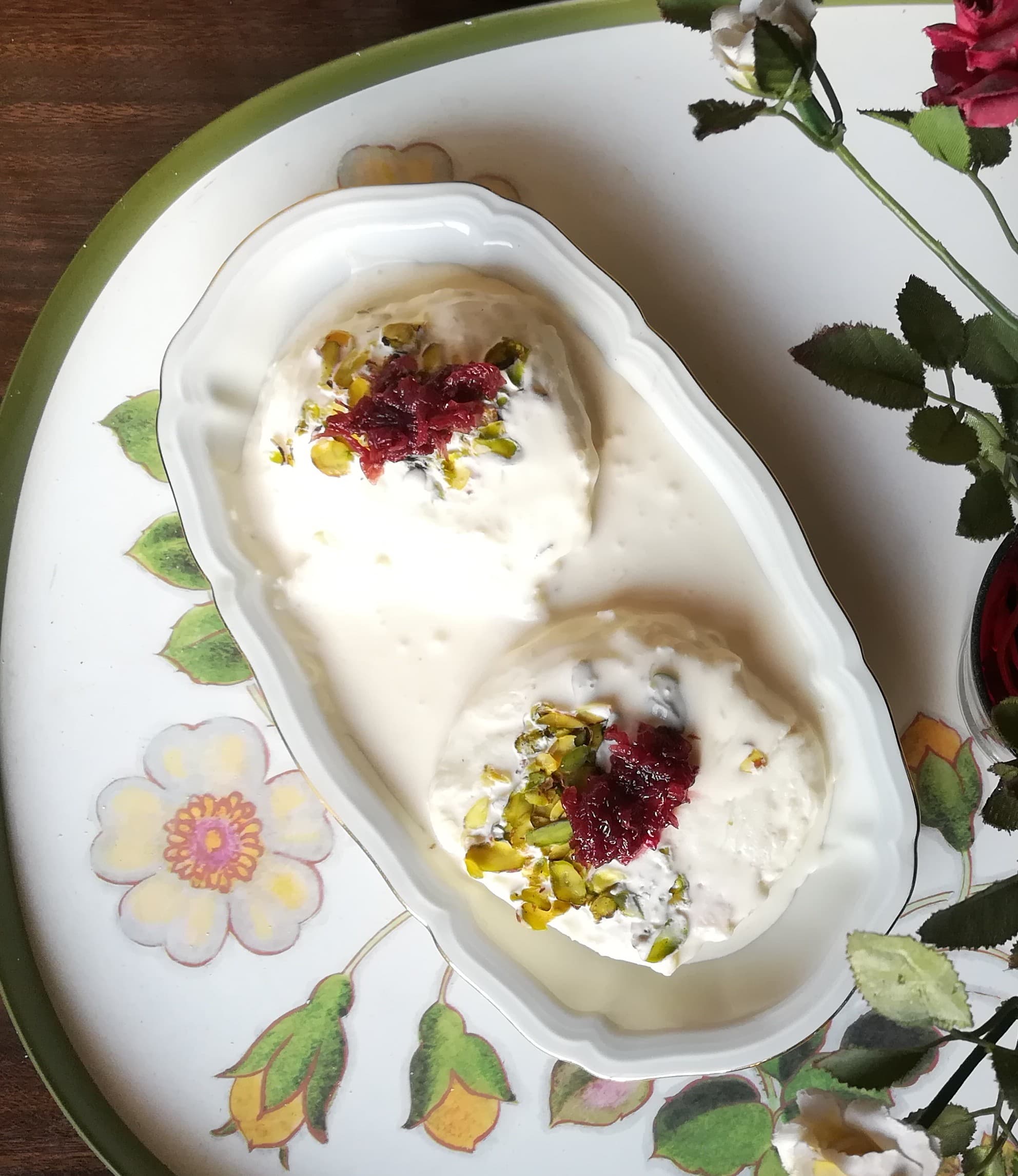
Thin pastry dipped in milk, folded round clotted cream, finished with pistachio and syrup. The sweet of the Ramadan counter, and mostly only that month.
- Where to eat it
- At sweet shops in Damascus, mainly during Ramadan; at home after breaking the fast.
- Price
- Variable — ask the price of a portion when you order
- When it is eaten
- Ramadan; hard to find through the rest of the year
Kallaj is really the name of a dough rather than of a sweet: pastry rolled extremely thin. The same word is used for the sheet and for what is made from it, and in Syria it is best known in its cream version. It is one of the fixtures of the Ramadan table.
Two different kallaj
Two separate things come out of the same dough. The sweet one is never cooked: the sheet is dipped in hot milk, clotted cream goes in the middle, the edges are folded in and the whole thing is turned out onto a plate. It never sees a flame. The savoury one is fried: spiced minced meat goes inside the sheet and it goes into hot oil. In Egypt that savoury version is layered in a tray and baked, and there it is called goulash.
The name itself refers to the dough. It is tied to the same root as the Ottoman gullac, which also describes a very thin sheet.
How the cream version is made
Warm milk, clotted cream, orange blossom water, syrup and pistachio. The sheet is folded into quarters and dipped in the warm milk for a moment only — leave it longer and it falls apart. A spoonful of cream goes in the centre, the edges are closed so the cream is completely covered, and the plate is turned over so the folds sit underneath.
Crushed pistachio is scattered over and syrup poured to taste. Pouring the syrup on the plate at the last moment is usual; poured earlier, the pastry drinks it and goes soft.
The Ramadan counter
Kallaj sheets are not on every counter all year; their season is Ramadan. Through that month bakeries and sweet shops put the sheets out in packets and households make their own after breaking the fast. The Ramadan page in this section covers the rhythm of the month.
Where to find it
At sweet shops in Damascus, in the front row of the window throughout Ramadan. The cream is fresh, so it is eaten the same day, and it stiffens straight out of a fridge. On a hot day it does not travel far.
You can say how much syrup you want when you order. Since the cream itself is not sweet, people also ask for it without any, and nobody finds that odd.
Tips
- Ask for more syrup, less, or none at all
- Eat it the same day; fresh cream does not wait
- The fried savoury version is a different thing — say which you want
- Do not be surprised if it is not on the counter outside Ramadan
Transparency
- How this was chosen
- Two kinds of record live here: the dish itself, and the place that serves it. Both are chosen and written by hand; ranking is not for sale and there are no sponsored entries. If a price range is not known for certain, it says so. Venues that serve alcohol are not listed on this site at all.
- Facts checked
- September 2026
- Last updated
- September 15, 2026