Maqluba
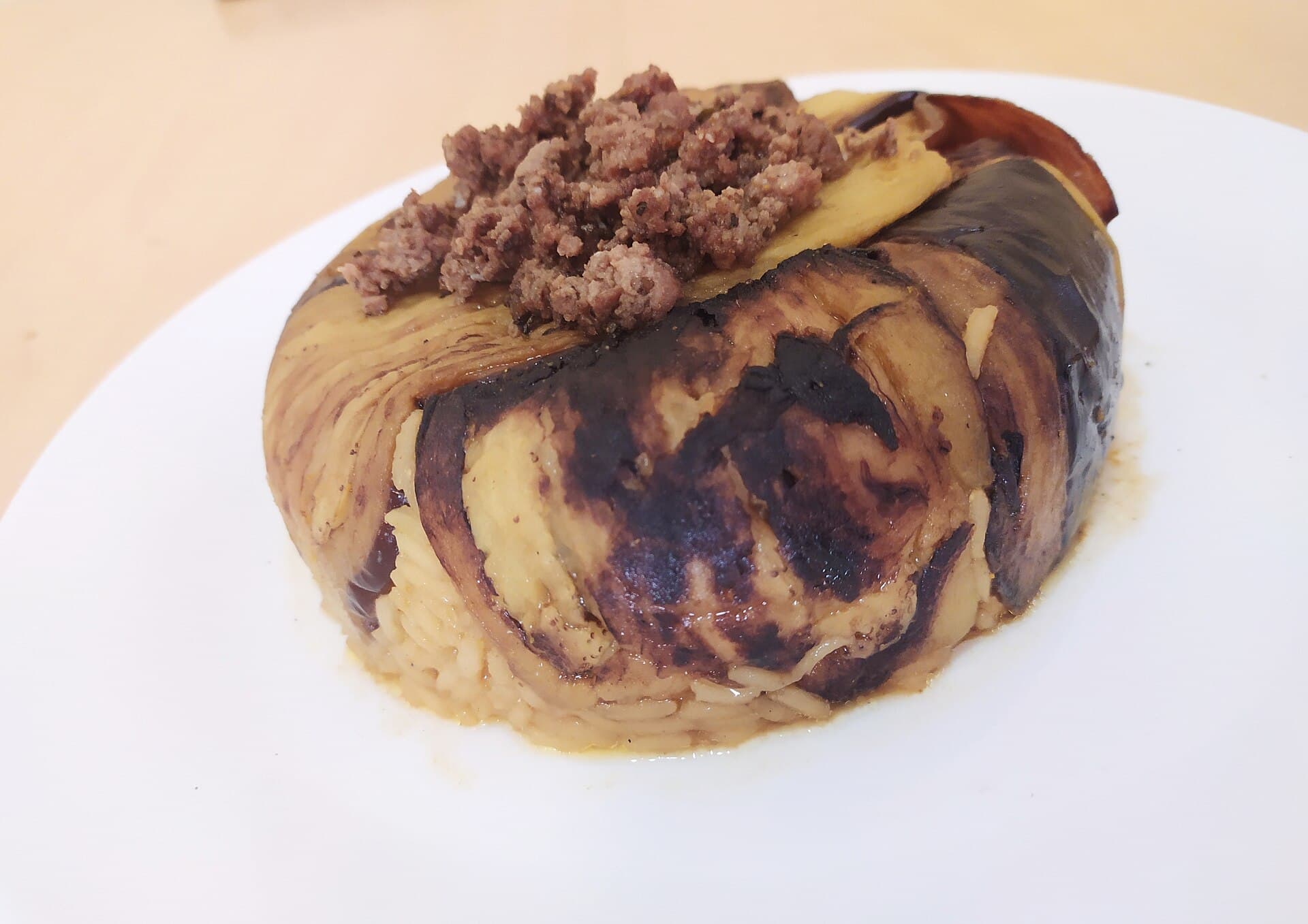
Fried aubergine at the bottom of the pot, meat and rice above it, and the whole pot flipped over onto a tray. The name says it: maqluba means upside down.
- Where to eat it
- At lunch in Damascus places cooking home food with a dish of the day; in homes at a full table. Not on the menu daily, so ask.
- Price
- Variable — ask the price of the day's dish when you order
- When it is eaten
- Lunch, when the day's dishes have just come off the stove
Fried aubergine is laid at the bottom of the pot, then lamb or chicken, then rice on top. Once the water has gone and the rice is done, the pot is turned over onto a tray. The dish comes out standing as a mould. That is where the name comes from: maqluba means upside down.
What goes at the bottom
Aubergine is the most common but not the only choice; cauliflower, potato and green beans do the same work. All of them are fried first. A vegetable put in without frying takes water from the rice and the mould does not hold. Toasted almonds and pine nuts are scattered over the top, with yoghurt and a tomato and cucumber salad beside it.
The story of the name
There is an account on record. The dish was first called badhinjaniyya, the aubergine one, and the name changed when Saladin, eating it in Jerusalem, called it that upside-down food. This is passed on as legend rather than as document. What is documented is something else: recipes under the same name sit in the cookbook of al-Baghdadi in the 13th century and in that of Ibn al-Warraq in the 10th.
Where it stands on a Syrian table
The sources give the origin to Palestine. Being common in Syria does not make it a Syrian dish, and this page does not write it as one. It is, though, one of the weekly dishes of a Damascus household, and the same pot goes on in Jordan, Iraq and Saudi Arabia.
What separates it from mahshi is that the vegetable is not stuffed but fried and layered. Shakriyeh and mansaf sit on the yoghurt side; maqluba belongs to the dry rice line. And unlike sayadieh it carries meat rather than fish, plus that flip of the pot.
Where to eat it
It is not a dish a restaurant has every day. Ask for it at lunch in places that cook home food and put out a dish of the day. The pot is large, so single portions are rare. This is food for a full table. At home the flip is watched: the tray goes over the pot, the pot is turned, and everyone looks to see whether the mould held.
Tips
- If it is not on the menu, ask for the dish of the day; maqluba comes up in rotation
- The chicken and the lamb version count as two dishes — ask which one it is
- If yoghurt does not come with it, ask; the plate is rich and yoghurt balances it
- A single portion may not be possible, so it is easier with a group
Transparency
- How this was chosen
- Two kinds of record live here: the dish itself, and the place that serves it. Both are chosen and written by hand; ranking is not for sale and there are no sponsored entries. If a price range is not known for certain, it says so. Venues that serve alcohol are not listed on this site at all.
- Facts checked
- September 2026
- Last updated
- September 15, 2026