Mouneh, the Syrian winter pantry
Jars go up at the end of September: makdous, pickles, kishk, molasses. Mouneh is not a dish but a season, the way a Syrian house gets ready for winter.
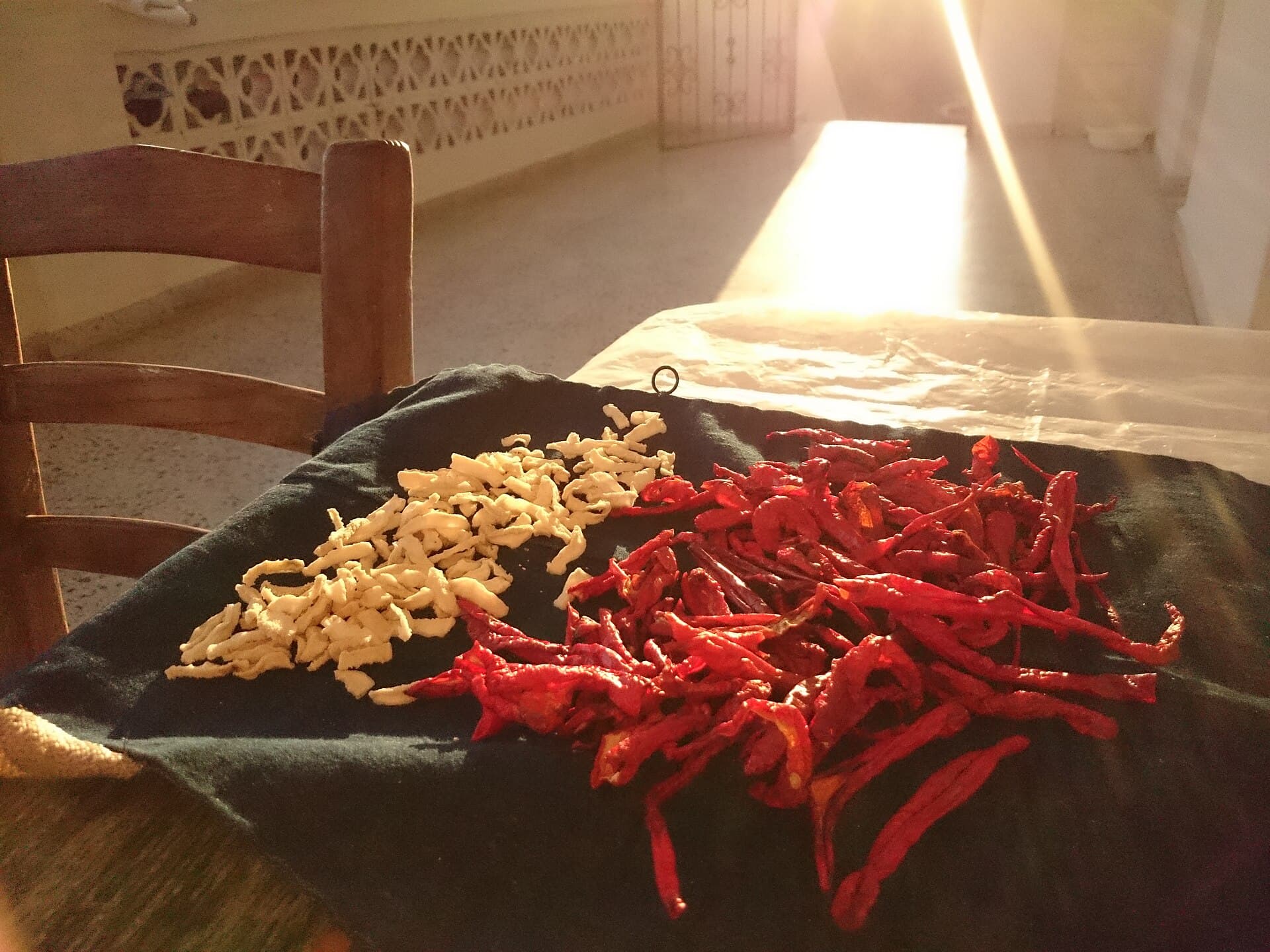
- Where to eat it
- At home: makdous and olives at breakfast, kishk and qawurma in winter. In the souq, by the jar at spice merchants and grocers; in season, from sacks of aubergines and walnuts set out in front of the shop.
- Price
- It varies with the product and the season; ask while it is weighed at the spice shop
- When it is eaten
- End of September and October, when the jars are filled
Mouneh is not a recipe. It is a season. Whatever comes in quantity at the end of summer and through autumn is worked into something that will last until spring. Aubergines go under oil. Peppers are threaded on string, yoghurt is mixed with bulgur and spread out in the sun, and grape and carob thicken in the cauldron. What comes out of it is not a set of separate products but a food system that runs for a year without a fridge.
When it is done
The calendar shifts from one item to the next, and it is tight. Kishk — dried yoghurt and bulgur — is made in August and September, because that is when milk is plentiful. Jars of makdous and pickles are filled at the end of September and go on through October; those are the weeks of the small round baladi aubergine. Qawurma and jams belong to autumn, and molasses follows the harvest at once. By the end of October the shelf should be full.
How things keep
Five methods run at the same time, each holding a different group. Salt brine takes the olives and the pickles, and natural fermentation takes the makdous. Sun drying on the balcony and the roof takes peppers, aubergines, kishk and qamar al-din, the sheet of dried apricot. Storing under fat takes qawurma, the meat put down in its own tallow, and boiling to syrup takes grape, pomegranate and carob. What they share is simple: none of them asks for electricity.
What sits on the shelf
Written out, the list runs long: makdous, mhallal, kishk, qawurma, basterma, makanek, pomegranate molasses, grape molasses, qamar al-din, samneh, jams, olives. Each is a job on its own, yet they are done in the same weeks and often in the same courtyard. Mouneh is the word that ties them to one season; it is not the name of a single product.
What has changed
Two things. The fridge took away the obligation, so most city households no longer fill jars, while the work carries on in the countryside and the mountain villages. The other is price: walnuts, olive oil and aubergines grew expensive, home batches shrank, vegetable oil replaced olive oil in some kitchens, and mouneh moved from housework to factory product and then to an export line. Most of the jars sold in the souq today are filled in a workshop, not at home.
Where a visitor sees it
At the end of September and in October mouneh becomes visible from the street: cloths spread in courtyards and on roofs, peppers threaded on strings, jars lined up by the doors. At the spice merchant, kishk powder, sheets of qamar al-din and jars of molasses sit there all year; in season the front of the shop belongs to sacks of aubergines and walnuts.
Tips
- Go to the souq at the end of September or in October; that is when the work is visible
- Choose what travels: kishk powder and sheets of qamar al-din are dry, jars are heavy and break
- A jar should be sealed under a layer of oil; if the oil has dropped below the level, leave it
- Ask whether it is homemade or workshop-filled; both stand side by side on the same shelf
Transparency
- How this was chosen
- Two kinds of record live here: the dish itself, and the place that serves it. Both are chosen and written by hand; ranking is not for sale and there are no sponsored entries. If a price range is not known for certain, it says so. Venues that serve alcohol are not listed on this site at all.
- Facts checked
- September 2026
- Last updated
- September 15, 2026