Damascene Mulberry Syrup
Black mulberries boiled down with no water added, then let down with iced water. The season runs from early May to the end of June; the rest waits in jars.
- Where to eat it
- Jarred at home for the mouneh shelf; bottled syrup at spice merchants and herbalists. In season the fresh fruit is in the Damascus markets and the Ghouta gardens.
- Price
- Variable — the price of a bottle changes from shop to shop, ask
- When it is eaten
- May and June for the fresh fruit; the syrup is drunk all summer
A finger of dark syrup goes into the glass, iced water goes on top, and the colour shifts from deep red towards violet. It tastes like no other mulberry drink, because there is no water in it: the syrup is boiled from the juice of the fruit alone. The season in Damascus is short and everyone knows it — the real work is filling the jars before it ends.
Which mulberry
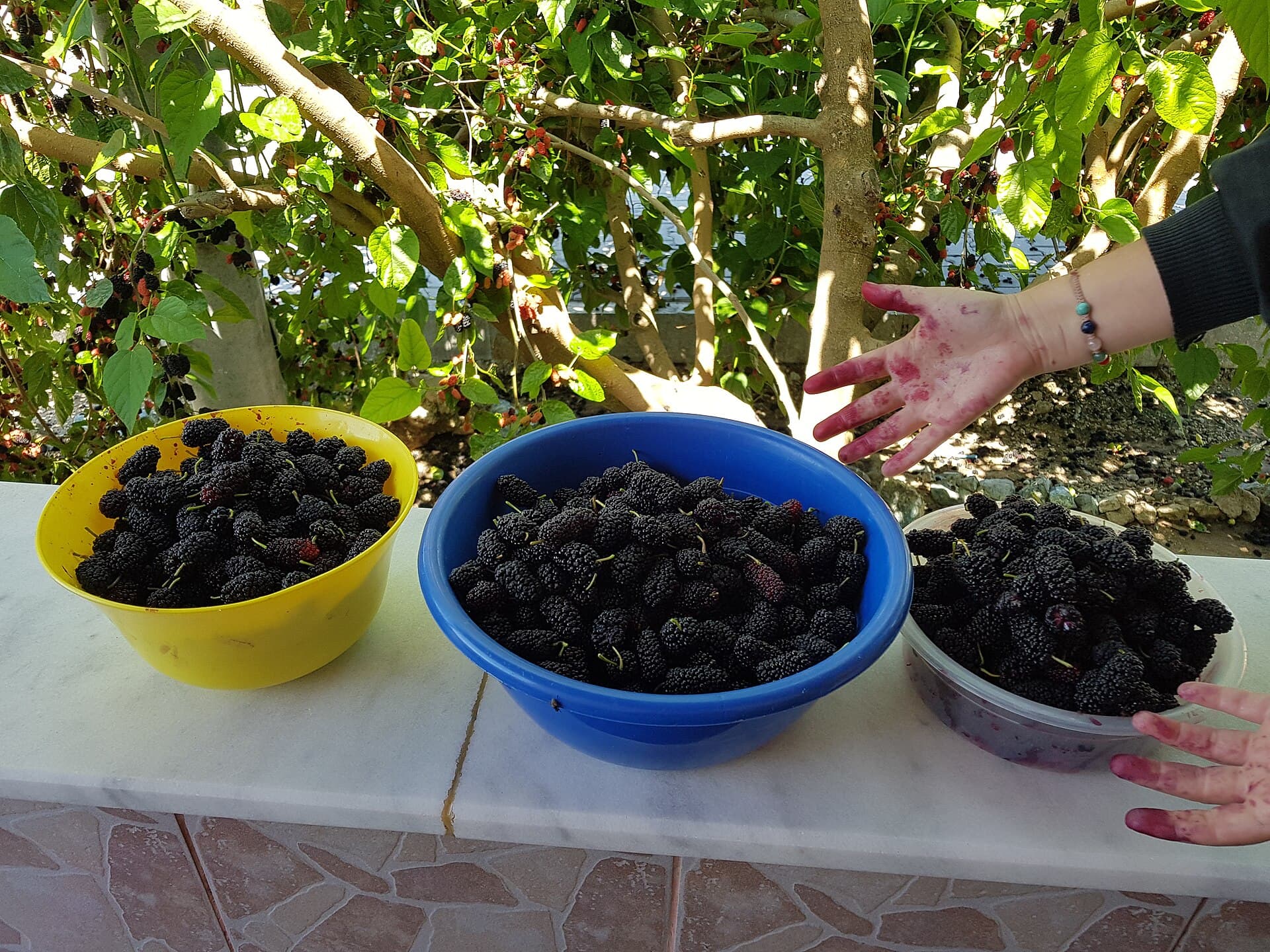
The fruit is tut shami, the black mulberry, Morus nigra. It is the tree of the Ghouta gardens and the Barada valley: dark, heavy with juice and fragile, so it has to be worked within a day or two of picking. The season opens in early May and closes at the end of June.
How it is made
Ripe mulberries go into the pot with no water added and are boiled until they collapse. Once cool they are pressed and passed through a fine sieve. One measure of sugar goes in for every two measures of juice; the mixture is boiled again and skimmed. It then stands in the sun for 3 days and is stirred morning and evening. Last, it is poured into glass bottles and jars that seal tightly.
How it is drunk
Let down with iced water. There is no fixed ratio — a finger of syrup for those who like it strong, half that for those who do not. The colour deepens the longer the bottle stands, and the taste does not turn sour. It is drunk all summer, though it is at its best in the fruit’s own season, with fresh syrup.
Where to find it
This is household work rather than shop work. Bottled syrup is sold at spice merchants and herbalists, and in season the fresh fruit sits in baskets in the Damascus markets. The jarred syrup belongs to mouneh, the winter store — the same shelf as jam, molasses and makdous.
An old record
Mulberry sherbet turns up in medieval sources: Ibn al-Baytar writes about it, and so does the Aleppo historian Ibn al-Adim. It reached folk poetry and proverb as well. Do not confuse it with jallab, which is made from date and raisin molasses and is on sale all year; mulberry syrup comes from a single fruit and only in its season.
Tips
- The season runs early May to end of June; outside it, look for bottled syrup rather than fresh fruit
- Let it down with iced water and add more if it comes thick — the ratio is a matter of taste, not recipe
- Ask the seller how much water to add; every batch has its own strength
- Do not confuse it with jallab: that is date and raisin molasses, this is one fruit and one season
Transparency
- How this was chosen
- Two kinds of record live here: the dish itself, and the place that serves it. Both are chosen and written by hand; ranking is not for sale and there are no sponsored entries. If a price range is not known for certain, it says so. Venues that serve alcohol are not listed on this site at all.
- Facts checked
- September 2026
- Last updated
- September 15, 2026