Mulukhiyah
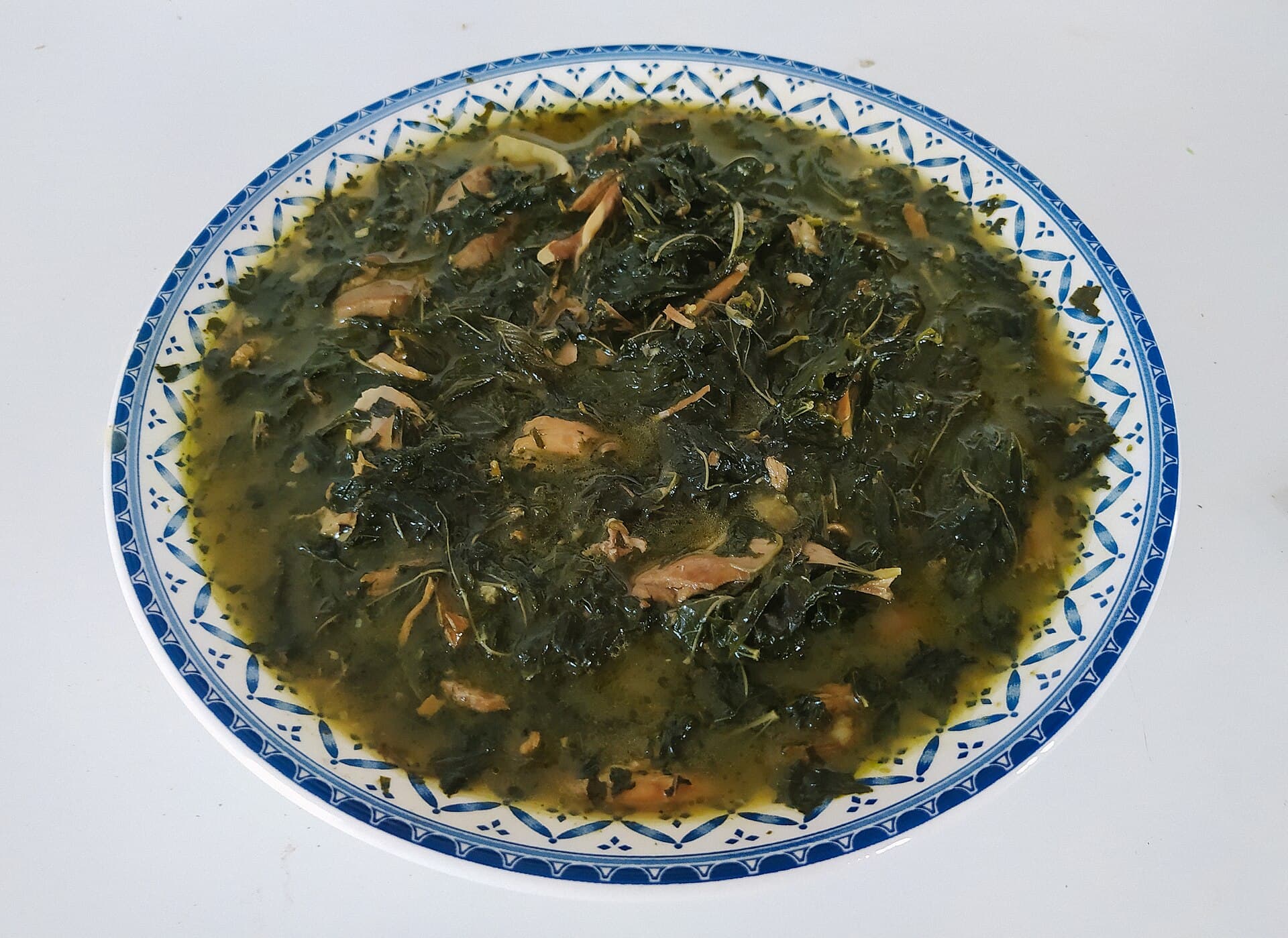
A green leaf cooked with garlic and coriander and eaten over white rice. The texture recalls okra, and a Damascus table sets lemon down right beside it.
- Where to eat it
- On the lunch menu of pot restaurants cooking home food; the dried leaf comes packeted from spice merchants, the fresh leaf from greengrocers in season.
- Price
- Variable — ask the price of a plate when you order
- When it is eaten
- The fresh leaf belongs to the warm months; with dried leaves it is cooked all year
Mulukhiyah is a leaf, Corchorus olitorius, also known in English as Jew’s mallow. Boiled, it thickens the broth into something slippery and mucilaginous, close to cooked okra. The taste is faintly bitter. On a Damascus table that texture is not a flaw to be worked around; it is the dish. The leaf is sold fresh and dried, and the two do not taste the same.
The Levantine version and the Egyptian one
They share a name but not a plate. In Damascus, and in the Levant generally, the leaves are chopped and sautéed in oil with garlic and coriander; in Egypt the same leaf becomes something closer to a soup. The Levantine method boils meat or chicken in a separate pot and keeps the stock aside. The leaves and the coriander are then cooked in that stock. It arrives with white rice and fresh lemon, and vinegared onions and toasted bread may be set down beside it.
A short historical note
The dish appears in medieval Arabic cookbooks, among them the recipe collection of Ibn al-Adim of Aleppo. The Egyptian historian al-Maqrizi records it as the favourite dish of the Umayyad caliph Muawiya. The Fatimid ruler al-Hakim banned mulukhiyah in 1005 and his successor al-Zahir lifted the ban, but the Druze, who hold al-Hakim in a particular regard, still observe it and do not eat mulukhiyah. That is why the dish is absent from tables in the Druze areas of Syria.
Where to eat it
On the lunch menu of the pot restaurants that cook home food, when it is in season. It is not written up every day, so ask what the day’s pot holds. The dried leaf is sold in packets by spice merchants and is light enough to take home; the fresh leaf turns up in bunches at greengrocers in season.
Tips
- If it is not on the menu, ask — it comes out as the dish of the day
- The slippery texture is close to okra; that is the definition of the dish, not a fault
- Squeeze the lemon; the sourness balances the texture and that is how it is eaten
- Do not look for it in Druze areas, where it is not eaten
- The dried leaf is light and keeps well, better for taking home than the fresh one
Transparency
- How this was chosen
- Two kinds of record live here: the dish itself, and the place that serves it. Both are chosen and written by hand; ranking is not for sale and there are no sponsored entries. If a price range is not known for certain, it says so. Venues that serve alcohol are not listed on this site at all.
- Facts checked
- September 2026
- Last updated
- September 15, 2026