Qashtalia, the Syrian Layali Lubnan
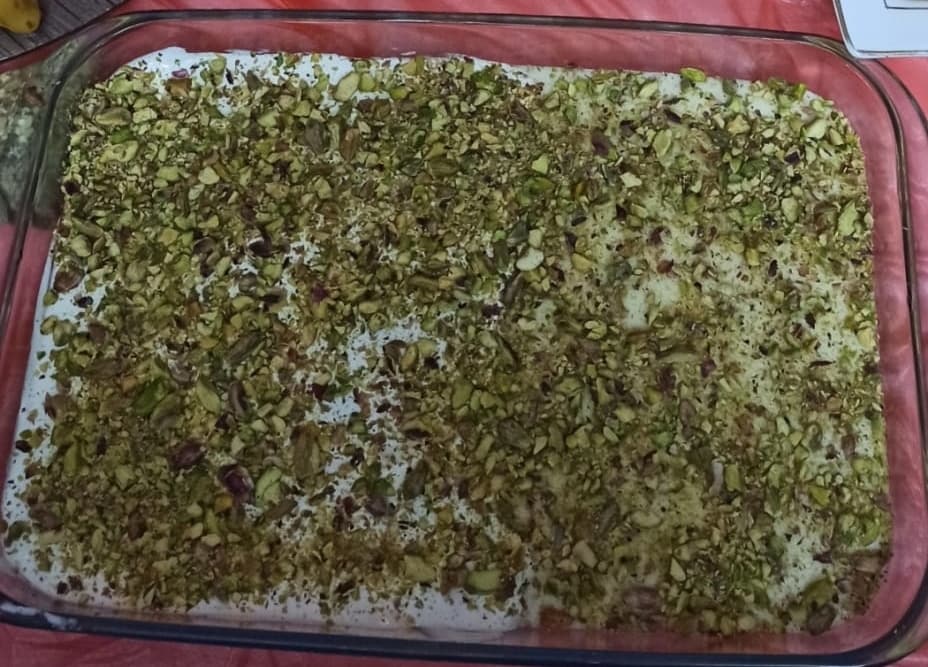
A cold dessert in two layers: semolina pudding below, clotted cream above, crushed pistachio and syrup on top. Lebanon calls the same plate layali lubnan.
- Where to eat it
- Cut from the tray in the chilled display at sweet shops; at home it is made in the morning in summer and kept in the fridge.
- Price
- Variable — ask for the price per portion or per kilo at the counter
- When it is eaten
- A summer evening, once it has chilled right through
A cold dessert built in two layers. Semolina simmered with milk goes into the tray first, a layer of qishta clotted cream goes over it, and crushed Aleppo pistachio and syrup finish it. In Syrian Arabic the name is qashtalia; in Lebanon the same plate is layali lubnan, nights of Lebanon.
How the two layers are built
The lower layer is semolina and milk. It is simmered with constant stirring, in some recipes with a little gum arabic, then poured into a tray and left to cool. Once the pudding has set, the cream is spread over it. Crushed pistachio and either honey or qatr syrup go on top, and some trays carry dried rose petals as well. The scent comes from orange blossom and rose water.
Why it has two names
The sources are explicit about the distinction. In Syrian Arabic, a dessert made from qishta and starch and finished with syrup and nuts is called qashtalia. In Lebanon the same plate is layali lubnan, or layali beirut. Both names describe one thing, and nothing on record says which came first; calling it an invention of Damascus would be just as groundless. At a Damascus sweet shop, qashtalia is the word that works.
Where to eat it
Sweet shops keep it in the chilled display and cut it from the tray, or serve it in a bowl. The stronger side of it is domestic. A household expecting guests in summer makes it in the morning and puts it in the fridge. It is never served warm: as it comes up to room temperature the cream loosens and the two layers run into each other.
What it is not
Muhallabiyeh is a single layer of milk and starch, while qashtalia has semolina below and cream above. Haytaliyeh has no layers at all and sits mixed in the bowl. The quickest test is the spoon — if it lifts two distinct layers at once, you have qashtalia.
Tips
- Qashtalia and layali lubnan are the same dessert — you will hear both names
- Eat it cold; as it warms the cream layer starts to run
- The pistachio goes on just before serving, and softens on a tray left standing
- It is milk and cream — skip it if lactose is a problem
Transparency
- How this was chosen
- Two kinds of record live here: the dish itself, and the place that serves it. Both are chosen and written by hand; ranking is not for sale and there are no sponsored entries. If a price range is not known for certain, it says so. Venues that serve alcohol are not listed on this site at all.
- Facts checked
- September 2026
- Last updated
- September 15, 2026