Qurban Bread — the Prosphora of Syria’s Churches
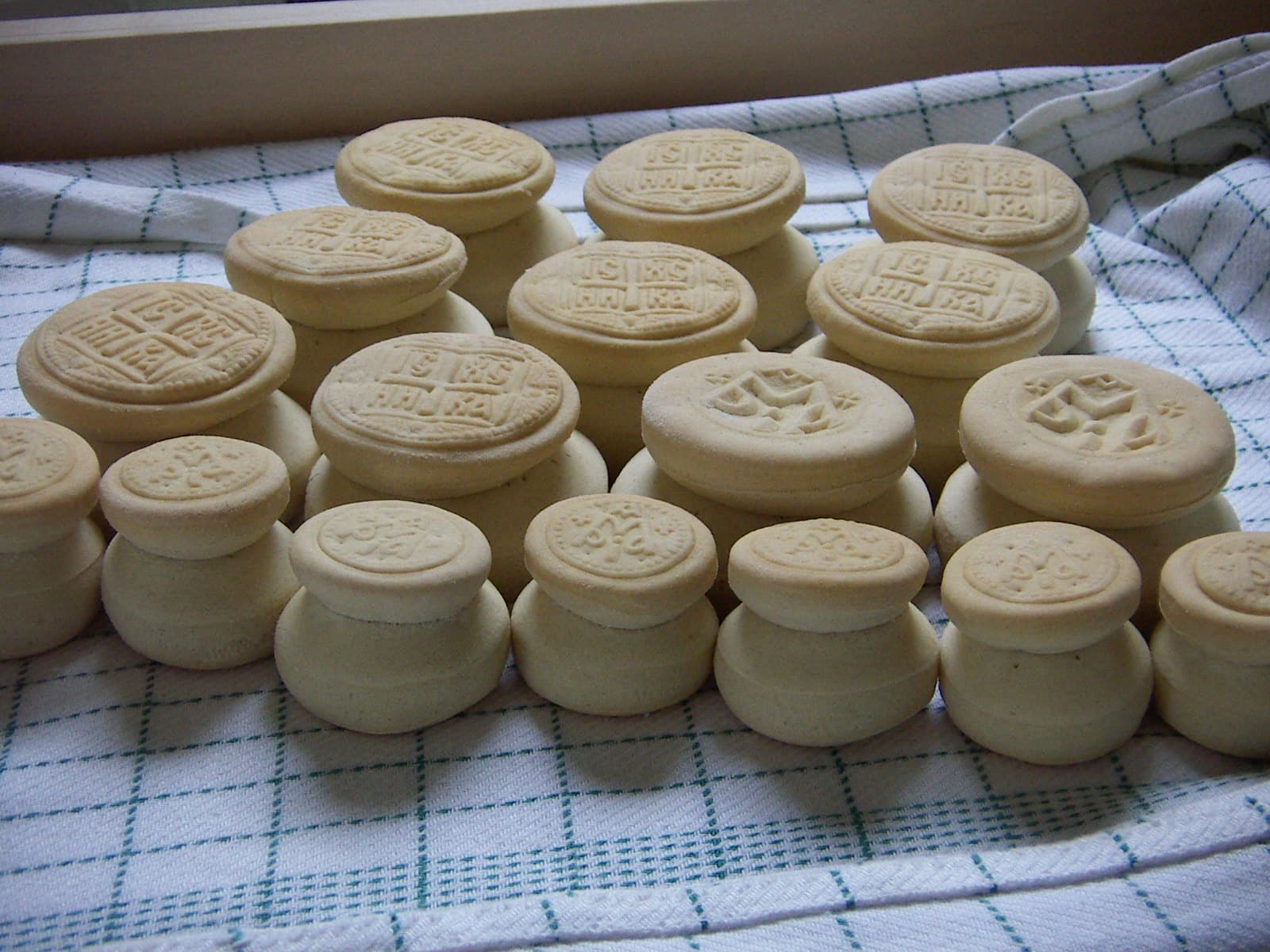
Flour, water and a little salt; no oil and no sugar at all. The wooden seal pressed into the disc marks where the loaf is to be cut during the liturgy.
- Where to eat it
- Baked in church bakeries and in Bab Touma for the liturgy; handed out to the congregation afterwards rather than sold over a counter.
- Price
- Not sold — handed out at the liturgy
- When it is eaten
- Sunday morning and Easter week
This is the bread used in the liturgy. The list of ingredients is short: pure white wheat flour, warm water and a little salt. No oil, no sugar, no milk. That plainness is a rule rather than a preference. The dough is formed into thick discs and a wooden seal carved with religious symbols is pressed hard into each one.
What is in it, and what is not
Flour, water, salt and yeast. After an hour or two of proving the dough is divided into equal balls. Each ball is flattened into a thick disc. It bakes at 200 degrees for 15-20 minutes and comes out pale gold. A dark crust is not wanted, because it makes the carving on the seal unreadable.
What the carving says
In the Greek and Antiochian tradition the seal carries a large cross at the centre with twelve small crosses around it: Christ and the twelve apostles. The seal is pressed hard. The pattern has to come out deep and legible. During the liturgy particular pieces of the loaf are cut following that pattern, so the stamp is not decoration but a cutting plan.
How the churches differ
In Syria the Greek Orthodox, Syriac and Armenian churches each use their own seals. The shape, and whether the bread is leavened or unleavened, follows the denomination; two churches in the same city do not turn out the same loaf. The bread is not for sale. It is baked for the liturgy, and what remains is handed out to the congregation.
Where it is baked in Damascus
The Hanania bakery in Bab Touma has been stamping this bread for four hundred years. The Salmon brothers, who run it, trace the family back to Maaloula. Mastic, mahlab and orange blossom water go into their dough. The first dough-kneading machine brought into Syria still works there. The bakery serves churches rather than passers-by; ask before you walk in.
Tips
- The bread is not for sale; ask at a church rather than ordering at a bakery
- The carving on the seal follows the denomination, so no two churches match
- The Bab Touma bakery works for churches — ask permission before entering
- Ask before photographing; the seals and dough sit on a working bench
Transparency
- How this was chosen
- Two kinds of record live here: the dish itself, and the place that serves it. Both are chosen and written by hand; ranking is not for sale and there are no sponsored entries. If a price range is not known for certain, it says so. Venues that serve alcohol are not listed on this site at all.
- Facts checked
- September 2026
- Last updated
- September 15, 2026