Sambousek, the Syrian half-moon pastry
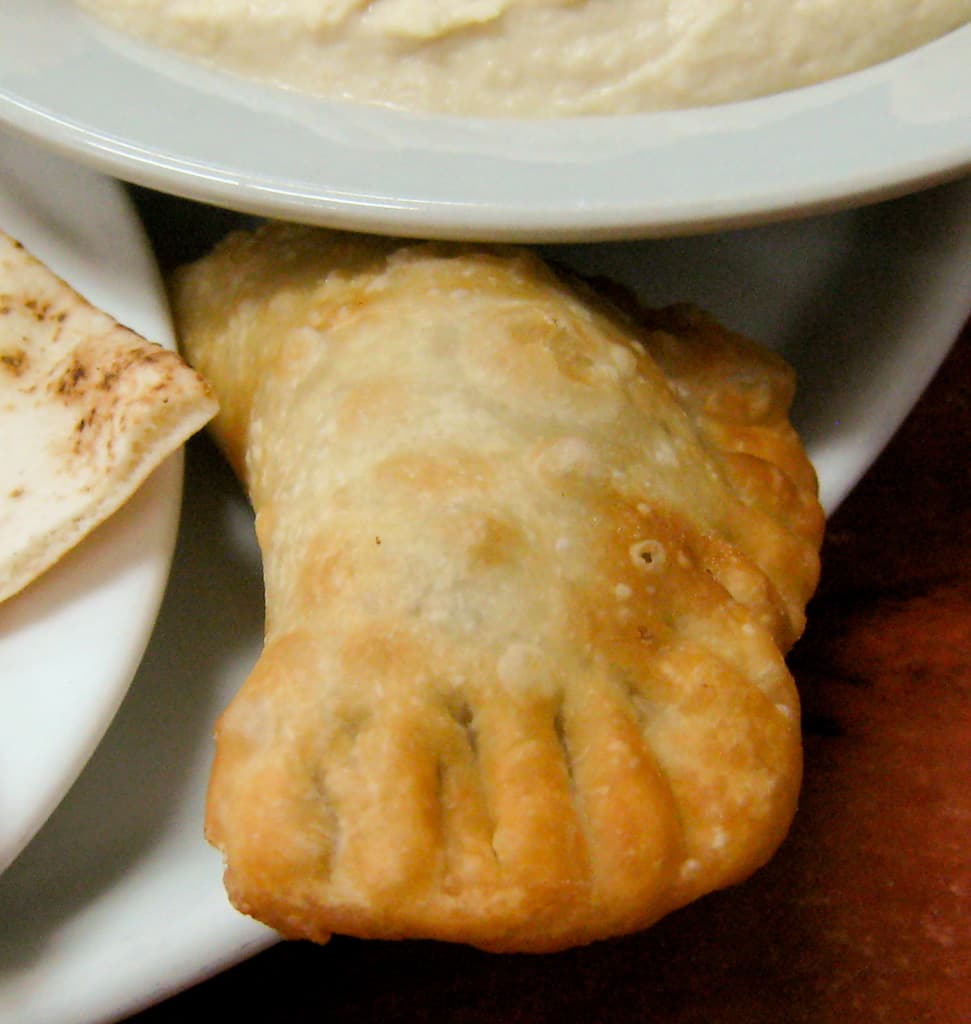
Thin dough cut into discs, filled with meat or cheese, folded into a half-moon, crimped shut and fried. In Syria it is the first plate when the fast breaks.
- Where to eat it
- At home tables through Ramadan; sold by the piece all year at pastry counters and cooked-food shops.
- Price
- Variable — sold by the piece at the counter; ask the price
- When it is eaten
- Ramadan evenings, just before the fast breaks
Sambousek is a sealed pastry made from thin dough. The dough is cut into discs, the filling goes in the middle, the disc is folded over into a half-moon and the edge is crimped shut with fingers or a fork. It is fried, and that is the point. A baked version exists, but the fried one is what a Syrian table expects, and in Ramadan it is the first plate to arrive beside the soup.
What goes inside
There are two classic fillings. The first is minced lamb or beef cooked down with onion, with pine nuts, cinnamon and black pepper. The second is white cheese with parsley, the lighter one. Crimping the edge is work rather than decoration: the dough is pressed hard so the seam does not open in the oil. One pastry that opens empties its filling into the pan and spoils the whole batch.
How it differs from fatayer
It parts from the fatayer on this site in three ways at once. Fatayer is filled with spinach, sealed on three sides into a triangle and baked. Sambousek is a half-moon, filled with meat or cheese, and fried. They can sit side by side on one table, but one is the bakery’s work and the other the stove’s.
Its place at the Ramadan table
Sambousek is the fixed opening of iftar in Syria. It comes out with the soup, and it is often the first mouthful after the fast. The preparation is built around that: trays of them are folded raw before Ramadan and frozen, and each evening only that night’s share is taken out and fried. A household eats from the same batch all month.
Where the name comes from
The name goes back to the Middle Persian word sanbosag, meaning a triangular pastry. The same family of sealed pastries is called samosa to the east and empanada to the west. Sambousek is the Levantine end of it, and the filling is where it separates from its relatives: minced meat, onion and pine nuts is the local taste.
Tips
- Meat and cheese are sold separately; say which one you want
- Eat it hot; the dough turns heavy once it cools
- Ask if you want the baked version; most counters fry
- Do not order it as fatayer — sambousek is a fried half-moon
Transparency
- How this was chosen
- Two kinds of record live here: the dish itself, and the place that serves it. Both are chosen and written by hand; ranking is not for sale and there are no sponsored entries. If a price range is not known for certain, it says so. Venues that serve alcohol are not listed on this site at all.
- Facts checked
- September 2026
- Last updated
- September 15, 2026