Syrian Pickles: Mhallal
On a Syrian table the pickle plate is not a choice but a fixture. It is put up in salt brine rather than vinegar, and the jars are filled in September.
- Where to eat it
- With the mezze, beside shawarma and grills, and at the edge of the plate in ful and hummus shops. Sold by weight at pickle stalls in the markets.
- Price
- Variable — by the kilo in the market; in a restaurant it comes with the meal, so ask when you order
- When it is eaten
- Jars are put up in September and October; on the table all year
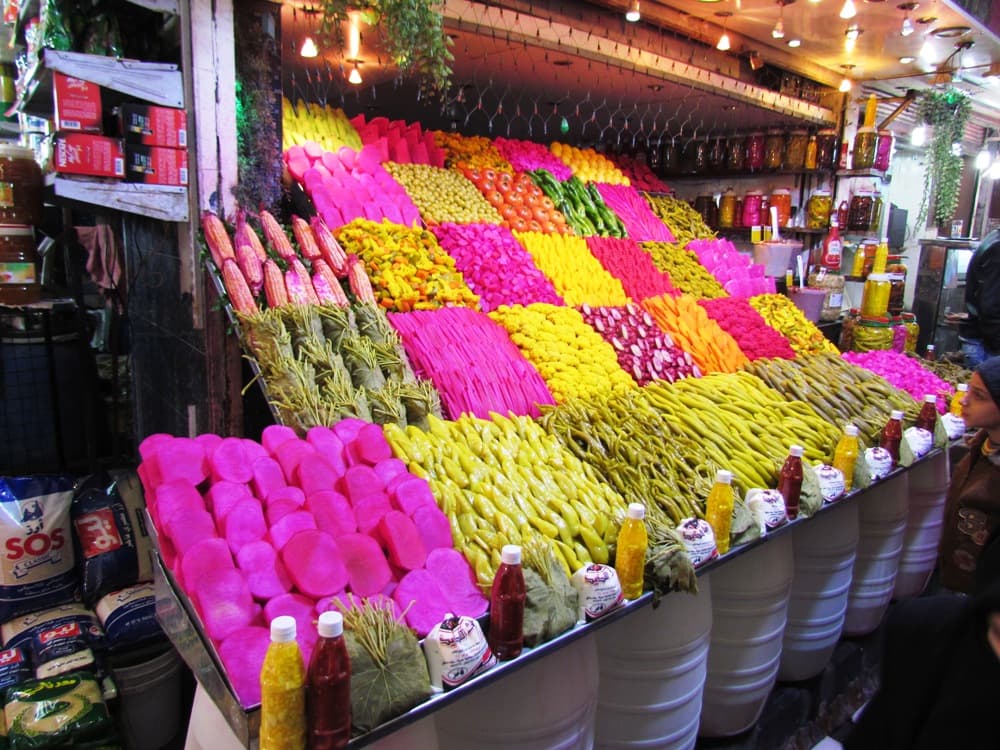
On a Syrian table the pickle plate is not a choice; it arrives beside the mezze, the shawarma, the ful and the grill without being asked for. The jars are put up in September and October, in the weeks when vegetables are cheap, and the table eats from them all year.
Brine, not vinegar
The method is salt water. Salt, water, a little lemon or vinegar, and fermentation does the rest. Anyone arriving from Turkey notices it in the first bite: Syrian pickles are markedly less sharp and more salty. A vine leaf or a few chickpeas go into the jar to keep the vegetables crisp, and a slice of beetroot goes in for colour.
What is on the plate
Small cucumbers, turnip turned pink by beetroot, little courgettes stuffed with carrot and mint, green and red peppers, garlic, cracked olives. There is also plain brined aubergine, and it should not be confused with makdous: makdous is stuffed with walnut and kept under olive oil, while this aubergine sits in salt water.
The pink turnip is the most visible thing on any stall. The colour is beetroot, not dye. What ends up on the plate changes from house to house and shop to shop; there is no standard mix.
Where to buy it
The pickle seller — mhallalati — is a shop type of its own. In Damascus they line the Bzouriyeh and Midhat Pasha stretch, in Aleppo they sit inside the souq. The sale is by weight. In a restaurant the plate comes with the meal. In the market you buy it by the jar or by the kilo.
Tips
- The pink of the turnip comes from beetroot, not from dye
- Do not confuse it with makdous: that one is walnut-stuffed and under oil, this aubergine sits in brine
- Less vinegary and saltier than Turkish pickles — you notice it in the first bite
- Buying a jar, check that the vegetables are still under the brine
Transparency
- How this was chosen
- Two kinds of record live here: the dish itself, and the place that serves it. Both are chosen and written by hand; ranking is not for sale and there are no sponsored entries. If a price range is not known for certain, it says so. Venues that serve alcohol are not listed on this site at all.
- Facts checked
- September 2026
- Last updated
- September 15, 2026