The Dead Cities of Syria: which one to visit
There are dozens of abandoned Byzantine villages and they are not alike. Which is easiest to reach, which is best preserved, what each has, and where to take care.
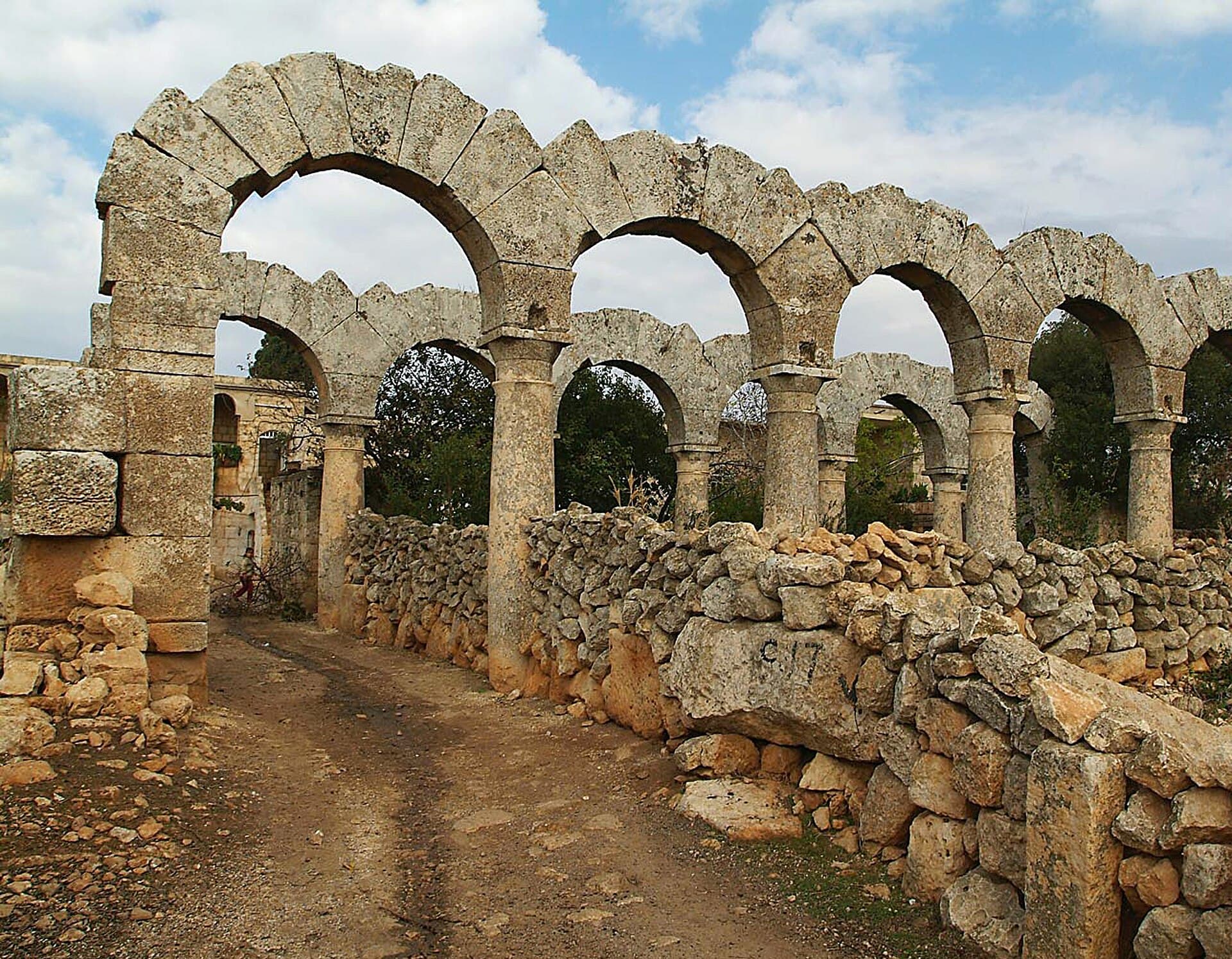
Abandoned Byzantine villages stand on the limestone plateau of northern Syria: stone houses, churches, olive presses and cisterns. Their wealth came from the olive oil trade; when the trade routes changed they emptied, and nobody built over them afterwards. That is why what you see in most places is not an excavation but an abandoned village. Part of the area entered the UNESCO World Heritage list in 2011 as the Ancient Villages of Northern Syria.
Two regions, three ridges
In the south is Jabal Zawiya: Serjilla, al-Bara and Ruweiha sit on the same ridge and all three fit into one day. In the north there are two more groups. On Jabal Simeon are the monastery of Mar Simeon and Deir Semaan, the pilgrim town at its foot, with Basufan, Fafertin, Qalota and Kharab Shams around them; west of Aleppo, standing on its own, is the Mushabbak basilica. The third group is on the Barisha and Ala ridges: Baqirha, Babiska, Barisha, Behyo, Qalb Lozeh and Kirkbize.
Which is easiest to reach
The easiest is Mushabbak: 25 kilometres west of Aleppo, with a metalled road running right to the front of it. Mar Simeon and Deir Semaan are also by the road and go together in one visit. Al-Bara is entered through the village, because the modern village was built on top of the ancient town. There are hard ones too. The last stretch to Serjilla is unpaved and turns to mud after rain, the last part of the way to Behyo is a dirt track, and a high-clearance vehicle makes the climb to Qalota easier.
Which is best preserved
As a village, Serjilla. A bath sits inside a natural bowl, the andron building directly opposite it, and two-storey stone houses around them; the roofs were timber and are gone, but the walls, door jambs and gables are in place. As a church, Mushabbak: walls, gables, arches and rows of windows all standing, held to be the most complete church building in the Dead Cities. As a facade, Qalb Lozeh: built around 460, its two west towers with a wide arch between them are taken to be the earliest known example of the Romanesque front that appears in Europe four centuries later.
What each one has
If you want dates, go to the inscriptions. The apse at Fafertin belongs to the oldest securely dated church, 372, and there is 492 over the west door at Qalota. Basufan carries 491-492 on its south wall, Baqirha 546 on the door lintel of the East Church, and Babiska 609-610 in its west church. If you want the economy, go to the presses: those at Barisha sit among the mansions, those at Behyo along the western edge of the ruin, and those at al-Bara are industrial in scale. If you want tombs, al-Bara: two pyramid-roofed monuments stand among the olive groves and the larger one can be entered. For the machinery of pilgrimage, Deir Semaan, with its two-storey pilgrim inns and the remains of three monasteries.
Where to take care
Unexploded ordnance remains a risk in part of the region; do not leave the cleared path. Most sites have no signage, so the driver has to know the place — asking for the name of the site often gets you nowhere, while the name of the village works. Basufan, Fafertin, Barisha and al-Bara are living villages: do not walk into a courtyard, do not photograph without asking, and remember that some houses among the ruins hold animals. The ground everywhere is rock blocks and loose stone, so solid soles here are not advice but a requirement.
How to divide it up
One Dead City does not fill half a day; they are planned in clusters of three. Serjilla, al-Bara and Ruweiha make one half day. Baqirha, Babiska and Dar Qita make another, with three kilometres between them. Behyo and Qalb Lozeh are two kilometres apart, and Kirkbize is less than one from Qalb Lozeh. Mar Simeon goes with Deir Semaan, and Basufan and Fafertin are on the same side road. Public transport reaches none of them.
Tips
- Do not leave the cleared path; ordnance is still a risk in part of the region
- The driver has to know the place; ask for the village name, not the site name
- Plan in clusters of three; one site does not fill half a day
- Do not go to Serjilla after rain; the last stretch is unpaved
- In ruins inside living villages, stay out of courtyards and ask before photographing
Transparency
- How this was chosen
- This page carries the fastest-ageing information on the site: visa rules, exchange rates, border crossings and SIM prices change several times a year. The verification date above says when the facts were last put through their sources; for anything later, check your own foreign ministry travel advice and a Syrian consulate. No figure that is not known for certain is written here.
- Facts checked
- September 2026
- Last updated
- September 15, 2026