The farming year in Syria
Roses in May, freekeh fields burning at the end of it, olives in autumn and winter stores on the roofs. What the roadside shows in the month you arrive.
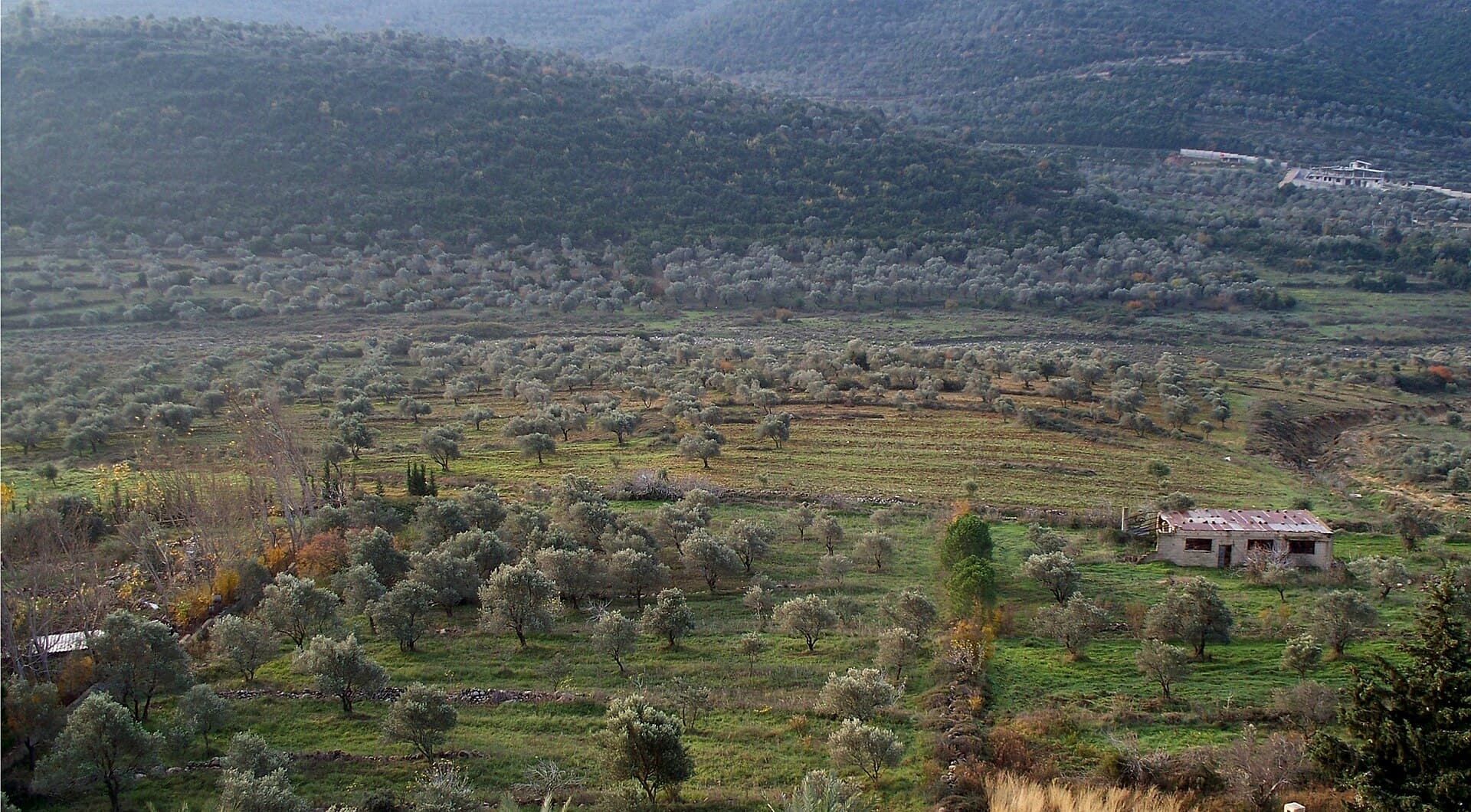
In Syria the season is not a weather question, it is the calendar itself. The month you arrive in decides what you see going on at the roadside. Hands picking roses in May, green wheat burning in the field at the end of May, sacks of olives in autumn, winter stores laid out on the roof at the end of summer. This page sets out that calendar.
Farming is still the backbone
Agriculture is about a quarter of the national economy and the only safety net for the millions who remain in the countryside. Wheat, cotton and olive output all fell during the war years, with the countryside of Hasakah and Aleppo hit hardest.
For a visitor the point is that the field you are looking at is not decoration. The tractor, the sacks and the stall by the road carry a family’s year. Asking before you photograph is particularly in order here.
Olive, the country’s largest tree
There are around ninety million olive trees in the country and some seven hundred and twenty presses working the crop. Aleppo comes first by tree count and area, Idlib immediately after, then Tartus, Latakia and Deraa. Most groves are unirrigated, growing on rain alone and on stony ground where nothing else takes.
The harvest is in autumn. Branches are combed and stripped by hand, the crop goes to the press in sacks, and pressing within a few days of picking is the measure of quality. The weeks when the new oil comes out are a season of their own: the oil is green and bitter, and it is eaten poured on bread with zaatar. The same oil is the raw material of Aleppo soap.
The Damascene rose and May
In the village of Al-Mrah in the Damascus countryside the rose opens in May and picking begins that week. Families go out to the fields early in the morning and pick by hand; in the afternoon the buds are sorted at home, some dried for tea, the rest prepared for distillation. The village holds its annual rose festival in the same days.
The practice was inscribed on the UNESCO representative list of intangible cultural heritage in 2019. The women make the rose syrup, the jam and the pastries together, and apothecaries sell the dried buds. If you are in Damascus in May, a day out into the countryside is the most concrete opportunity the calendar offers.
Apricots and the Ghouta
The gardens around Damascus, the Ghouta, are known for apricots. Qamar al-Din, apricot pulp dried in the sun into sheets, is traced back here: the variety best suited to the work grew in the Ghouta. The same variety still grows only in Syria and in the south-west of Turkey.
The apricot season is in early summer. The sheets are sold by the box in the souq and the drink is made from them at home; in Ramadan every stall has them. The Ghouta is smaller than it was, but the orchards are still there.
Freekeh: the field that burns at the end of May
This is north-western Syria’s work. The wheat is cut while still green, with the grain milky, and the sheaves are heaped in the field and set alight. The dry straw and husk burn while the moisture inside the grain protects it. Then it is threshed and dried in the sun.
In the countryside of Idlib and Aleppo the harvest starts at the end of May, when the leaves of the wheat are only beginning to yellow. In towns like Taftanaz the burning is done at the edge of the field and the smell of smoke reaches the village. If you are on the road you will see the smoke from a distance. That is not a fire, it is a harvest.
Pistachio: Aleppo’s name, Hama’s fields
The Arabic name of the pistachio points straight at Aleppo, because that is the traditional growing region of the tree. Today the centre of production is a little further south: Morek, in Hama governorate, is the country’s largest pistachio producer and holds its largest pistachio market. Almost the whole of the town’s land is planted with pistachio, and the tree count runs to around eight hundred thousand.
Pistachio is the backbone of Syrian sweets: knafeh, baklava, znoud al-sitt and barazek all carry it. In the souq the shelled and unshelled kernels are sold separately, and a fresh crop is greener in colour.
Grain and cotton on the Euphrates
The country’s large fields are in the east. The Euphrates and its tributaries feed the irrigated belt running from Raqqa to Hasakah, and the wheat and cotton come from there. The Tabqa Dam sits at the centre of that system; Lake Assad behind it was built for irrigation and for power.
Output in this region fell sharply in the war years and the recovery is still under way. The harvest calendar also shifts with altitude and with the rain of the given year. If you want to know when a particular field will be cut, do not look for a fixed date, ask locally.
Mouneh: the winter stores
Late summer and autumn are a season of their own in a Syrian house. It is called mouneh, the making of winter stores, and it is collective work that takes several days in the courtyard and on the roof.
Kishk is made in August and September: yogurt is soured, mixed with bulgur, dried in the sun and ground to a powder. In autumn, in the weeks when aubergines are cheap, makdous is put up: small aubergines stuffed with walnut and garlic and buried in olive oil. In the same weeks tomato paste is spread out, pomegranate molasses is boiled down and peppers are dried. Look at a roof and what is laid on it tells you the month.
What each month shows
May: rose picking and the rose festival at Al-Mrah. End of May: freekeh burning in the countryside of Idlib and Aleppo. Early summer: apricots. August and September: kishk on the roofs. Autumn: the olive harvest, makdous and the new oil.
This calendar shifts by two or three weeks with altitude, the coast early and the mountains late. Do not look for an exact day. Walking into a coffee house in the district you are heading for and asking is the most reliable source there is, and asking permission before entering a field is part of the same conversation.
Tips
- May: rose picking and the festival at Al-Mrah, inscribed by UNESCO in 2019
- Smoke in the Idlib and Aleppo countryside at the end of May is the freekeh harvest, not a fire
- The olive harvest is in autumn; the weeks of the new oil are a season of their own
- Kishk is dried on the roofs in August and September, makdous is put up in autumn
- The calendar shifts two or three weeks with altitude; ask locally for an exact day
Transparency
- How this was chosen
- This page carries the fastest-ageing information on the site: visa rules, exchange rates, border crossings and SIM prices change several times a year. The verification date above says when the facts were last put through their sources; for anything later, check your own foreign ministry travel advice and a Syrian consulate. No figure that is not known for certain is written here.
- Facts checked
- September 2026
- Last updated
- September 15, 2026