Judging quality at the stall
Do the pistachios rattle, has the za’atar been padded out, does the oil catch at the back of the throat, does the rug read from behind. Tests done by hand.
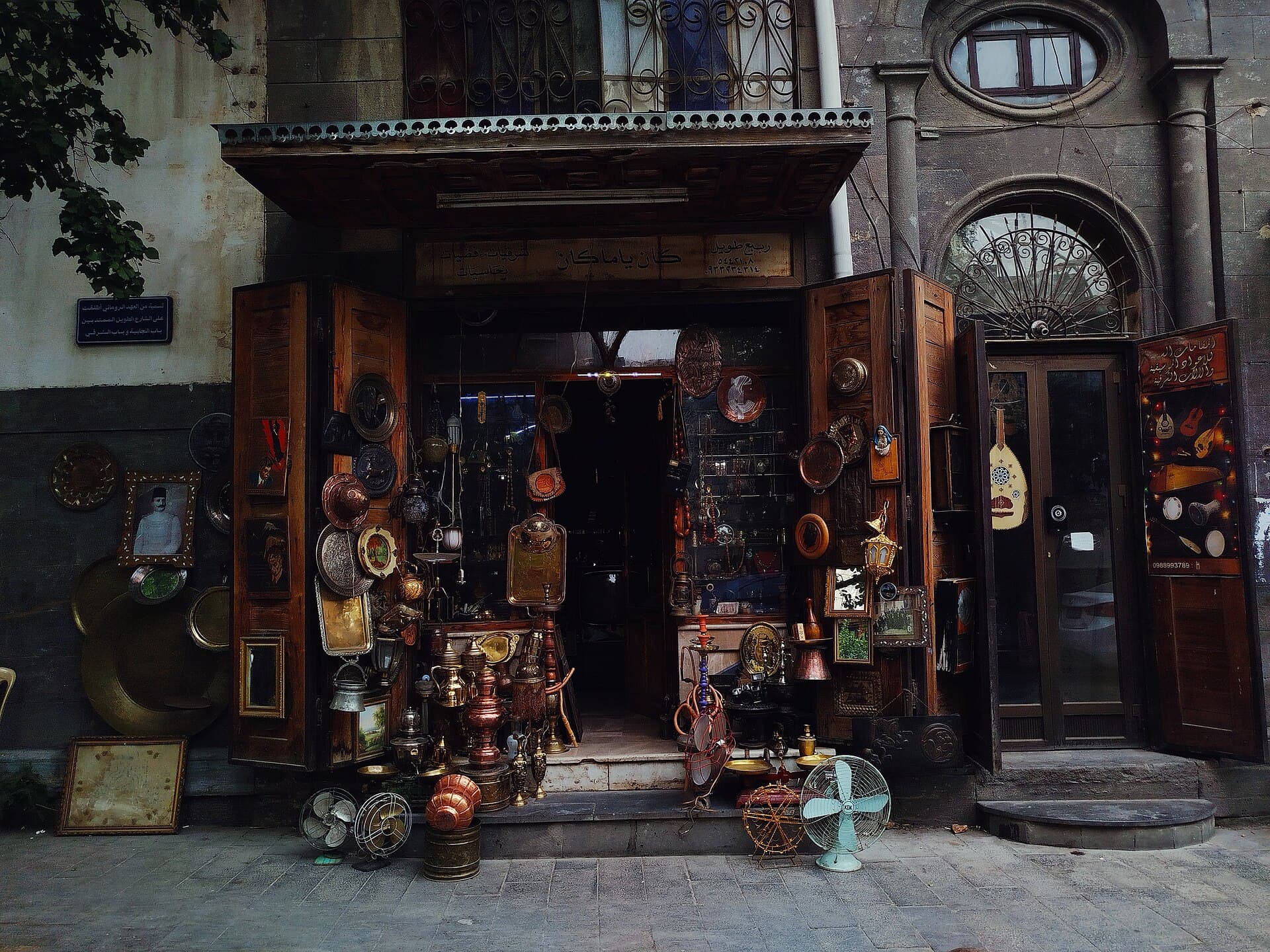
What to buy and what to leave is on the shopping page in this section, and how the crafts are made is on the crafts page. This page takes the third question: of the two things in front of you, which is the better one. The laurel content of soap, the reverse side of brocade and the fingernail test on inlay are explained there and are not repeated here. What follows are tests you can run at the stall in a few seconds.
One method: put two grades side by side
Looking at a single sample tells you nothing about quality. What you can read is a difference. So one sentence works at every stall: is there a better one, and can I see the two together. A good seller expects the question and produces it. A seller who does not produce it has also told you something.
Two habits finish the job. Ask for a broken sample first — a split pistachio, the cut face of a soap block, a slice of cheese are already on the counter and can be asked for. Then buy small: a hundred grams on the first day, a kilo on the second. If you have three days in a market, spend the first taking measurements.
There is one warning sign. If every grade carries the same price, there is only one grade in the shop, and it is the lower one.
Pistachios and nuts: if it rattles it is old
The first test on pistachios in the shell is sound. Take a handful and shake it. If the kernels knock about inside the shells they have shrunk, which means last year’s crop. In a new crop the kernel fills the shell and makes no noise. The second test is smell: old stock smells of paint or of oil, while new nuts smell of almost nothing.
Ask for a broken one. The skin around the kernel should be lilac and the flesh pale green; a yellowish, dull green kernel has been in storage a long time. Roasting and salting hide age, which is why raw and in the shell is the safer buy. Walnuts work the same way: a pale kernel is new, a dark brown wrinkled one is a year old.
The sentence to use is short: is this year’s crop. If the answer takes a while, you have had your answer.
Za’atar, sumac and spices
Za’atar is not a plant but a blend of thyme, sumac, sesame and salt. The way to cheapen it is equally settled — bran, semolina or breadcrumb goes in. The test is done with the fingers. Crush a pinch between two of them: a good blend stains the skin a greenish brown and the thyme and sesame come up at once. If the mix is powdery, uniform in colour and weak in smell, it has been padded. Whole visible sesame seeds are a good sign.
With sumac the problem is dye. Take a little on a wet fingertip and touch it to your tongue: real sumac is sour on the instant and its colour is a dull maroon. A bright red, uniform powder with little sourness has been coloured or weighted with salt.
The test described on the Aleppo pepper page here belongs to the same family: push your hand into the flakes, and good ones feel damp and oily. Dry, dusty and pale means old.
Olive oil: which harvest
With olive oil there is one question, the harvest: is this year’s or last year’s. The Syrian harvest falls in autumn and the weeks when the new oil comes out count as a season of their own. New oil is greenish and cloudy, it smells of grass and green olive, and on tasting it leaves a slight burn at the back of the throat. That burn is not a fault. It is the freshness.
Old oil has gone soft, its smell has flattened and the taste drifts towards paint. Do not buy from a clear bottle standing in the light; ask for a tin or dark glass. Tasting at the counter is normal and asking for it is not rude.
Apricot sheets and dried fruit
A sheet of qamar al-din should be dark orange and pliable, bending without cracking and tacky to the touch. A bright orange sheet that is stiff and brittle has either taken a lot of sugar or been weighted with starch. Wipe the dust off it with a finger: heavy sugar dust says the fruit content is low.
With dried apricots colour does the same work in reverse. Sun-dried fruit turns brown, while sulphured fruit stays a lively orange. Both are sold and the choice is yours, but do not read bright orange as natural. For raisins and figs use your hand: damp fruit stuck together and crusted with sugar has been sitting a long time.
A rug is read from the back
All the information in a rug is on its back. Turn it over and look at the pattern: in hand weaving the design reads clearly from behind and the individual knots are visible. A back that is smooth, closed or covered with a mesh is machine work. Knot density is counted there too, and the more knots to a square centimetre the finer the drawing.
Two more tests. The fringe: in hand weaving it is the continuation of the warp, while a fringe sewn on afterwards gives away a machine. And colour: with natural dye the same shade shifts slightly across the length of the piece, because the dye was kept in batches. Do not read that shift as a defect. It is the sign.
Wool and synthetic can also be told apart by hand. Wool feels cool, slightly springy and holds a crease when folded; synthetic is shiny, slick and recovers too quickly.
Measure, scale and the price itself
Ask the price by the kilo. The old ratl is still in circulation in speech and its value varies from place to place, so having it converted is cleanest. Watch the scale as well: it should be in view, the weight of the bag deducted, and the price named after weighing rather than before.
The last measure is the price itself. Walk three stalls in the same market and ask about the same item. Where two of the three agree, that is the market. Question the cheap one, because in a market cheapness usually comes from padding rather than from quality. How bargaining actually runs is on the tipping and bargaining page in this section.
Tips
- One sentence at every stall: is there a better one, can I see the two together
- Shake pistachios in the shell; a rattle means the kernel has shrunk and the crop is old
- Crush za'atar between two fingers — no smell and no stain means it has been padded
- New olive oil catches at the back of the throat; that is freshness, not a fault
- Turn the rug over: if the pattern does not read from behind, it is machine made
Transparency
- How this was chosen
- This page carries the fastest-ageing information on the site: visa rules, exchange rates, border crossings and SIM prices change several times a year. The verification date above says when the facts were last put through their sources; for anything later, check your own foreign ministry travel advice and a Syrian consulate. No figure that is not known for certain is written here.
- Facts checked
- September 2026
- Last updated
- September 15, 2026