Power, water and everyday infrastructure
Cuts are daily and scheduled; hot water, the lift, the air conditioning and the pump stop together. European sockets, bottled water, and a day built around them.
Electricity in Syria is not background to a trip, it is the itinerary: hot water, the lift, the air conditioning, the wifi and the water pump all stop at the same moment and for the same reason. This page explains how the cuts work and how to build a day around them. Phone lines and mobile data are on a separate page.
Why the power is off
The power stations do not generate enough to meet demand. Part of the plant was destroyed in the war and fuel shortages followed; generation has fallen by close to 40 per cent in recent years and war damage to the grid is still being repaired. There is movement on supply: Azerbaijani gas began flowing to Syria through Turkey on 2 August 2025, and the ministry of electricity aims to raise capacity to 12 gigawatts by 2030. The picture on the ground has not changed: the cuts are daily and scheduled. Hours vary by city, by district and by season — we print no hours on this page, so ask your hotel for that week’s schedule.
Generators and the ampere subscription
When the grid goes down, the neighbourhood generator takes over. The subscription is sold by power: you draw as many amperes as you have signed up for. The arithmetic is this: 1 ampere at 220 volts is about 220 watts — a few lamps, a router, a phone charger. An air conditioner, an electric water heater and an iron are far above that budget, and the subscription will not carry them. Most hotels and restaurants run their own diesel generator, and outside generator hours the wifi goes as well. When you book, do not ask whether there is a generator; ask how many hours a day it runs and whether it carries the air conditioning.
Solar panels and the roof heater
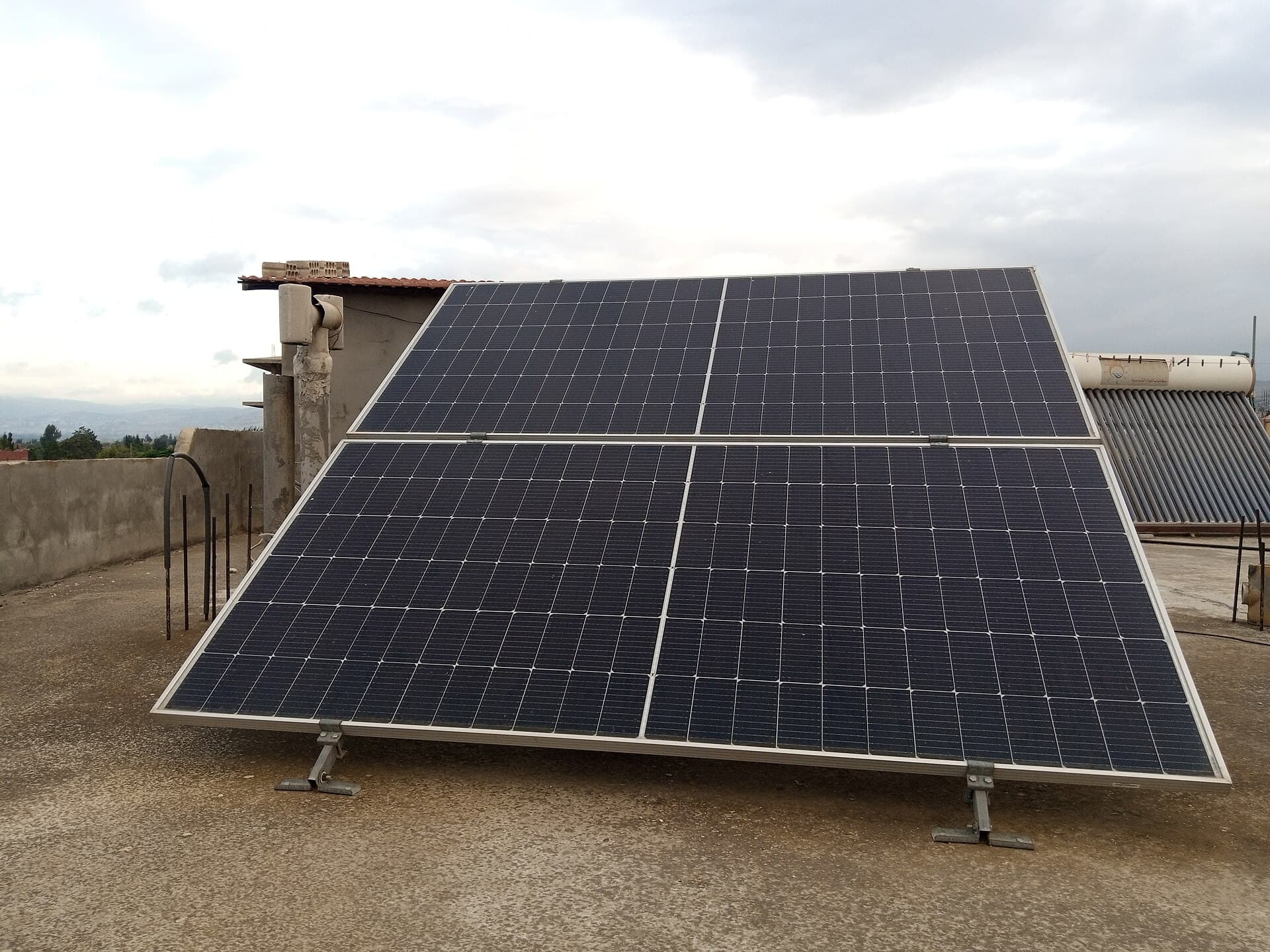
Two things stand on the roofs: photovoltaic panels and evacuated-tube solar collectors. A panel array with a battery keeps a house going through the cut, but it is expensive, which is why it has spread only so far. The collector heats water and earns its keep more reliably in daily life: after a sunny day there is hot water, on an overcast winter day there is none. If the hot water at your hotel comes from solar, showering early or late makes a difference.
Sockets, voltage and power banks
The supply is 220 volts at 50 hertz and the sockets are European — C, E and L. A European plug fits most of them, while a British or North American plug needs an adapter. If your device was built for 110 volts an adapter is not enough and you need a converter. A power bank is not a luxury here. On a plane a spare battery travels in the cabin: up to 100 watt-hours freely, between 100 and 160 watt-hours with the airline’s approval, and above that not at all. A multi-socket extension lead also earns its space, since it lets you charge everything at once during generator hours.
Water
Tap water is not for drinking. Use sealed bottled water for drinking and for brushing teeth. Buildings keep a tank on the roof, and when the mains go the tank keeps the taps running until it empties; refilling it depends on a pump, and the pump depends on electricity. As a cut runs on, pressure drops on the upper floors first. Which floor your room is on is therefore not only a question about the lift. Keeping a shower short is a practical necessity rather than a courtesy.
Heating and cooling
Winter is colder than people expect. Damascus sits at 680 metres and the average January high is 13 degrees, with nights well below that. Do not expect central heating; rooms are warmed by diesel stoves and electric heaters, both tied to the cuts and to the fuel price. If you are staying through the winter bring thermals and a fleece rather than trusting the hotel blanket. In summer the generator will not carry the air conditioning in most places, and a ceiling fan is the more dependable thing. Do not plan to spend the midday heat indoors, because indoors may not be cool either.
Building the day around the cuts
A few habits make the whole difference. Charge your phone and your power bank at every chance rather than waiting for them to run down. The lift stops during a cut, so if you arrive with luggage or with an older relative, ask in advance which floor the hotel has given you. Set the evening around the hotel’s generator hours, because during a cut the room is both dark and hot. Carry a small torch or a head lamp instead of spending your phone battery on light. Museums, souqs and anything outdoors run on daylight, and that is the programme least disturbed by any of this.
Tips
- Ask the hotel how many hours the generator runs and what it carries
- Sockets are European, 220 volts at 50 hertz; British plugs need an adapter
- Power banks up to 100 watt-hours travel freely; above that needs approval
- A cut stops the lift and drops water pressure on the upper floors
- Use sealed bottled water for drinking and for brushing teeth
Transparency
- How this was chosen
- This page carries the fastest-ageing information on the site: visa rules, exchange rates, border crossings and SIM prices change several times a year. The verification date above says when the facts were last put through their sources; for anything later, check your own foreign ministry travel advice and a Syrian consulate. No figure that is not known for certain is written here.
- Facts checked
- August 2026
- Last updated
- September 15, 2026