How to get to Deir ez-Zor: flights, the desert road and river crossings
Deir ez-Zor airport reopened in August 2026 with flights from Damascus, Kuwait and Cologne. The desert road is mostly single-lane; a pontoon bridge links the banks.
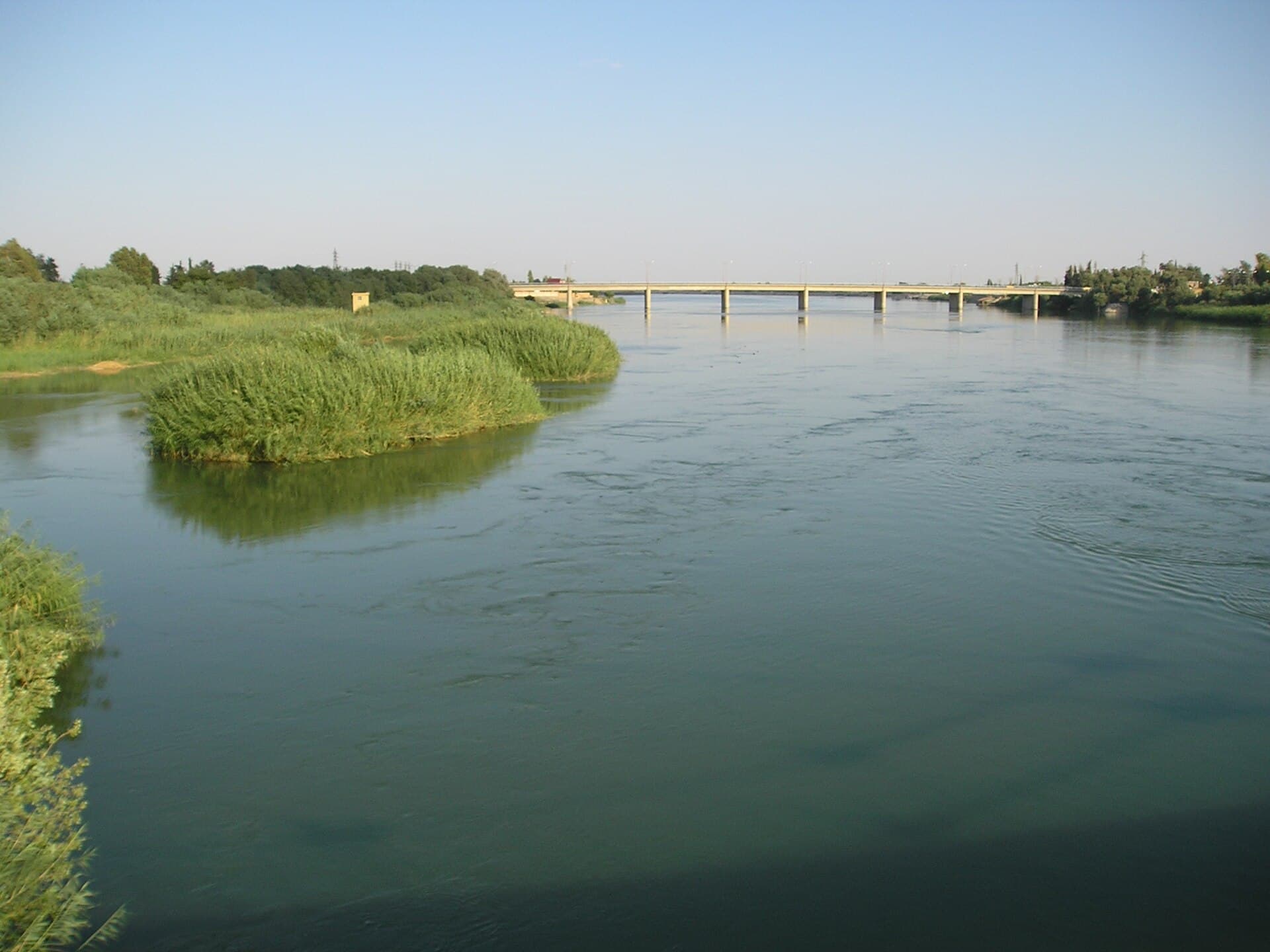
The answer to getting to Deir ez-Zor changed in summer 2026. The airport reopened on 5 August 2026 after 14 years, and there are now flights to the city from Damascus, Kuwait and Cologne. The road is still largely a single-lane desert highway, and in July 2026 it saw a serious bus crash. Arriving does not settle everything either: the permanent bridges over the Euphrates are under repair, and since the flood at the end of August crossing between the two banks has depended on a pontoon bridge. This page answers three questions with dates: how to fly in, the state of the road, and how to cross the river in the city. Stops and day plans are on the page on desert and Euphrates travel.
Can you fly there?
Yes, since August 2026. Deir ez-Zor airport is about 10 kilometres southeast of the city centre. Repairs began in early 2026 and the airport opened on 5 August 2026; according to SANA, the state news agency, two Syrian Air aircraft landed on opening day, one of them a domestic flight from Damascus.
- Damascus: a domestic Syrian Air service.
- Kuwait: Jazeera Airways has flown direct since 8 August 2026.
- Cologne: the German carrier LEAV Aviation has operated one flight a week since 1 September 2026; the first aircraft landed that day.
An infographic published by SANA put the first month at 54 flights and more than 2000 passengers. On 13 September 2026 the civil aviation authority said three more regional routes were being prepared, without naming destinations. Flight days and fares are not in the sources; the route is new and schedules change often, so check with the airline before you travel. A general list of carriers is on the page about airlines flying to Syria.
What is the road like?
The road from Damascus to Deir ez-Zor crosses the desert via Palmyra and is about 420 kilometres long. According to an official statement carried in a SANA report of 19 August 2026, most of it is a single lane used in both directions. On 25 July 2026 two passenger buses collided between Al-Sukhnah and Palmyra; the announced toll was 35 dead and 30 injured.
The Damascus–Palmyra and Palmyra–Deir ez-Zor sections are to become a dual carriageway. According to the same report, the contract is worth about USD 300 million, the construction period is 780 days, and the start depends on approval of the contract. For the next two years, then, the road will be used as it is.
A few practical rules follow from this. Travel by day and set off early enough to arrive before dark. Palmyra is the natural break halfway; conditions there are on the page on how to get to Palmyra. If you hire a car with a driver, agree on speed and breaks before setting off.
No dated source was found for bus companies or ticket prices. In December 2025 the Deir ez-Zor bus left from the Homs North Garage. On 1 January 2026 two zeros were removed from the currency, and after the fuel price rise of 13 September 2026 transport fares are being recalculated, so ask the price at the garage. Distances and journey times between cities are all on the page on how far you can travel in a day.
Do not assume the road is always open. During protests over the 13 September 2026 fuel price rise, roads were blocked in Deir ez-Zor, Hasakah and Raqqa, and the Aleppo–Deir ez-Zor road was closed in the Raqqa countryside. Ask the evening before whether your route is open.
How do you cross the Euphrates in the city?
The centre of Deir ez-Zor lies on the southwest bank; the far bank opens onto the Jazira, the plain between the Euphrates and the Tigris. The suspension bridge that was the city’s landmark cannot be used. The concrete Siyasiya bridge and the Mayadin bridge are under repair, and a SANA report of 12 September 2026 said they are expected to open in the first quarter of 2027 or early in the second.
Until then people cross on a military pontoon bridge and an earth causeway bridge. At the end of August the Euphrates rose as more water flowed in from Turkey, and two decisions came one after the other:
- 27 August 2026: night crossings on both bridges were banned.
- 28 August 2026: the earth bridge was closed completely until further notice; entry to and exit from the city are only by the pontoon bridge.
- 31 August 2026: a pontoon bridge also opened at Mayadin.
- 11 September 2026: the pontoon bridge in Deir ez-Zor returned to service after maintenance.
As of mid-September there is no source saying the earth bridge has reopened. If your plans involve the far bank, cross in daylight and ask that morning whether the bridge is open. On 12 September 2026 the governorate launched Nabd al-Deir, a two-year project covering 45 kilometres of road and bridge repairs in the city, so traffic arrangements may change around work sites.
Final checks before you go
- Flights: confirm the day and time again with the airline.
- Road: travel by day and plan the return before dark.
- Route: ask the evening before about road blocks.
- River: if you are crossing to the Jazira bank, ask about the pontoon bridge that day.
- Cash and passport: keep both with you for checkpoints and places that do not take cards.
Tips
- Check flight days with the airline; the route opened in August 2026 and schedules change
- Travel the desert road by day; most of it is a single lane carrying two-way traffic
- Ask the evening before whether protests have blocked the road on your route
- If you are crossing to the Jazira bank, check that morning whether the pontoon bridge is open
Transparency
- How this was chosen
- This page carries the fastest-ageing information on the site: visa rules, exchange rates, border crossings and SIM prices change several times a year. The verification date above says when the facts were last put through their sources; for anything later, check your own foreign ministry travel advice and a Syrian consulate. No figure that is not known for certain is written here.
- Facts checked
- September 2026
- Last updated
- September 15, 2026