A short history of Syria for travellers
Seven layers, from the Ebla tablets to the French Mandate. Not a chronology to memorise but a spine for placing the stone that stands in front of you.
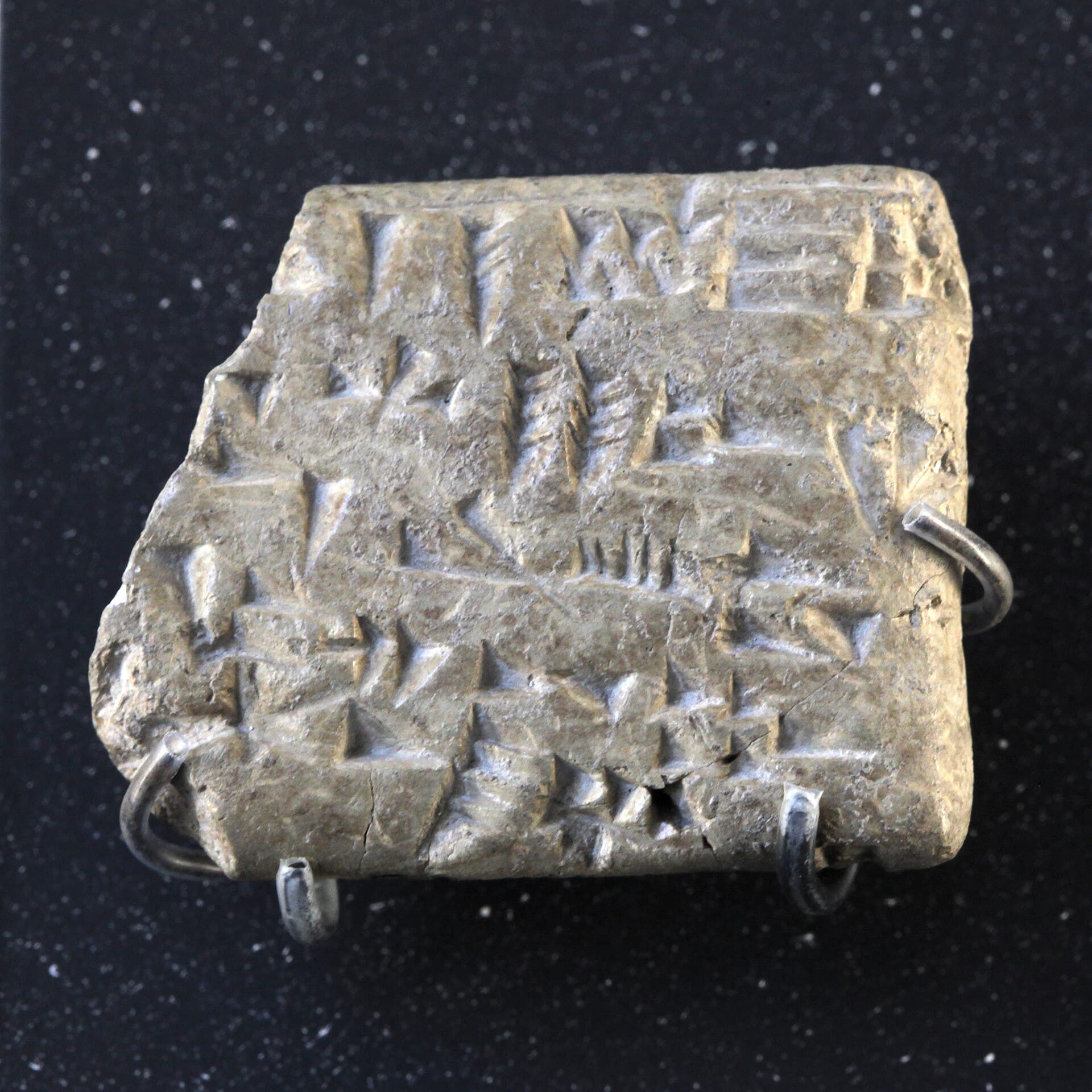
The difficulty in Syria is not that there is too little history but too much. A Roman column, an Umayyad wall, a Mamluk facade and an Ottoman khan can stand within one street of each other. This page puts that pile in order — not as a chronology to memorise but as a spine you can hang a building on.
Where writing and the alphabet came from
Under the mounds of northern Syria lie the large cities of the Bronze Age. The palace archive at Ebla dates to between 2500 and 2250 BC and brought to light a Semitic language nobody knew existed. Mari, on the Euphrates, was keeping letters and accounts in the same period. Ugarit on the coast did something else again: it built a writing system of about 30 cuneiform signs — one of the earliest alphabets known.
What you see of this layer today is foundations, door sills and a ceremonial stair. The tablets are in museums.
Arameans, Rome and Byzantium
When the Bronze Age order collapsed, Aramean kingdoms centred on Damascus came forward and Aramaic became the common language of the region. It is still spoken in Maaloula and two neighbouring villages. In 64 BC Rome made Syria a province. Palmyra grew rich on caravan trade in the desert, Bosra became capital of the Roman province of Arabia in 106, and stone towns went up on the coast and across the Idlib plateau.
After Rome came Byzantium and the region turned Christian. The villages we call the Dead Cities, the monastery around Saint Simeon and churches such as Qalb Lozeh belong to this layer. If the stone is cut large and square, the arch is round and there is a cross carved somewhere, you are probably standing in it.
The Umayyads: ninety years with Damascus as capital
After the battle of Yarmouk in 636 the region passed to Muslim rule. In 661 Muawiya moved the caliphate to Damascus, and until 750 the city was the centre of a state reaching from Spain to Central Asia. Most of the buildings covered on this site carry a trace of those ninety years: the Umayyad Mosque was raised over a Roman temple and then a church, and the desert palaces are the work of the same dynasty.
In 750 the dynasty fell and the capital moved to Baghdad. Damascus was never a capital again, but the scale of the years when it was is still there in the courtyard.
Zengid, Ayyubid, Mamluk: when the stone was worked hardest
Once Baghdad was far away, Syria produced dynasties of its own. The Hamdanids in Aleppo, then the Seljuks, then Nur ad-Din Zengi and Saladin. Most of the bathhouses, hospitals and madrasas of Damascus date to the time of those two names. Saladin died in Damascus in 1193 and his tomb stands just off the north wall of the Umayyad Mosque.
After 1260 came the Mamluks, and most of the facade grammar you see in the old cities is theirs: ablaq walls of alternating black basalt and yellow limestone, fan-shaped arches, souq vaults. The souq and the bathhouses of Aleppo work to that measure.
The Crusader castles
In the same period the coastal strip and the mountains were in the hands of the Crusader states. Krak des Chevaliers was the headquarters of the Knights Hospitaller and fell in 1271 to the Mamluk sultan Baybars. Saladin’s Castle takes its name from the commander who took it in 1188; Tartus cathedral and Marqab belong to the same network. These are not the buildings of a single war but the pieces of a frontier that lasted two centuries — taxing villages, closing roads and signalling to one another.
The Ottomans: four centuries and the pilgrim road
In 1516 the region passed to Ottoman rule and stayed there until 1918. These four centuries set the fabric of the old cities as you find it now: khans, souq roofs, courtyard houses, complexes such as the Tekkiye. The role of Damascus changed too — it became the assembly point for the pilgrim caravan to Mecca, and the city’s economy was built around that. Hejaz Station is the last form that route took.
Mandate and independence
After the First World War Syria came under French mandate: in practice in 1920, formally three years later by decision of the League of Nations. The shelling of Damascus in 1925 and the holes in the roof of Souq al-Hamidiyah date from this period. Independence was completed in 1946 with the withdrawal of the last French troops.
The country then passed through republics, a union and coups. The civil war that began in 2011 entered a new phase with the change of government at the end of 2024. This page does not cover current politics; for the practical situation see the other pages in this section.
Three questions to ask a building
Three questions place most of what you will see. How is the stone cut: Rome and Byzantium use large regular blocks, the Mamluks like a band of colour, the Ottomans bring plaster and timber inside. What shape is the arch: round is early, pointed is Islamic. What is the plan: a colonnaded street is Roman, an arcaded courtyard is early Islamic, a single domed room is late Ottoman.
Plenty of buildings will defeat the questions. Asking them still pays — tying what you are looking at to a layer tells you more than a memorised list of dates.
Tips
- Round arch means early, pointed arch means Islamic — the quickest tell
- Black-and-yellow stone banding (ablaq) is a Mamluk signature, all over Aleppo and Damascus
- Damascus was an imperial capital for ninety years; the legacy is large for the span
- Dead Cities and Qalb Lozeh are the Byzantine layer, Krak and Marqab the Crusader one
- Aramaic is still spoken in Maaloula and two neighbouring villages
Transparency
- How this was chosen
- This page carries the fastest-ageing information on the site: visa rules, exchange rates, border crossings and SIM prices change several times a year. The verification date above says when the facts were last put through their sources; for anything later, check your own foreign ministry travel advice and a Syrian consulate. No figure that is not known for certain is written here.
- Facts checked
- August 2026
- Last updated
- September 15, 2026