Hammams in Syria: which ones are standing
Some are still working baths, some were repaired and reopened, and one is a roofless ruin. Which hammam is in which state, and what to ask before you go.
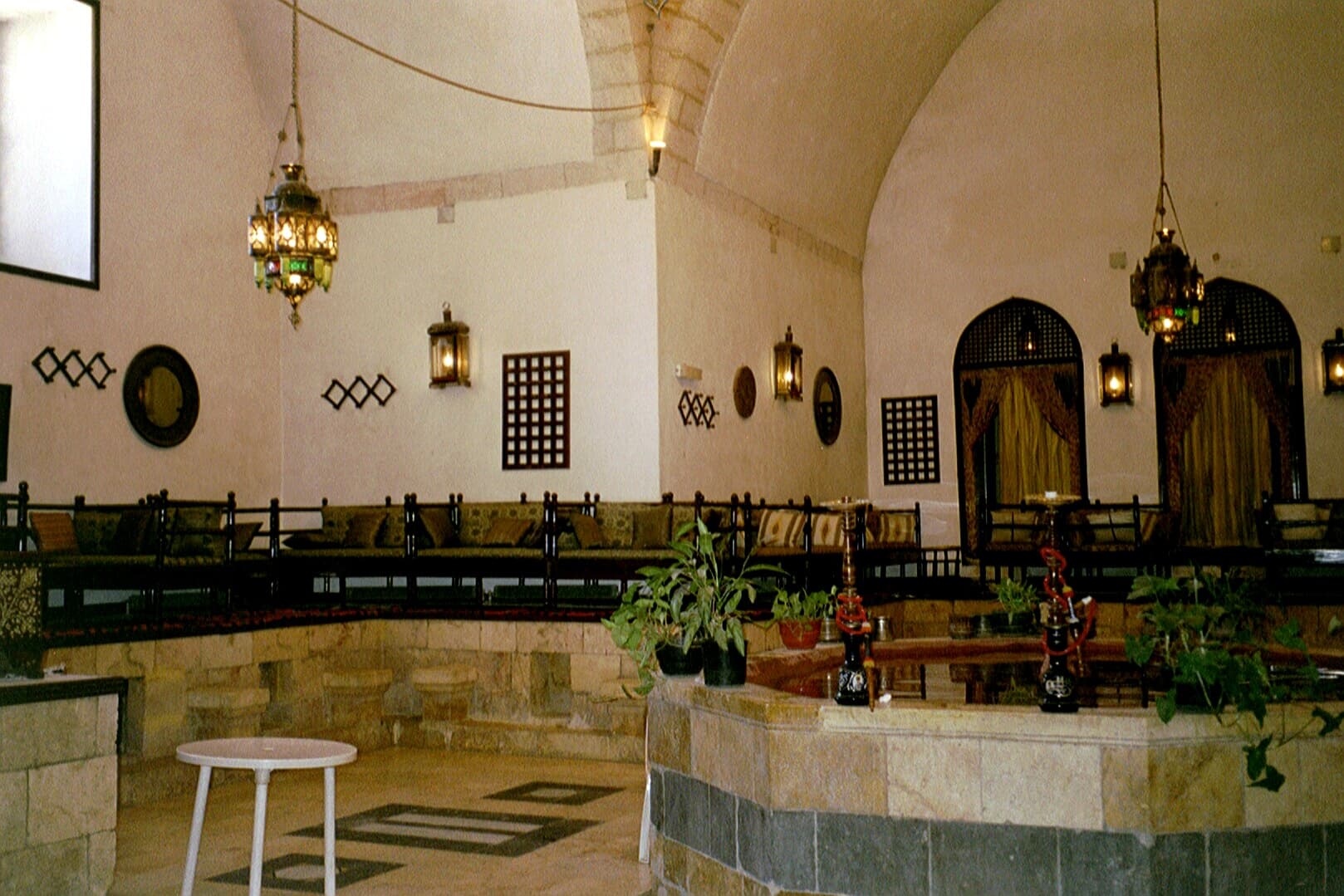
A hammam in Syria comes in three states, and confusing two of them means a wasted trip. Some are still doing their original job: you walk in and you wash. Some were repaired after the war and reopened. One is a ruin — you do not wash there, you read the plan. This page says which is which; how to behave inside a hammam is on another page.
Damascus: two working baths
Hammam Nur al-Din was built in the 12th century by Nur al-Din Zengi and is still open. It sits inside the Bzuriye souq, close to Khan As’ad Pasha; the door is at market level and looks ordinary from outside, because the building itself is below. Hammam al-Malik al-Zahir is older still: it is dated to 985, the Fatimid period, which makes it senior to many of the monuments in the old city. It stands next to the Zahiriyya madrasa and it too takes customers; the dome over the changing hall and the marble-inlaid pool are worth the look.
Aleppo: repaired and reopened
Hammam Yalbugha al-Nasiri is at the western end of the citadel square and can be told apart from a distance: its facade is striped in black and yellow stone. The governor of Aleppo, Sayf al-Din Yalbugha al-Nasiri, built it in 1491; at around 1500 square metres it is one of the largest Mamluk baths in Syria. It was restored and reopened in 1985. Hammam al-Nahhasin is right inside the Medina souq, south of the Great Mosque, and its first building goes back to the 12th century. It was damaged between 2012 and 2016, repaired in 2022, and today it is a bath people wash in again.
Bosra: the hammam you cannot use
Hammam Manjak stands alone on this list. It is at the north end of the colonnaded street in Bosra, directly opposite the Omar mosque, and its inscription ties it to 1372 and to Emir Manjak, governor of Damascus. The roof came down long ago, and that has one benefit: excavation opened the building down to its rooms, so the plan of the bath reads like a book from above. What you cannot see in the other baths — how the hot, warm and cold rooms are strung together — is visible here with the naked eye.
What to ask before you go
Three questions, and all three have answers that move. First the hours: men’s and women’s times are separate and shift with the season, so ask at the door. Second the price: entry, the scrub and the massage are priced separately and there is no single tariff, so ask before you order. Third the time: washing alone takes an hour and a half, and with a scrub and massage it reaches two hours. Settling all three at the door beats bargaining inside.
What to look for
The glass eyes in the dome. Light drops through them in shafts and becomes visible in the steam; that is the design idea behind these buildings. And the sequence: cold room, warm room, hot room. The building was made to move you through those three in order, and even in the ruined Manjak that order can be read on the ground.
Tips
- Men's and women's hours are separate and shift by season; ask at the door
- Entry, scrub and massage are priced separately; ask about all three first
- Washing alone is an hour and a half; with a scrub and massage, two hours
- Hammam Manjak in Bosra does not work; you go there to see the plan
- Look at the glass eyes in the dome; that is where the light comes from
Transparency
- How this was chosen
- This page carries the fastest-ageing information on the site: visa rules, exchange rates, border crossings and SIM prices change several times a year. The verification date above says when the facts were last put through their sources; for anything later, check your own foreign ministry travel advice and a Syrian consulate. No figure that is not known for certain is written here.
- Facts checked
- September 2026
- Last updated
- September 15, 2026