Syrian music: muwashshah, qudud and tarab
The muwashshah tradition of Aleppo, the qudud written onto religious melodies, what a tarab evening is, and where a traveller can actually hear it today.
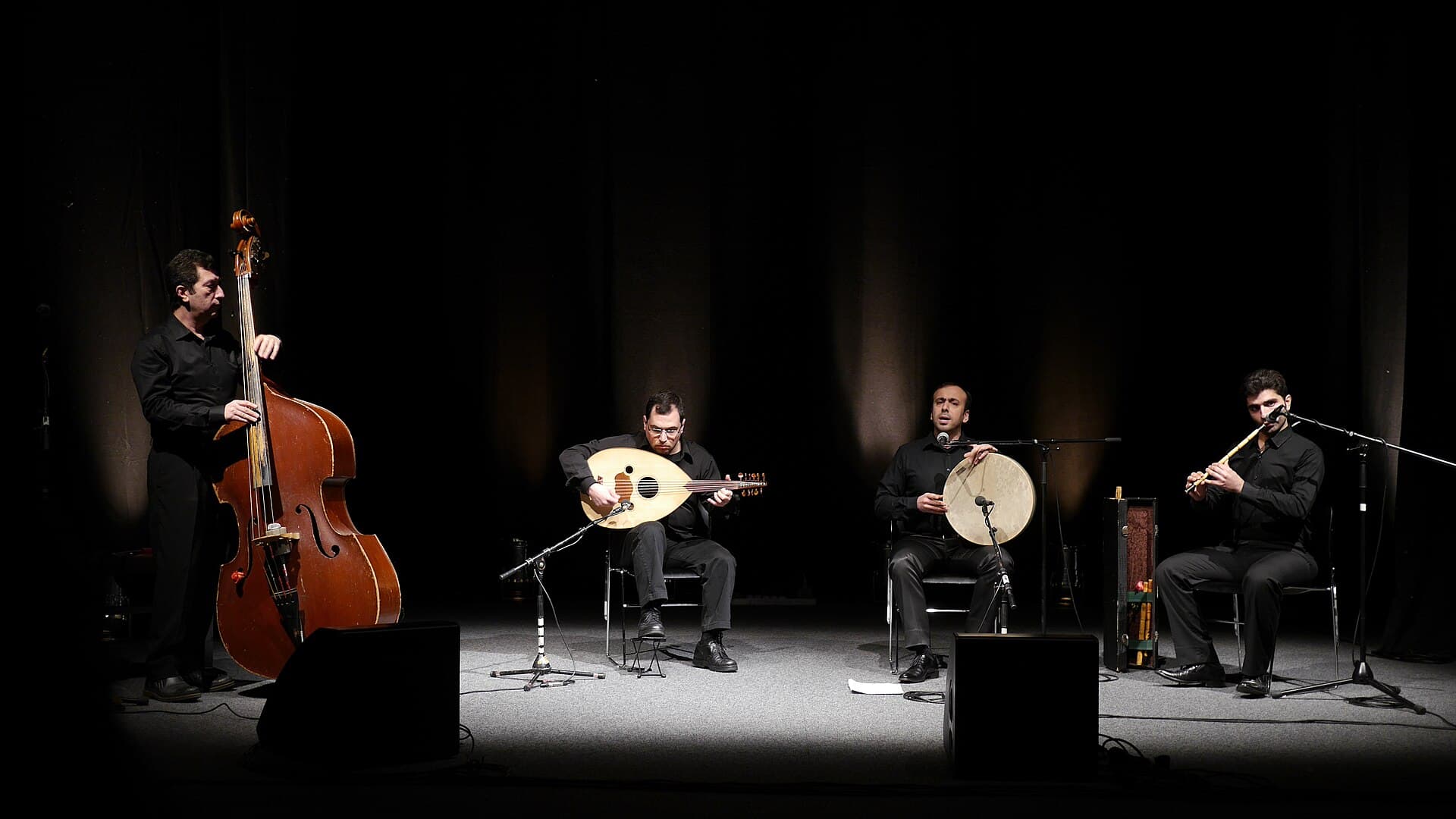
Music in Syria is not background for visitors; it is one of the things that separate the cities from each other. Aleppo founded a school, Damascus developed a different habit of listening, and both are still alive. This page explains what the tradition is and where it can really be heard today — the answer in the last section is short and honest.
Where the muwashshah comes from
The muwashshah is a poetic form and it developed in al-Andalus in the late 10th and early 11th centuries. Its structure is strict: five strophes each rhyming within itself, threaded with lines that carry a rhyme shared across the whole poem, and an exit called the kharja at the end. The kharja can be in a different language from the body.
The form was written to be sung, so a muwashshah is performed rather than read. It travelled east from Spain and Aleppo took it up and turned it into a repertoire of its own.
Qudud Halabiya
The qudud are Aleppo’s own genre and the logic behind them is surprising: old religious melodies are taken, and muwashshah poetry of Andalusi descent — usually about love and longing — is set on top of them. The tune comes from the mosque and the Sufi lodge, the words from courtly verse. The whole body of songs went onto the UNESCO intangible heritage list in 2021.
What strikes you first about a qadd is its weight: the tempo is slow, the ornament is dense, and the song does not tell a story so much as hold a state.
The voices came out of the minarets
Here is the most concrete detail in the tradition. Many of the great Aleppo voices were also muezzins and used their voices from a minaret first. Sabri Moudallal was born in Aleppo in 1918 and carried both the religious repertoire and the muwashshah all his life. Muhammad Khayri was a muezzin in the mosques of the old city. So was Bakri al-Kurdi, who also composed qudud.
Sabah Fakhri was born in Aleppo in 1933 and died in 2021, and he is the name that carried two fading genres — muwashshah and qudud — to a wide audience. Ali al-Darwish worked in the archive rather than on stage: he collected and classified old melodies and set down the sections of the samah dance.
What tarab means
Tarab is a hard word to translate. It is neither a genre nor an instrument; it names the heightened emotional state built between performer and audience. The audience does not sit silent: a line that lands is answered aloud, a repeat is called for, and the same phrase can be sung five times with different ornament.
The practical consequence is that a tarab evening does not run on concert logic. The programme stretches, the order of songs shifts with the room, and where the night ends is not settled in advance.
Oud, qanun, ney
Three instruments form the spine of the small ensemble. The oud is a pear-bodied, fretless, short-necked lute, and because no frets divide the string, the intermediate notes of maqam music come out exactly on it. The crafting and playing of the oud went onto the UNESCO list in 2022, in a file shared with Iran.
The qanun is a trapezoidal box zither, played with finger picks, with small levers along the side that let the tuning be changed mid-piece. The ney is a reed flute blown without a mouthpiece; the Arabic ney is blown straight across the rim. To these are added the riqq and the daff, which hold the rhythm.
Samah and dhikr
There is a group dance tied to the Aleppo muwashshah repertoire: the samah. It is slow and measured, closer to an exercise in unison than to a display; it is learned with the music and means nothing on its own.
Alongside it there is the dhikr of Sufi gatherings. Dhikr is worship, not performance; even where a visitor may enter, you stay quiet, do not photograph and do not move to the front. Sema — the turning rite of the Mevlevi order — had its lodges in these lands in Ottoman times, but it is not a regular scheduled show in Syria today. You may come across it; you cannot put it in a diary.
Shadow play and the hakawati
The shadow play of Damascus was added to the UNESCO urgent safeguarding list in 2018: jointed puppets cut from hide, a light behind them, a stretched screen, and a single operator doing every voice. Few masters are left and performances are not regular.
The other leg of the same oral tradition is the hakawati, the storyteller who reads and acts out a book in a coffee house. That part is covered in detail on the coffee house page of this site.
Where to hear it now
The honest answer: there is no fixed programme and online calendars are unreliable. Five approaches work.
- Ramadan nights. After the fast is broken, the chance of live performance in cultural venues and neighbourhoods is higher than in the rest of the year.
- Weddings and engagements. This is where qudud are most sung today; if you are invited, that is where you hear the real thing.
- Ask at the hotel. This information is not advertised, it travels by word of mouth; reception or a driver is the most current source.
- Instrument shops and workshops. A maker who builds ouds usually plays them too; asking to listen is normal.
- Listen to recordings. Hearing Sabah Fakhri and Sabri Moudallal before you travel means you recognise what you hear on the road.
One warning while we are here: some of the evenings advertised as “tarab nights” take place in venues that serve alcohol. This site does not recommend those places — the rule that applies to food applies here too. Ask about that when you ask where the music is.
Tips
- Qudud are worldly words set on old religious melodies; UNESCO-listed in 2021
- Many of the great Aleppo voices were muezzins as well
- Tarab is not a genre but the state built between performer and audience
- The oud is fretless, so the in-between notes of maqam come out exactly
- No fixed programme; Ramadan nights and weddings are the real performances
Transparency
- How this was chosen
- This page carries the fastest-ageing information on the site: visa rules, exchange rates, border crossings and SIM prices change several times a year. The verification date above says when the facts were last put through their sources; for anything later, check your own foreign ministry travel advice and a Syrian consulate. No figure that is not known for certain is written here.
- Facts checked
- August 2026
- Last updated
- September 15, 2026