Tipping, bargaining and asking the price
You haggle in the souq and never in a restaurant. Who to tip and how much, what to do when the seller calls it a gift, and the foreigner price question.
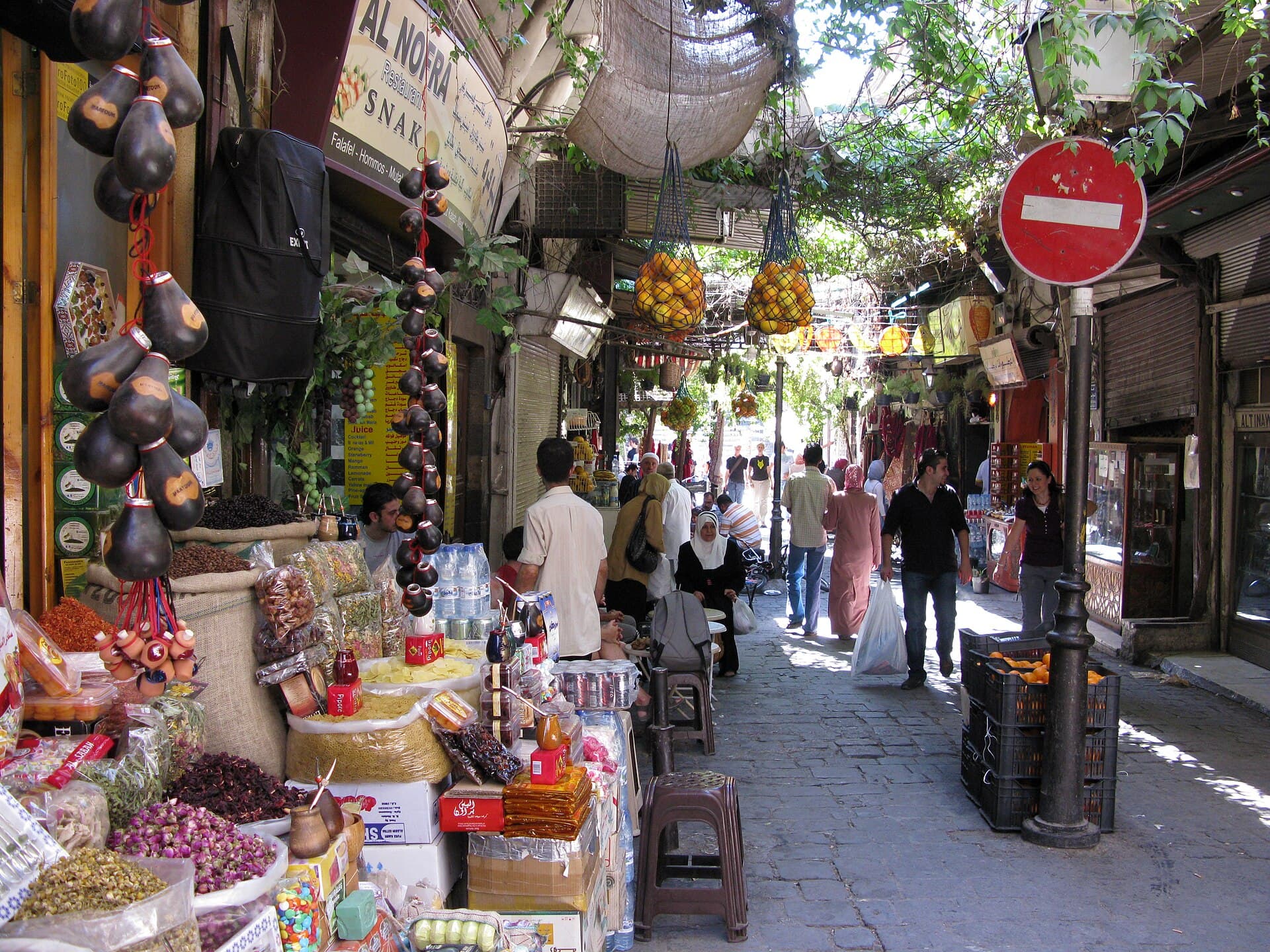
Prices in Syria come in two forms: written and spoken. Knowing which one you are facing matters more than the sum itself — haggling where you should not, and paying the first number where you should have haggled, look equally odd.
Where you bargain and where you do not
The rule of thumb: if the price is on a label it is fixed, if it comes out of the seller’s mouth it is a conversation.
Bargaining is expected for:
- Souvenirs, textiles, copper, rugs, soap and woodwork in the souq.
- Antique and second-hand stalls.
- Taxis — agree the fare before you get in, since most meters do not run.
- Hiring a driver or a guide for the day.
- A stay of several nights in a hotel; for one night the room to move is small.
Bargaining is out of place for:
- Restaurants and cafes — the menu price is the price.
- Bakeries, sweet shops, nut sellers: anything sold by weight.
- Grocery shops, pharmacies and any shop with labels.
- Museum and site entry, bus and minibus tickets.
- Jewellers — the gold rate is set daily, only the workmanship is discussed.
How to ask the price
The exchange opens with a greeting. Walking in and going straight to “how much” reads the way it would at home: abrupt. A greeting, a look, then the question.
Asking is not a promise to buy. Looking, thanking the seller and leaving is ordinary and nobody comments. What is genuinely rude is something else: haggling at length, settling on a figure and then walking away. An agreed price is paid, so stop before you get there.
Handling the goods uninvited is also frowned on. The seller puts the cloth or the soap in your hand; you say what you want to see.
How the haggle actually runs
Bargaining is not a contest. It is a sequence both sides know, and knowing it makes the whole thing shorter and warmer.
- Find the range first. Ask for the same item in two or three shops. Bargaining in the first one means bidding without knowing where the price sits.
- The opening figure is an opening. A counter-offer is expected, not rude. The gap is wide on souvenirs and narrow on everyday goods.
- Stay quiet and smile. Patience moves a price, insistence does not; whoever is in a hurry pays more.
- Buy in quantity. Six bars of soap instead of two really does change the unit price, and the seller will suggest it himself.
- One question closes it. “Akher siir” — last price. If the answer does not suit you, thank him and leave; if nobody calls you back, that was the price.
Who to tip, and how much
Tipping in Syria is not obligatory, but it is common and it works in small sums. The baseline is rounding the bill up; 10 per cent is generous.
It has one precondition: small notes. In the new lira introduced in January 2026, the 10, 25 and 50 notes are made for this, and none of them help if your pocket is empty by the afternoon. Set a bundle aside in the morning.
- Waiters — round the bill up. If a service charge is printed on it you need not add more; if you cannot see one, ask.
- Taxi drivers — no tip is expected. Rounding the agreed fare up is enough.
- Hotel staff — a small sum by hand for whoever carries the bag and whoever cleans the room, given daily. A lump left at checkout rarely reaches the person who came in every morning.
- Guides — for a full day, a separate sum at the end, on top of the fee. It is not considered part of it.
- Drivers — the same if he has been with you all day. Buying him lunch is common and well received.
- At mosques and churches — small change for whoever watches your shoes or unlocks a closed section. Where there is a donation box, use it instead.
- Toilet attendants — the smallest note, to whoever hands you the paper. This is what the coins in your pocket are for.
When the seller says the price is a gift
Tea or coffee in a shop is not a sales technique in Syria; it is what happens to anyone who comes through the door. Accepting creates no obligation, and drinking a glass and leaving empty-handed is entirely normal.
The confusing moment is different. Instead of naming a figure the seller sometimes says “it is a gift”, or in Arabic “ma btiswa” — it is not worth anything. That is a courtesy formula, not an offer. The right answer is not to accept but to ask once more: “Please, how much?” The second time the number comes.
With someone who has helped you — shown you the way, carried your bag, opened a locked door — the measure changes. Offer once more if he refuses, then stop; a third attempt embarrasses him. If you have been invited into a home, money never appears at all: you repay it with sweets or fruit next time.
There is also the man who attaches himself at a gate and offers to show you around for nothing, then asks for a sum at the end. That is not a scam, only an unspoken arrangement. Ask at the start and you will both be comfortable.
Do foreigners pay a different price
Short answer: not where prices are fixed, and yes as an opening figure where they are not.
A menu costs the same for everyone, and so does bread. In the souq the opening price is built on the assumption that you do not know the range. It is not personal, and a local is given a high opening too — the difference is that he knows where to stop.
Information is the remedy. Learn three things before the day starts: the range for a taxi across town, from your hotel; the price of the thing you want in two different shops; and roughly what a meal costs. Those three numbers set the whole day.
Do not agonise over small gaps; a difference that is trivial to you is not trivial to the person across the counter. But do not accept several times the going rate either — a price accepted becomes the price the next traveller is quoted.
Museums and archaeological sites may charge foreign visitors a separate rate. That is an official price and not open to negotiation; confirm the figure at the gate.
Change, and which lira
Paying with a large note is where the day most often snags: the stall has no change and sends you off to find some. Break a big note early and keep the small ones in a separate pocket.
The second confusion is the currency itself. Two zeros were dropped in January 2026, so old prices online look 100 times today’s. You may hear a figure quoted out of habit in the old money. Do not argue with a number you did not follow: have it written on paper or typed into a phone, and it ends there.
Settle which currency the price is in, too. Some places quote in dollars and some in lira, and mixing the two produces an argument neither side wanted.
Tips
- A labelled price is fixed; a spoken price is a conversation
- Never walk away after agreeing a figure — an agreed price is paid
- Set aside 10, 25 and 50 lira notes in the morning for tips
- “It is a gift” is a courtesy formula; ask the price a second time
- Learn the taxi and meal range before the day starts
Transparency
- How this was chosen
- This page carries the fastest-ageing information on the site: visa rules, exchange rates, border crossings and SIM prices change several times a year. The verification date above says when the facts were last put through their sources; for anything later, check your own foreign ministry travel advice and a Syrian consulate. No figure that is not known for certain is written here.
- Facts checked
- August 2026
- Last updated
- September 15, 2026